
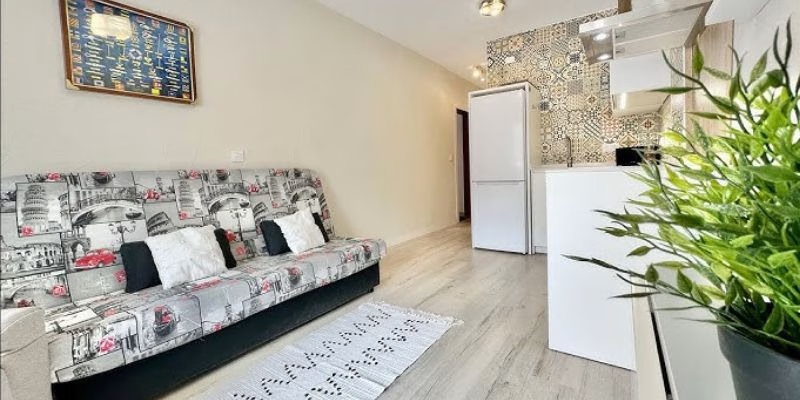

What is a 1K Apartment in Japan? It is a common and cost-efficient housing unit. It stands out in the specialized apartment for rent Japan market. This classification is optimally structured for single individuals or couples prioritizing location, budget, and convenience in major cities. This guide explains the 1K layout among Japanese apartments. It provides crucial details. These details help navigate Japan Tokyo apartment rent and secure suitable accommodation. Mastery of this precise terminology is the first essential step for any foreign resident. Understanding What is a 1K Apartment in Japan is crucial for navigating the market effectively.
Decoding the 1K Apartment Japan Classification
The “1K” system is a standardized nomenclature utilized across Japan to describe residential unit layouts. This classification employs a number and a letter to denote the configuration of the unit. The 1K is a precise structural definition: it signifies one main, separate room supplemented by a distinct, defined kitchen area. This system offers transparency regarding the functional space available to the tenant.
The “1” in the designation unequivocally indicates one main room. This room must work as the primary living and sleeping area. It often also serves as the study space. This core space is intended to be separate from all other functional areas. The “K” strictly defines the presence of a dedicated Kitchen (キッチン, Kitchin). Crucially, this kitchen is physically partitioned from the main room by a door. It also can be separated by a sliding wall (fusuma or shoji) or a hallway. These partitions guarantee it is a self-contained unit. This physical separation is the single most critical factor. It distinguishes the 1K from its often cheaper and smaller counterpart, the 1R (One Room) apartment. Understanding this detail is paramount when searching for suitable apartments in Tokyo or other major metropolises. Knowing precisely What is a 1K Apartment in Japan helps filter listings immediately.

Key Components and Dimensions of a Standard 1K Layout
A typical 1K apartment is designed for efficiency. It incorporates several essential features mandated by modern Japanese housing standards. These features offer a whole, self-sufficient living environment. The measurements are defined using the Tatami mat unit. The unit is known as (jō or 畳). Conventionally, 1 jō is accepted as 1.62 square meters or more.
- One Main Room (The “1”): This multi-functional space serves as the heart of the home. Sizes typically range from 6 Tatami mats (approximately 9.72 square meters) to 8 Tatami mats (approximately 13 square meters). This size provides enough, dedicated space for a bed, a desk, and minimal seating. For instance, a typical 7-jō 1K apartment offers about 11.34 square meters of main room space, excluding closets and the kitchen area.
- Kitchen (The “K”): This is a self-contained, small-scale cooking space, often located near the entryway. It is generally equipped with a sink and minimal countertop space. It includes a stovetop, which is gas, induction, or a portable single burner. The key element is the physical door or separation. This feature ensures food preparation odors and steam do not migrate into the living area.
- Unit Bath (or Yunitto Buro): Most modern units feature a prefabricated bathroom system. This system is all-in-one and integrated. It includes the toilet, sink, and a shower/bathtub combination. While space-saving, a few newer, higher-end 1K units may offer a separate toilet and bath. This is a highly desirable premium feature.
- Genkan and Hallway: This is a required entry area where outdoor shoes are removed. It often incorporates a small landing and storage space for footwear (getabako).
- Storage: Built-in closets (Oshiire or Kurozetta) are commonly included in the main room. Although the total storage capacity is limited, many units efficiently use vertical space within these closets.
Advantages of Choosing a 1K Apartment
The 1K apartment structure remains persistently popular. The target demographic is attracted by significant financial and practical benefits. These benefits far outweigh simple considerations of size.
Affordability and Cost-Efficiency in Urban Centers
The intentionally smaller footprint of the 1K apartment results in significantly lower monthly costs. This is in contrast to larger options. It directly benefits the tenant’s overall budget management. This advantage solidifies the appeal of What is a 1K Apartment in Japan for budget-conscious residents.
- Lower Initial Costs: The total move-in cost structure in Japan includes several elements. These include the non-refundable key money (Reikin) and the refundable security deposit (Shikikin). This structure is directly proportional to the monthly rent. Selecting a 1K substantially reduces these immediate financial burdens. For example, in a suburban area like Yokohama, a 1K unit can have move-in fees. These fees are 4 to 5 times the monthly rent. The monthly rent is ¥70,000. This results in an entry cost of approximately ¥280,000 to ¥350,000. This is consistently less than the first requirements for a 1LDK in the same area.
- Competitive Rental Rates: 1K units consistently offer the most competitive pricing per month, which is crucial in high-demand, high-cost areas. In a highly desirable central business district like Marunouchi, a 1K apartment rent for ¥120,000 per month. In the exact proximity, a 1LDK easily exceeds ¥200,000 per month. This provides significant savings for the tenant.
Superior Hygiene and Contained Spaces
The partitioned kitchen provides tangible hygienic and aesthetic benefits for daily living. It addresses a critical drawback common in open-concept studio apartments.
The structural barrier ensures that cooking odors, grease particles, and moisture are confined to the kitchen area. This prevents them from contaminating the main living and sleeping area. This containment is significantly beneficial for preserving the quality of clothing, bedding, and electronics. Tenants benefit from a high-quality living environment. Strong food smells and residual moisture are confined to the kitchen space. These include those from preparing fish, stir-fries, or steaming rice. This restriction preserves the air quality and cleanliness of the main room next to it.
Optimal Location Accessibility
The compact design philosophy of 1K apartments allows property developers to site buildings in high-density locations. These locations are highly convenient and directly adjacent to essential public transit hubs.
This strategic placement provides tenants with exceptional convenience and immediate access to Japan’s world-renowned public transportation networks. Professionals and students consistently choose 1K units specifically for this logistical advantage. Examples of prime 1K locations include units within a five-minute walk of major terminal stations. These stations feature Shibuya Station. It provides access to 8 separate train lines. Another is Tokyo Station, which is a central Shinkansen hub. Finally, there is Kyoto Station. This significantly minimizes daily commute times and costs.

1K vs. Other Japanese Apartment Layouts
You need a detailed comparison of the 1K with alternatives. This is crucial for making an informed choice when searching for an apartment for rent Japan. The differentiation hinges on the mandatory inclusion of dedicated Dining (D) and Living (L) areas. They have a specified minimum size. Strict real estate standards define these requirements.
| Classification | Abbreviation Meaning | Minimum Area Requirement for D/L | Key Feature Differentiating it from 1K |
| 1R | One Room | N/A | No kitchen separation; kitchen is integrated into the main room. |
| 1K | One Room + Kitchen | N/A | Separate, small kitchen distinct from the main room. |
| 1DK | One Room + Dining Kitchen | DK area must be 4.5 to 8 Tatami mats | Includes a designated dining area (min. 4.5 jō) in addition to the separate main room. |
| 1LDK | One Room + Living Dining Kitchen | LDK area must be 8 Tatami mats or more | Includes a significantly larger, dedicated living and dining area (min. 8 jō) plus the separate main room. |
A tenant should consider a DK or LDK layout. This is ideal if they need a separate, dedicated area for dining or relaxation. This area is beyond the basic bedroom role. But, if the primary goal is absolute cost minimization, the 1K apartment Japan remains the most strategically sound choice. It also meets the basic necessity of a separate cooking space.
Important Considerations and Challenges When Renting a 1K Apartment
While beneficial, securing and living in a 1K apartment in competitive markets like Tokyo requires full awareness of practical constraints. Understanding unique Japanese rental procedures is essential. These procedures can be challenging for non-Japanese residents.
Strict Space Management and Furnishing
The total floor area is relatively small. Strategic organization and highly efficient furniture choice are crucial for maintaining a healthy and comfortable lifestyle. Tenants must strictly rank items that are multi-functional and compact.
- Practical examples of essential space maximization techniques include the mandatory utilization of vertical storage systems. Examples include ceiling-high book racks or tiered storage carts. Another technique is the acquisition of multi-functional appliances, like a compact combination microwave/oven/toaster. Additionally, it involves the use of fold-out tables or desks. These can be entirely stowed away when not actively in use. These decisive space-saving measures are essential to prevent the singular main room from becoming cluttered and compromising the living environment.
Navigating the Japanese Application and Contract Process
The Japanese rental application process is rigorous and highly formalized. It requires specific documentation and financial guarantees. These requirements often prove challenging for foreign residents. Foreign nationals must typically secure a Guarantor Company (Hoshō Gaisha). This company acts as a financial safeguard for the landlord. This is especially necessary if a personal guarantor is unavailable. This is a nearly universal, standard practice when applying for most apartments in Tokyo.
The mandatory application process typically demands submission of the subsequent documents:
- Proof of Identity (Passport and Residence Card (Zairyū Card)).
- Proof of Income (Employment certificate, recent salary statements, or certified bank balance).
- Completed, signed rental application form and payment of a non-refundable application fee.
Tenants must attend a legally mandated explanation of the Important Matters (Jūyō Jikō Setsumei) before signing the contract. This explanation details legal obligations, maintenance rules, and end-of-lease procedures. This complex procedure is often conducted entirely in Japanese.
Utility and Amenity Standards
The standard 1K unit often comes with basic fixtures. Tenants are typically responsible for setting up all utility services upon move-in.
- Gas, Electricity, and Water: Tenants must contact local providers to start service connections, often requiring specific procedures for foreign names.
- Internet/Cable: Many older 1K units do not have pre-wired high-speed fiber-optic connectivity (Hikari). Tenants must confirm available services with the building management. They should also check with local providers.
- Appliances: Unlike in many Western countries, Japanese apartments in Japan are generally unfurnished. Tenants must buy essential appliances. These include a washing machine, refrigerator, and microwave. They must be carefully sized to fit the compact spaces.

Arealty: Your Specialized Partner for 1K Apartments in Japan
Successfully navigating the unique demands of the Japanese rental landscape requires specialized support. This support must fully understand the logistical and legal needs of international residents. Arealty is a highly regarded real estate firm. It is dedicated to simplifying the complex process of securing apartments in Japan. So the firm offers transparent listings and essential multi-lingual services.
Foreign tenants gain access to a pre-vetted variety of listings by utilizing a specialized agency like Arealty. These listings are explicitly designated as foreigner-friendly. This eliminates the uncertainty often linked to landlord screening and significantly accelerates the application process. Arealty ensures crystal-clear communication about all financial obligations. This includes the typically high initial costs linked to securing Japan Tokyo apartment rent. This transparency promotes trust.
Example of a Foreigner-Friendly 1K Apartment Listing via Arealty
Arealty meticulously curates listings to guarantee they are accessible and financially clear for foreign nationals. They often feature properties with reduced or zero Key Money. This helps alleviate the significant first financial burden.
| Property Detail | Specification | Financial Breakdown |
| Location | Minato Ward, Tokyo (5 min walk to Tamachi Station) | Monthly Rent: ¥139,000 |
| Size | 27.00 sq. meters | Maintenance Fee: ¥10,000 |
| Year Built | 2018 (High-Security Manshon Construction) | Key Money (Reikin): 1 months |
| Key Amenities | Built-in IH Cooking Heater, Delivery Box, Fiber Optic Internet Ready, Auto-Lock | Security Deposit (Shikikin): 1 month |
| Tenant Need | Guarantor Company required (Fee: 50% of first month’s rent) | Initial Payment (Estimated): ¥707,400 (Rent + Deposit + Fees) |
This listing exemplifies a premium, highly desirable 1K unit in a central location. It maintains clear, manageable initial fees. The requirements are transparent. This demonstrates the strategic advantage of utilizing a reliable, foreigner-focused real estate firm.
For immediate access to similar foreigner-friendly 1K apartment listings in Tokyo, review Arealty’s featured properties here: https://arealty.jp/listing/1k-apartment-tokyo
Conclusion
Understanding What is a 1K Apartment in Japan is fundamental. It is a non-negotiable necessity for any successful housing search in the country. The 1K unit is definitively characterized by its cost-efficiency. It is also known for its beneficial proximity to urban infrastructure. Additionally, it provides crucial physical separation between the main room and the kitchen. This strategic configuration makes it an exceptionally strong choice. It is ideal for single individuals or couples who value an optimized balance of location convenience and budget control.
Securing a rental property in Japan demands precision, specialized knowledge, and an understanding of unique local legal procedures. Take the necessary professional step toward securing your ideal 1K apartment. The complexities of the Japanese rental market, from shikikin to reikin to guarantor requirements, should not create unnecessary obstacles. Contact Arealty today. Gain immediate access to expert guidance. Benefit from transparent listings and dedicated multi-lingual support. This support is for all your apartments in Tokyo and Japan rental needs. If you are prepared, make a confident and seamless transition to your new home.



Leave a Reply