
Renting an apartment in Japan involves a distinct and rigorous set of procedures. This is particularly true within competitive markets like rentals in Tokyo Japan. These markets have regulations and significant financial requirements that routinely surprise international residents, making it essential to avoid common rental mistakes Japan. Successful leasing relies heavily on understanding these specialized processes, demonstrating impeccable reliability, and diligently preparing all necessary documentation. This guide offers strategic insights for expatriates looking for foreign friendly apartments in Tokyo. It ensures a smooth and secure transition into Japanese urban life.
Critical Mistakes Before Moving In: Contractual and Financial Traps
The initial phase of securing an apartment for rent Japan is dominated by significant financial and deep contractual complexity. Issues at this crucial stage often arise. This happens because the legal and financial commitment within the Japanese lease agreement (Chin Taishaku Keiyaku Sho) is not fully understood. Diligence during the application and contract signing phase is crucial. This process often involves hundreds of pages of documentation. It is absolutely paramount to avoid substantial future financial strain.
The Unpreparedness Mistake: Misunderstanding Initial Fees and Renewal Obligations
Many international tenants fail to anticipate the truly unique upfront costs. Financial due diligence is critically undervalued by new tenants. These costs typically amount to a substantial sum equivalent to four to seven months of rent. The primary mistake is the failure to recognize the legal and non-refundable nature of specific mandatory fees. These fees are common in the Japanese rental system and differ vastly from a simple security deposit.
- The key mistake to avoid is misunderstanding Key Money (Reikin) and Renewal Fees (Kōshinryō). Unlike standard Western deposits, Reikin is a non-refundable “gratitude money”. This non-refundable fee is transferred straight to the property owner. This amount is often equivalent to one to two months’ rent. It is completely separate from the Security Deposit (Shikikin). Kōshinryō is a mandatory fee. It is typically equivalent to one month’s rent. It is paid every two years to extend the standard two-year lease. You must accept these unique charges as standard, non-negotiable costs within the Japanese rental system. If a property requires these, you must budget for them entirely, ensuring liquidity for the substantial move-in payment.
- The crucial strategy is to partner with an agency. This agency should provide a professional, bilingual explanation of the Jūyōjikō Setsumei (Explanation of Important Matters). This mandatory legal explanation must clearly clarify the exact financial breakdown. It must include the non-refundable nature of Key Money. This preempts any future confrontation over these funds. Thorough understanding prevents the shock of realizing tens of thousands of yen will not be returned.
The Utility Confusion: Assuming Costs are Included
A common error tenants must address to avoid common rental mistakes Japan is the assumption that utility costs are seamlessly integrated into the monthly rent. Tenants often fail to understand the crucial distinction between shared area fees and personal consumption costs. This mistake often makes a property temporarily uninhabitable upon arrival due to a lack of power, gas, or water connection, highlighting the need for rigorous pre-move-in checks.
- You must avoid the assumption that utilities (electricity, gas, and water) are included in the rent. Always assume utilities are separate and are the sole financial and administrative responsibility of the tenant, requiring immediate self-registration with local providers (e.g., TEPCO, Tokyo Gas).
- Furthermore, you must not confuse the Common Area Fee (Kanrihi or Kyōekihi), which strictly covers the maintenance and management of shared spaces (e.g., elevator upkeep, hallway lighting, communal area cleaning), with your personal utility costs. The preventative strategy requires seeking explicit clarification on utility responsibility. Confirm which providers service the specific address. Ensure you promptly register and activate all services immediately upon lease signing to ensure functionality on your move-in date. Failure to do so can mean spending the first night without essential services.

Critical Mistakes During Tenancy: Cultural and Communal Violations
This phase carries the highest risk of neighbor complaints and contract breaches, reflecting critical errors tenants must avoid common rental mistakes Japan. These issues are generally not legal violations; instead, they reflect a failure to adhere to local Japanese communal rules and expected social etiquette (Manners or Reigi). Strict cultural compliance is mandatory for lease security and maintaining your tenancy.
Violations of Communal Rules and Etiquette
The two most frequent sources of friction with neighbors involve the disposal of household waste and noise pollution. Tenants must adhere strictly to highly localized regulations and the cultural expectation of silence.
- Failure to Comply with Garbage Disposal Rules is a widespread error due to the complexity of Gomi Shori (garbage sorting). The strategy is simple: master the local rules immediately. Obtain the municipal garbage calendar for your area and adhere strictly to the schedule and sorting categories. Example: Putting out plastic bottles without rinsing and removing the cap is a violation. It will draw immediate complaints from neighbors and the sanitation company. Dumping trash outside of the designated hours is also a violation.
- Causing Noise Pollution is another major pitfall because cultural expectations demand extreme quiet, especially after 9:00 PM. You must avoid this by strictly observing quiet hours. Always be mindful of sound transmission; avoid using loud appliances like washing machines or hosting noisy gatherings late at night.

Violations of Contractual Usage Terms
These actions constitute severe breaches of the lease agreement, potentially leading to immediate eviction and significant financial repercussions. Tenants must respect the terms concerning occupants, property integrity, and payment.
- Unauthorized Occupancy (Adding Unlisted Roommates): You must absolutely avoid allowing any individual not explicitly named and approved on the lease to reside in the property long-term. Do not permit anyone not on the lease to live in the property for an extended period. The strategy is to adhere strictly to the named residents clause. Allowing a relative or friend to move in is legal grounds for immediate contract termination.
- Unauthorized Pets: You must not keep any pet—regardless of size—if the contract explicitly states “No Pets” (Petto-kinshi). The strategy is to strictly read the pet clause. Damage caused by a cat’s claws on flooring will guarantee the loss of your entire Shikikin. Pervasive pet odors or persistent barking from an unapproved animal also ensure additional specialist repair costs.
- Unauthorized Modifications: You must avoid making any permanent structural or aesthetic changes to the property. The strategy is to seek written permission first. Violations like drilling numerous holes for large shelves are considered willful damage. Repainting walls will also be charged at 100% of the restoration cost.
- Late or Non-Payment of Rent: This is a major financial and contractual error. You must not let the payment date lapse (yachin-fubara). The strategy is to set up automatic bank transfers (furikomi). This ensures the rent reaches the landlord’s account. Payment must be meticulously settled prior to the stipulated deadline.
- Illegal Subleasing: You must not sublease (Mata-gashi) the apartment to anyone else. The strategy is to formally terminate the lease. If you must leave the property, you must formally notify the landlord according to the contract’s notice period.
Critical Mistakes After Moving Out: Restoration and Financial Claims
Issues arising after move-out can be financially devastating for tenants. Disputes over Restoration to Original Condition (Genjō Kaifuku) often occur when the tenant is out of the country. Proactive finalization is the only way to safeguard your deposit.
Improper Property Restoration and Fee Avoidance
The two most common mistakes are the improper disposal of belongings and failing to perform the necessary final cleaning. These errors directly lead to unexpected fees.
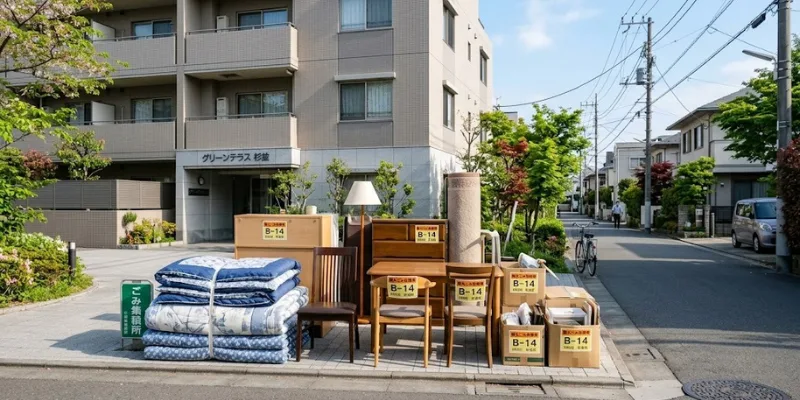
- Abandoning Furniture and Belongings: You must not leave any belongings inside the apartment when vacating. This covers bulky refuse, such as major appliances or discarded furniture. The strategy is to schedule Sodai Gomi (large trash) pickup well in advance. Any item left behind will incur a significant disposal fee and penalty, which will be deducted from your Shikikin.
- Leaving Property Excessively Dirty: This is primarily a cultural mistake. You must avoid leaving the apartment dirty or uncleaned. The strategy is to clean thoroughly yourself to reduce the severity of the professional cleaning charges. Focus on high-grime areas like (1) kitchen fan filters, (2) bathroom mold, and (3) drains.
Violations of Final Financial and Legal Obligations
The final two issues relate directly to settling financial debts and legal obligations at the termination of the contract. Failure to address these guarantees loss of the security deposit and represents a critical lapse in managing your move-out to avoid common rental mistakes Japan.
- Refusing to Pay Restoration Costs: This is a major final financial dispute. Do not refuse to pay restoration cost (Genjō Kaifuku Hi) for damages you clearly caused. These damages exceed “normal wear and tear.” The strategy is to understand your liability. Be prepared to cover costs for damages like strong persistent odors or permanent stains.
- Leaving Without Notice or Permission: This is the ultimate contractual failure. You must not abandon the property without providing the mandatory 1-to-2-months’ written notice. The strategy is to give formal notice. If you fail to do so, you are legally liable for rent until the notice period expires. Your rental obligations persist, regardless of vacancy.

Arealty: Your Strategic Partner to Avoid Common Rental Mistakes Japan
Navigating these 13 potential pitfalls presents challenges. The strict requirements for rentals in Tokyo Japan demand specialized support from a dedicated firm. Arealty ensures a transparent, compliant, and stress-free process for international residents. This makes us the top choice for foreigner friendly apartments Tokyo.
- We mitigate risk by providing Bilingual Contract Clarity. We translate critical terms like Reikin and Shikikin. This prevents the primary contractual pitfalls. Our experienced agents guide you through the entire Jūyōjikō Setsumei process in fluent English.
- We exclusively feature Vetted Listings. Landlords proactively accept international applications. They minimize complex guarantor requirements. This streamlines the process for your apartment for rent Japan.
- Arealty provides End-to-End Guidance. This includes comprehensive checklists for utility setup, garbage disposal, and move-out procedures. These resources help tenants maximize Shikikin return by understanding their Genjō Kaifuku obligations.
Secure your Japanese residency without the stress. Contact Arealty today for a personalized, risk-managed consultation and ensure your tenancy is successful from the very start.
Conclusion
Achieving a secure and stress-free tenancy in Japan relies entirely on proactive education and unwavering compliance. To successfully avoid common rental mistakes Japan, international residents must meticulously guard against the 13 critical errors related to finance, contract adherence, cultural etiquette, and move-out procedures. Partnering with a specialized, bilingual firm like Arealty provides crucial expert guidance. Financial due diligence is critically undervalued, but preparation remains the single most powerful tool for safeguarding your finances. Compliance reinforces your legal position in future transactions and ensures a comfortable, long-term life in your new Japanese home.
Ready to secure your ideal Japanese apartment with confidence? Contact Arealty today to start your risk-free search.

Real estate advisor at Arealty Japan, specialising in helping foreign residents navigate the Tokyo and Osaka rental markets. Lucy has guided hundreds of international renters — from Working Holiday visa holders to corporate relocations — through Japan’s apartment application process. Her writing draws on firsthand experience with landlord screening, guarantor companies, and foreigner-friendly listings across all 23 Tokyo wards and major Kansai cities.