
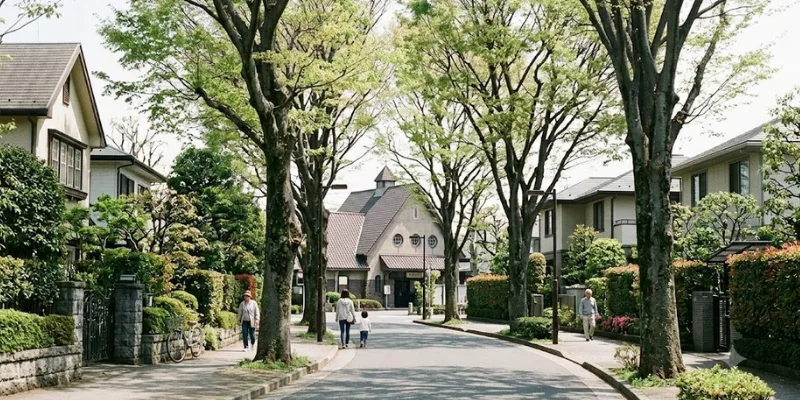

Denenchofu is a low-rise residential neighborhood in western Ota-ku, Tokyo. Financier Eiichi Shibusawa built it in 1918 as Japan’s first planned “garden city.” Wide, tree-lined streets radiate out from the station in concentric circles. Large single-family homes line those streets, giving the area a reputation as one of Tokyo’s most prestigious addresses. Denenchofu Station connects directly to Shibuya and Meguro on the Tokyu Toyoko and Tokyu Meguro Lines. At A-Realty, renters often ask us about Denenchofu’s history and lifestyle. The honest answer is that its rental market works differently from most Tokyo neighborhoods, and this guide explains why.
| Denenchofu at a Glance | |
|---|---|
| Ward | Ota-ku, Tokyo |
| Train Lines | Tokyu Toyoko Line, Tokyu Meguro Line |
| To Shibuya | ~15 min |
| Founded | 1918, as Japan’s first garden city |
| Known For | Tree-lined radial streets, luxury single-family homes |
| Ota-ku Avg Rent (1BR, 2026) | ¥150,000-¥200,000/month |
Where Is Denenchofu and What Is It Known For?
Denenchofu sits in the western part of Ota Ward. It sits close to the Tama River and the border with Setagaya-ku. Eiichi Shibusawa developed the area starting in 1918 through the Garden City Company. He modeled it on the garden suburb movement he had studied in Greater London. According to Ota City’s official heritage guide, Shibusawa’s son Hideo traveled through Europe and the United States to research garden suburbs first. That research shaped the plan before construction began.
The design still defines the neighborhood today. Streets radiate outward from Denenchofu Station in concentric arcs, not a standard grid. The 1923 Great Kanto Earthquake barely touched the area. Central Tokyo suffered heavy damage, and many residents fled to Denenchofu afterward for its safety. That single event cemented the neighborhood’s reputation. It accelerated Denenchofu’s growth into one of the city’s most exclusive addresses.
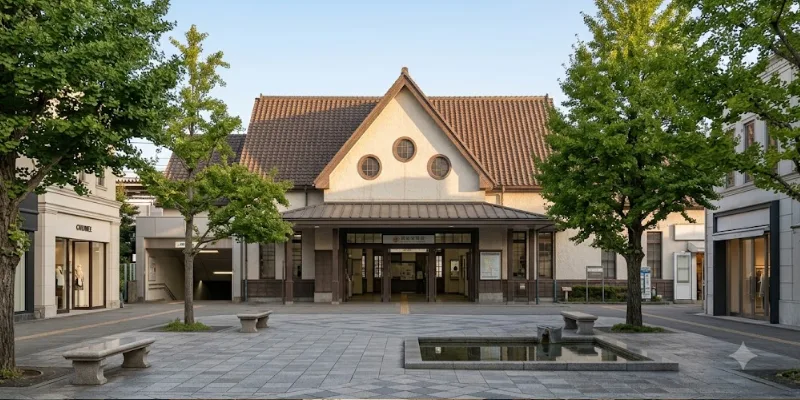
The station building itself has become a local landmark. Its distinctive Western-style design, with a steep tiled roof and round windows, has stood since the neighborhood’s earliest years. Renovations have preserved that original look even as the surrounding station facilities modernized. Locals and visitors both recognize the building as a symbol of Denenchofu’s garden-city origins.
Denenchofu’s resident list has long included business executives and public figures, a pattern going back to the neighborhood’s founding decades. That reputation, more than any single landmark, is what keeps Denenchofu’s name recognizable across Japan today.
How Connected Is Denenchofu’s Transport?
Two Tokyu lines serve Denenchofu Station. Both run north toward central Tokyo:
| Line | Operator | Connects To |
|---|---|---|
| Tokyu Toyoko Line | Tokyu | Shibuya, Yokohama |
| Tokyu Meguro Line | Tokyu | Meguro, plus through-service to the Tokyo Metro Namboku and Toei Mita Lines |
From Denenchofu Station, Shibuya takes about 15 minutes. Shinjuku takes about 20 minutes. Tokyo Station runs closer to 30 minutes, since Denenchofu sits away from the JR network. The Meguro Line’s through-service adds useful reach into central Tokyo without a transfer. It connects directly to stations like Roppongi-itchome and Ichigaya.
Renters weighing Denenchofu against other parts of the ward can browse current apartments for rent in Ota-ku. That lets you compare stations and commute times across the whole area in one place.
What Makes Denenchofu’s Streets and Architecture Distinct?
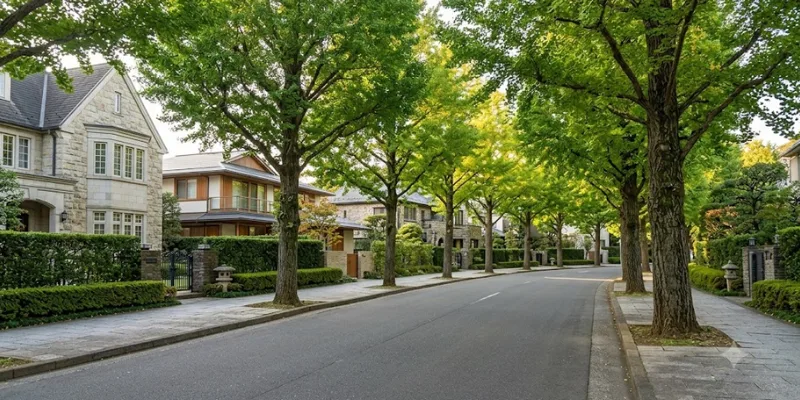
Denenchofu’s zoning rules have stayed unusually strict since the 1920s. Early plans required houses to sit back at least two meters from the road. Much of the neighborhood still keeps that setback today. Height limits and low building density preserve the area’s open, garden-suburb feel. Commercial buildings stay concentrated near the station, not spread through the residential blocks.
Denenchofu Ginza, the shopping street just outside the station, holds most of the neighborhood’s everyday retail. Bakeries, cafes, and long-established local shops line the street. A handful of upscale boutiques sit among them too. The overall effect feels closer to a well-kept garden suburb than central Tokyo. Mature trees and quiet residential blocks stretch in every direction from the station square.
What Is Daily Life Like in Denenchofu?
Daily errands center on Denenchofu Ginza and the immediate station area. Supermarkets, bakeries, and everyday shops sit within easy walking distance for most residents. Jiyugaoka and Futako-Tamagawa both sit a short train ride away for a broader selection. Both offer larger shopping and dining districts than Denenchofu itself.
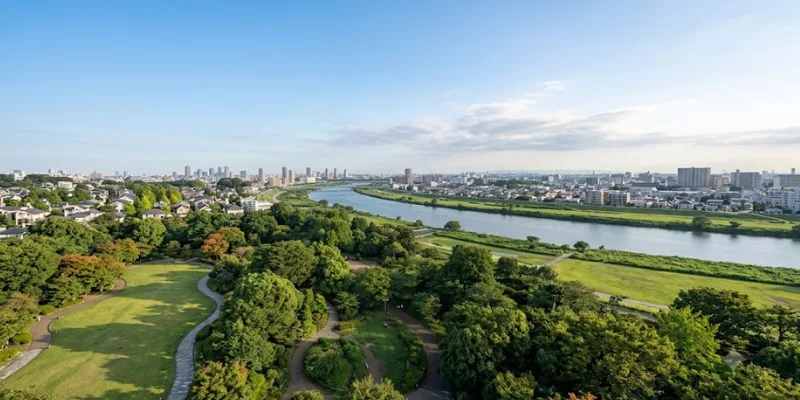
Green space is a genuine strength here. Tamagawadai Park sits a short walk from the station, on high ground overlooking the Tama River. It offers wide lawns and walking paths. The neighborhood’s own tree-lined streets work as informal green space too. Few Tokyo neighborhoods match that scale of greenery this close to a train station.
Families are drawn to Denenchofu partly for its schools. Denenchofu Futaba Gakuen, a well-regarded private school for girls, sits within the neighborhood. Several other respected schools operate nearby as well. This has kept Denenchofu popular with long-established Japanese families across generations.
The neighborhood also keeps a cultural calendar of its own. The hosts an annual art festival that brings local and international artists into the area. Small galleries and pop-up exhibitions appear along the main streets during the event. It is a low-key affair compared to central Tokyo’s larger art fairs, but it fits the neighborhood’s quiet, community-focused character well.
Our guide to Ota City covers the wider ward. It includes healthcare, international schools, and services available across all of Ota-ku’s neighborhoods.
Can You Rent an Apartment in Denenchofu?
This is the question we hear most often about Denenchofu. The honest answer: rarely, and rarely as a standalone apartment building. Denenchofu’s original zoning favored large single-family homes on generous lots, not apartment buildings. That pattern has held for over a century. Most available listings near Denenchofu sit just outside the core garden-city blocks. Look toward Denenchofu Minami, Tamagawa, or the Ikegami Line stations of Mitakesan and Kugahara instead.
A recent listing illustrates the price tier. A 1K unit of about 26 square meters in Denenchofu Minami, a short walk from Mitakesan Station, currently lists around ¥141,330 per month. That sits toward the upper end of Ota-ku’s typical 1K range. It reflects the area’s overall desirability, even for units outside the historic core. Landlords near Denenchofu also tend to expect stronger applications than the Ota-ku average, since demand for the address stays high year-round.
| Layout | Ota-ku Average Rent (JPY/month, 2026) |
|---|---|
| Studio (1R/1K) | ¥80,000-¥120,000 |
| 1 Bedroom (1DK/1LDK) | ¥150,000-¥200,000 |
| 2 Bedrooms (2LDK) | ¥220,000-¥300,000 |
Renters set on the Denenchofu address itself should expect to look at houses rather than apartments. Budget well above these ward averages if that is the goal. Our guide to buying a house in Japan covers that process for anyone considering ownership here instead of a lease.
Who Is Denenchofu Best Suited For?
- Renters drawn to quiet, low-density living: Wide streets, mature trees, and strict zoning keep Denenchofu calmer than almost anywhere else in central Tokyo.
- Families prioritizing established schools: Denenchofu Futaba Gakuen and other respected schools sit within or near the neighborhood.
- Buyers more than renters: Anyone set on the historic garden-city blocks will likely end up house-hunting, not apartment-hunting.
- Commuters to Shibuya or Meguro: The Tokyu Toyoko and Meguro Lines both reach these areas in 15 minutes or less.
Renters who want Denenchofu’s atmosphere but need more apartment choice usually do better in Denenchofu Minami or Tamagawa. Both sit a short walk from the same station area.
How Does Denenchofu Compare to Neighboring Areas?
Jiyugaoka sits one stop north on the Toyoko Line. It offers a livelier shopping and cafe scene, with far more apartment inventory than Denenchofu proper. Todoroki, just south, swaps Denenchofu’s radial street plan for a quieter valley setting around Todoroki Ravine. Its low-rise, house-dominated character feels similar overall.
Futako-Tamagawa sits across the Tama River in Setagaya-ku. It offers a busier, mall-anchored version of upscale riverside living, with considerably more rental apartment stock than Denenchofu itself; renters can browse apartments in Setagaya-ku directly for that comparison.
Denenchofu remains the most historically significant of these areas, and the most restrictive. It suits renters chasing proximity to that atmosphere more than renters hoping to live inside the original garden-city blocks themselves. Yukigayaotsuka and Kugahara, both a few minutes further along the Ikegami Line, offer a lower-cost path into the general area for renters willing to trade the Denenchofu address itself for a similar suburban feel.
FAQ: Renting in Denenchofu
Yes, for anyone who values quiet, low-density streets and easy access to Shibuya and Meguro. Suits families and long-term residents more than renters looking for a short-term city-center lifestyle.
Apartment buildings are uncommon within Denenchofu’s historic core, which was zoned for single-family homes. Most rental apartments near Denenchofu sit in adjacent areas like Denenchofu Minami or Tamagawa.
The comparison comes from Denenchofu’s large single-family homes, tree-lined streets, and history as home to business executives and celebrities since the 1920s.
Denenchofu to Shibuya takes about 15 minutes on the Tokyu Toyoko Line.
The Tokyu Toyoko Line and the Tokyu Meguro Line both serve Denenchofu Station. The Meguro Line runs through-service to the Tokyo Metro Namboku and Toei Mita Lines.
Denenchofu was planned and developed starting in 1918 by the Garden City Company, led by financier Eiichi Shibusawa, making it Japan’s first garden city.
Yes. Low density, strict zoning, and an established residential community make this place one of the safer, quieter neighborhoods in Tokyo, with a long history of stability since the 1920s.
AREALTY: Your Partner for Renting Near Denenchofu
Finding a home near Denenchofu means knowing which streets actually have apartment inventory. It also means knowing which ones only offer houses well above a typical rental budget. A-Realty helps international renters see that distinction clearly. We compare Denenchofu Minami and Tamagawa listings, and explain lease terms and guarantor requirements in plain English.
Ready to find your home near Denenchofu? Browse current apartments for rent in Ota-ku, search all available listings, or contact A-Realty to start your search today.

Real estate advisor at Arealty Japan, specialising in helping foreign residents navigate the Tokyo and Osaka rental markets. Lucy has guided hundreds of international renters — from Working Holiday visa holders to corporate relocations — through Japan’s apartment application process. Her writing draws on firsthand experience with landlord screening, guarantor companies, and foreigner-friendly listings across all 23 Tokyo wards and major Kansai cities.




Leave a Reply