
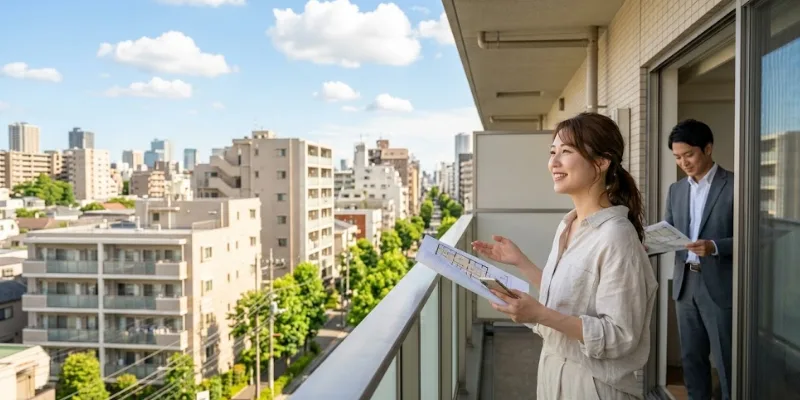

Looking to save money and skip the stress of the spring rush? Apartment hunting in Japan during July is the ultimate strategic move. While the peak season (February and March) is known for sky-high demand and rigid pricing, July falls within the Kansanki (off-peak season). During this “Golden Window,” the market shifts in favor of the tenant, offering three primary advantages:
- Financial Leverage: Landlords are eager to fill vacancies to avoid summer losses, leading to lower monthly rents, waived Key Money (Reikin), and “Free Rent” promotions.
- High-Quality Options: You gain access to premium units that became available after the spring reshuffle, but without the “frantic energy” of dozens of other hunters competing for the same listing.
- Personalized Service: Real estate agents have more bandwidth in July to conduct deep-dive research, negotiate better terms, and handle meticulous details like measuring furniture dimensions or verifying fiber-optic speeds.
By moving in July, you trade the summer heat for a more sophisticated, cost-effective, and value-driven relocation experience.

The Strategic Advantage: Why July is the Golden Window
The Japanese real estate industry classifies the period from June to August as the “閑散期” (Kansanki) or the off-peak season. Understanding the psychology of landlords and the logistics of the market during this time provides a competitive edge.
1. Significant Financial Incentives
During the peak months of February and March, landlords have the luxury of choice. In July, the roles are reversed. Vacant units represent a monthly loss of income, making owners highly motivated to secure tenants. This motivation translates into tangible savings for you.
It is common to find an apartment for rent in Japan during July that features:
- Reduced Monthly Rent: Landlords may lower the base rent by 3,000 to 5,000 Yen to make the listing more attractive.
- Waived Key Money (Reikin): This traditional “gratitude payment” is often the first thing removed to lower the barrier to entry.
- Free Rent Periods: Many owners offer the first month of rent for free if you sign a two-year contract.
2. High-Quality Inventory Selection
While it is true that there are fewer total listings than in March, the quality of available inventory remains high. Many premium units become available in May and June as people finish their spring transitions. Because there are fewer “hunters” in the market, these high-quality units stay on the market slightly longer, giving you the luxury of time to decide.
3. Dedicated Professional Support
Real estate agents in Japan are notoriously overworked during the spring. By apartment hunting in July, you ensure that your agent has the time to perform exhaustive searches. They can investigate specific details for you, such as:
- Confirming the exact fiber-optic internet speed available in the building.
- Measuring the dimensions of the refrigerator space during a second viewing.
- Negotiating directly with the management company for specific interior repairs.

The Master Schedule: A 60-Day Countdown to July
To move in by early July, you must view the process as a structured project. In Japan, the “empty-to-occupied” cycle typically takes 3 to 5 weeks, but starting earlier allows for better negotiation leverage.
Phase 1: Market Analysis and Goal Setting (Early May)
The foundation of a successful move is laid two months in advance. Use the Golden Week holiday period to conduct deep digital research.
- Establish Your Budget: Remember that the “Initial Cost” in Japan is often 4 to 6 times the monthly rent. If your rent is 100,000 Yen, expect to pay 500,000 Yen upfront for insurance, deposits, and agency fees.
- chỗ này chèn internal link các loại nhà theo các mức giá
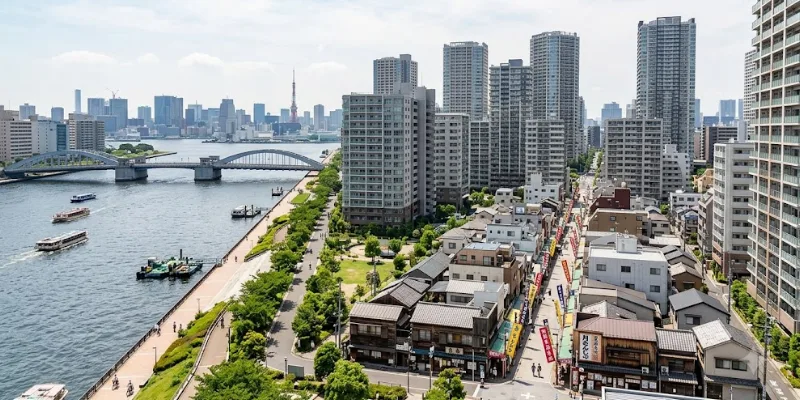
- Identify Three Target Areas: Instead of focusing on one station, identify three neighborhoods with similar vibes. For example, if you like apartments in Tokyo, Japan, you might compare Setagaya (residential/green), Nakano (vibrant/local), and Koto-ku (modern/waterfront).
- Document Requirements: List your “Deal Breakers.” Examples include separate bathroom and toilet (B/T betsu), indoor laundry space (sentakuki okiba), and second floor or higher (2-kai ijou).
Phase 2: Active Inquiry and Property Tours (Mid-May to Early June)
Once the Golden Week holidays conclude, real estate offices resume full operations. This is the time to hit the ground running.
- Contacting Agencies: Reach out to agencies specializing in international clients. Provide them with your specific criteria and your planned move-in date.
- The “Rainy Season” Viewing Strategy: June is the rainy season (Tsuyu) in Japan. While inconvenient, viewing a Japan Tokyo apartment rent in the rain is actually beneficial. It allows you to check for:
- Leaks or Dampness: Look for water stains near window frames.
- Drainage: Ensure the balcony does not have standing water.
- Sound Insulation: Heavy rain on thin roofs or through poor windows can be a major noise nuisance.
Phase 3: The Application and Screening Process (Mid-June)
The Shinsa (screening) is often the most stressful part for foreigners. In July, management companies are generally faster at processing applications because their desks are not piled high with files.
- Documentation Readiness: You will need your Zairyu Card (Residence Card), a copy of your employment contract, and your bank statements.
- Emergency Contacts: Ensure your emergency contact (usually a Japanese national or a long-term resident) is informed that they may receive a phone call from the screening company.
- The Guarantor Company: Most modern apartments in Japan require you to use a guarantee company. This replaces the need for a personal guarantor but comes with a fee (usually 50% to 100% of one month’s rent).
Phase 4: Finalizing the Contract (Late June)
Once approved, you will enter the final administrative stage. In Japan, this involves a “Jyuyo Jiko Setsumei” (Explanation of Important Matters). This is a legal requirement where a licensed professional explains every clause of your lease.
- Reviewing the “Fine Print”: Pay close attention to clauses regarding “Restoration to Original Condition” (Genko Kaifuku). This dictates how much of your deposit you get back when you move out.
- Utility Coordination: You must call the electricity, gas, and water companies. Note that the gas company must enter your home to turn the valve on, so you need to be present for an appointment on your move-in day.
Choosing the Right Partner: ARealty
Navigating the complexities of apartments in Japan can be overwhelming for those not fluent in Japanese real estate law or the language. This is where professional brokerage services become indispensable.
Why ARealty is the Preferred Choice
ARealty is a premier real estate agency dedicated to serving the international community in Japan. They understand that finding a Japan Tokyo apartment rent is about more than just four walls; it is about finding a community and a home where you feel welcome.
- Bilingual Expertise: ARealty provides full support in English and Japanese, ensuring that nothing is “lost in translation” during the Important Matters Explanation.
- International-Friendly Listings: They maintain an extensive database of landlords who are specifically open to foreign residents, drastically reducing the “application rejection” rate.
- Transparent Negotiations: The experts at ARealty are skilled in the July negotiation tactics mentioned above. They work on your behalf to reduce initial costs and secure the best possible terms.
- Holistic Support: From setting up your utilities to explaining how to sort Japanese trash, ARealty provides the “after-care” that traditional agencies often ignore.
Ready to find your dream home? Don’t leave your summer move to chance. Contact ARealty today to receive a personalized consultation and a curated list of available apartments in Tokyo, Japan. Let their professional team turn the challenge of apartment hunting in July into your most successful relocation yet.

Detailed Cost Breakdown: What to Expect
| Fee Type | Typical Amount | Negotiability in July |
| Shikikin (Deposit) | 1 – 2 Months Rent | Low (It is your security) |
| Reikin (Key Money) | 1 – 2 Months Rent | High (Many 0-Reikin units in July) |
| Chukai Tesuryo (Agency Fee) | 0.5 – 1 Month Rent | Medium |
| Kasai Hoken (Fire Insurance) | 15,000 – 20,000 Yen | Fixed |
| Guarantor Fee | 50% – 100% of Rent | Fixed |
| Lock Exchange Fee | 15,000 – 25,000 Yen | Low |
Budgeting for an apartment for rent in Japan requires a granular understanding of various fees. While many can be negotiated in July, some are fixed.
Conclusion
Apartment hunting in July is a masterstroke for the informed tenant. While the heat may be high, the competition is low, and the financial savings are substantial. By following a 60-day schedule, preparing your documentation early, and leveraging the professional expertise of an agency like ARealty, you can navigate the Japanese rental market with total confidence.
The perfect apartment in Japan is waiting for you. By choosing to move during the summer off-peak, you are not just finding a place to live—basing your decision on logic and strategy, you are securing a high-quality lifestyle at an unbeatable price.
Start your search today, focus on the details, and enjoy the unique advantages of the July rental market. Your new life in Japan begins with a single, well-planned step.

Real estate advisor at Arealty Japan, specialising in helping foreign residents navigate the Tokyo and Osaka rental markets. Lucy has guided hundreds of international renters — from Working Holiday visa holders to corporate relocations — through Japan’s apartment application process. Her writing draws on firsthand experience with landlord screening, guarantor companies, and foreigner-friendly listings across all 23 Tokyo wards and major Kansai cities.





Leave a Reply