
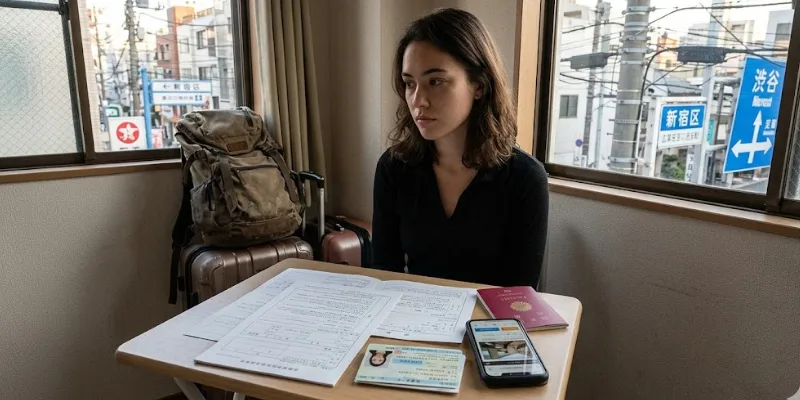

Sofa surfing in Tokyo for foreigners is not illegal — but it creates real administrative and visa complications that many people only discover after they have already arrived. Japan’s Basic Resident Registration Act (住民基本台帳法) requires every foreign national on a resident visa to register a residential address at their ward office within 14 days of moving in. Sofa surfing in Tokyo means having no registerable address, which blocks bank account opening, visa renewal, university enrollment, and employer payroll registration — all at once.
This guide explains why sofa surfing in Tokyo for foreigners creates these problems, and covers every practical short-stay alternative — from capsule hotels to monthly mansions — at every budget.
Why Sofa Surfing in Tokyo Creates Problems for Foreign Nationals
Japan’s residence registration system (住民登録, jūmin tōroku) links your registered address to:
- Your Residence Card (在留カード) — updated at the ward office
- Bank account opening — all major Japanese banks verify address
- Visa renewal — Immigration Bureau checks your registered address
- University or language school enrollment
- Employer payroll and tax registration
When you are sofa surfing in Tokyo, you have no address to register. Using a friend’s address is not straightforward either — Tokyo apartment leases typically prohibit hosting non-registered guests for extended periods, and doing so can put your host’s lease at risk.
The practical window for sofa surfing in Tokyo before it causes real problems: 1–2 weeks maximum, and only while actively applying for legal short-stay accommodation.
Immigration Services Agency — Residence Card and Address Registration — official guidance on address registration requirements.
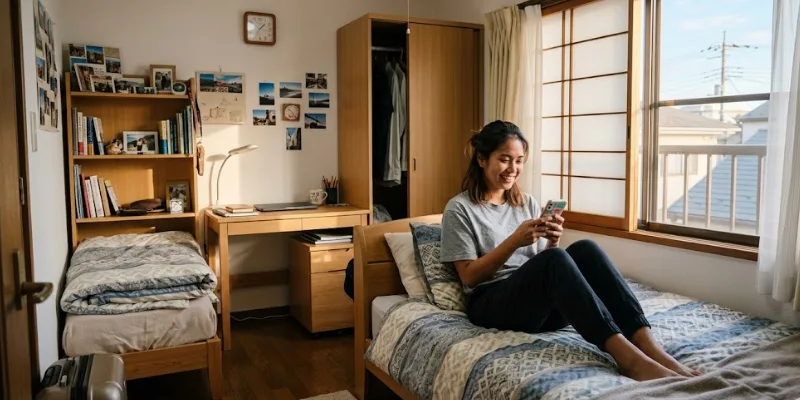
Legal Alternatives to Sofa Surfing in Tokyo for Foreigners
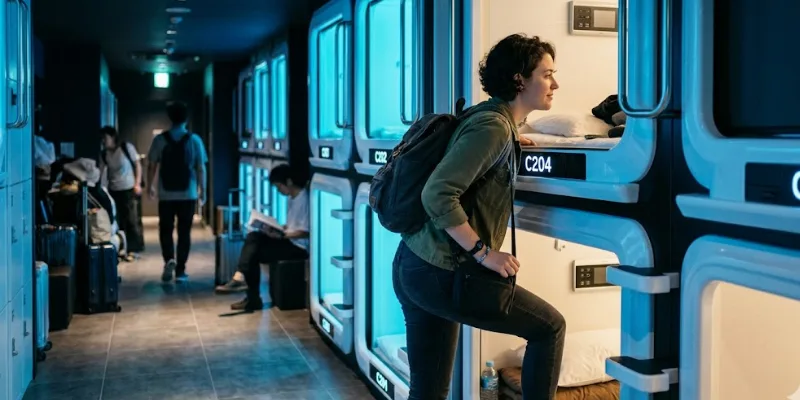
Option 1 — Capsule hotel (¥1,500–¥4,000/night)
Capsule hotels are legal, widely available, and require nothing beyond a passport. A legitimate week-1 solution while you orient yourself. Limitations: no address registration possible, limited luggage storage, no postal address.
Best areas: Shinjuku, Asakusa, Akihabara, Shibuya.
Option 2 — Guest house / gaijin house (¥45,000–¥70,000/month)
Guest houses in Tokyo are designed specifically for the gap between arriving in Japan and securing a permanent apartment. Key advantages:
- Move-in within 1–3 days — passport and enrollment/employment certificate sufficient
- No guarantor needed
- Furnished private rooms, shared kitchen and bathroom
- Contracts from 1 month
- Address registerable at the ward office — confirm with the operator before signing
Well-known operators with English support: Sakura House, Tokyo Share, Oakhouse.
Sakura House — Tokyo Guest Houses for Foreigners — established operator with 20+ locations across Tokyo.
Option 3 — Share house (¥45,000–¥80,000/month)
Share houses differ from guest houses in offering a more residential feel — typically managed by a property company, larger private rooms, and a longer-term contract structure. Most allow address registration.
For pricing, areas, and application process, see our share house in Japan for foreigners guide.
Option 4 — Monthly mansion (¥90,000–¥180,000/month)
Monthly mansions (マンスリーマンション) are fully furnished serviced apartments available from 1 month with no long-term contract and no guarantor. Fully private, address-registerable, and the most professional transition option while a permanent lease is processed.
For pricing and how to book, see our monthly mansion Tokyo guide.
Option 5 — Short-term private apartment (¥60,000–¥90,000/month)
Some Tokyo landlords list apartments on 3–6 month short contracts for foreigners in transition. Less common than monthly mansions but more space for the price. Browse foreigner-friendly short-term listings.
Sofa Surfing in Tokyo vs. Couchsurfing Platforms
Couchsurfing.com operates in Tokyo, but sofa surfing in Tokyo through hospitality platforms carries the same address registration problem for anyone on a resident visa. Tourist visa holders (under 90 days, no registration required) can use these platforms freely. Anyone on a working holiday, student, or work visa cannot rely on this for more than a week or two without risking administrative gaps.
Timeline: From Sofa Surfing to a Permanent Apartment
| Week | Recommended accommodation | Action |
| Week 1–2 | Capsule hotel or guest house | Register at ward office, open bank account |
| Week 2–4 | Guest house or share house | Apply for permanent apartment simultaneously |
| Week 3–6 | Same while application processes | Guarantor screening, contract preparation |
| Week 5–8 | Move into permanent apartment | Register new address at ward office |
If you arrive with full documents ready, the permanent apartment process can compress to 2–3 weeks. See our guide on how to rent a Japan apartment before arrival for the day-by-day playbook.
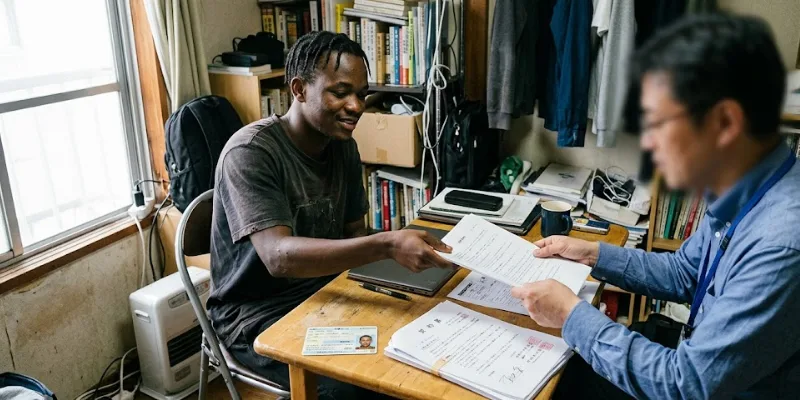
Transition Checklist: From Short-Stay to Permanent Apartment
- Choose your target ward
- Gather documents: Residence Card, passport, income proof or bank statement
- Select a guarantee company: GTN, Roommate, or Leonet
- Start search: SUUMO, Homes.co.jp, or Arealty Tokyo listings
- Book 3–5 viewings before submitting an application
- Submit application — guarantor screening 2–5 business days
- Sign contract and pay initial costs
- Register new address at ward office within 14 days
For the full step-by-step process, see our overseas rental application guide.
FAQ: Sofa Surfing in Tokyo for Foreigners
Is sofa surfing in Tokyo illegal for foreigners? Not explicitly illegal, but staying without a registerable address puts you in violation of address registration obligations within 14 days of arrival on a resident visa.
Can I use a hotel address for Residence Card registration? No. Hotels and non-residential facilities cannot be registered as your residential address.
How long can foreigners stay in a capsule hotel legally? There is no legal time limit on capsule hotel stays, but the practical problem is the address registration obligation — not the hotel stay itself.
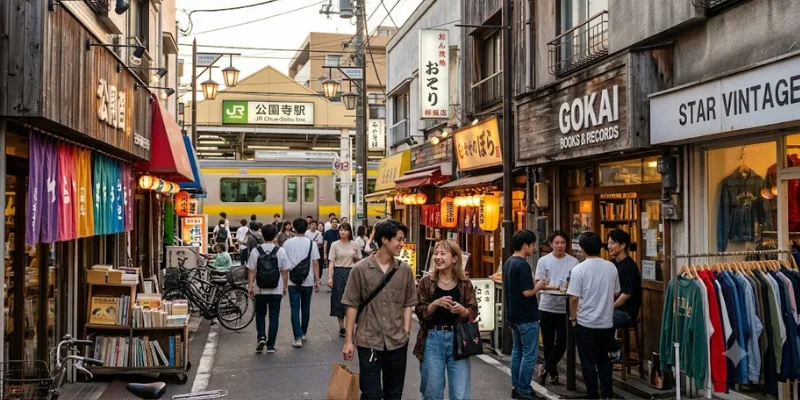
What is the cheapest legal short-stay option in Tokyo? Share houses and guest houses start from ¥45,000/month all-inclusive. Some Koenji and Senjū operators go as low as ¥38,000/month for shared dormitory rooms.
→ Browse all short-stay and long-term apartments in Tokyo
How Ward Offices Handle Address Registration for Short-Stay Accommodation
Not every short-stay option in Tokyo allows address registration, and this distinction matters more than the accommodation type itself. Ward offices (区役所) generally require:
- A lease agreement or written confirmation from the accommodation operator that they consent to your registration at that address
- Confirmation that the building is zoned for residential use (some serviced apartments and short-term rentals operate under a different zoning classification that doesn’t permit standard residential registration)
Established guest house and share house operators in Tokyo are generally set up correctly for this — it’s a routine part of their business model since most of their clientele are foreign residents who need to register. Smaller or informal arrangements, including subletting situations or short-term Airbnb-style listings, frequently are not set up for this and can leave you without a registerable address even though you’re paying rent and have a roof over your head.
Before signing any short-stay agreement, ask directly: “Can I register my address here at the ward office?” A legitimate operator will answer immediately and clearly. Hesitation or vague answers are a red flag.
What Happens If You Don’t Register Your Address in Time
Missing the 14-day registration window doesn’t trigger automatic penalties for most first-time cases, but it creates a cascade of smaller problems that compound:
- Bank account applications get rejected or delayed — most major banks require a registered address matching your Residence Card before opening an account
- Mobile phone contracts become harder to secure — carriers typically require proof of address for postpaid plans
- Employer payroll processing stalls — companies need your registered address for tax withholding and health insurance enrollment
- Visa renewal applications can be flagged — Immigration may ask for an explanation if your registered address history shows gaps or gaps in update timing
None of these are usually catastrophic on their own, but together they can mean weeks of delay in getting basic services set up — which is precisely the inconvenience that sofa surfing in Tokyo for foreigners is meant to be a temporary bridge past, not a long-term solution.
Sofa Surfing in Tokyo During Peak Moving Seasons
Tokyo’s two peak moving seasons — March to early April (fiscal year and academic year start) and September (second semester start for some programs) — put significant pressure on short-stay accommodation availability. Guest houses and share houses that normally have same-week openings can be fully booked 2–3 weeks in advance during these windows.
If you know your move falls within these periods:
- Book your guest house or share house room at least 3–4 weeks before arrival, even though most operators technically allow last-minute booking
- Expect monthly mansion prices to be 10–20% higher during peak season due to demand
- Start your permanent apartment search earlier than the 2-4 week window described elsewhere in this guide — competition for desirable units is also higher during these months
Frequently Overlooked Costs During the Transition Period
Beyond the headline monthly rate for guest houses, share houses, or monthly mansions, budget for:
| Item | Typical cost |
| Initial cleaning fee (most short-stay operators) | ¥5,000–¥15,000 one-time |
| Linen/bedding rental (if not included) | ¥2,000–±4,000/month |
| SIM card or pocket Wi-Fi for connectivity during the gap | ¥3,000–¥5,000/month |
| Coin laundry (most share houses lack in-room laundry) | ¥1,000–¥2,000/month |
These add up to a meaningful amount over a 4–8 week transition period and are worth budgeting for separately from your permanent apartment’s move-in costs.
Internal Resources for the Housing Transition Period
- Tokyo short-term apartment rental guide — full pricing and booking process for monthly mansions
- Rent a Japan apartment from overseas before arrival — how to skip the transition period entirely by applying before you land
- Share house in Japan: apartments and foreigner guide — detailed share house pricing and applications
- How to register your address in Japan — the full ward office registration process, including required documents
When Sofa Surfing Genuinely Makes Sense
Despite the risks outlined above, there are limited scenarios where sofa surfing in Tokyo for foreigners is a reasonable short bridge rather than a problem to avoid entirely:
- You’re on a tourist visa for under 90 days and have no registration obligation at all — in this case, staying with a friend is no different legally from staying in a hotel.
- You have a confirmed apartment move-in date within 3–5 days and simply need a place to land after a flight before keys are handed over. A short, clearly time-bound stay carries minimal practical risk.
- Your host has explicit landlord permission to have a long-term guest, which is uncommon but does happen, particularly in employer-provided housing where the company is aware of and has approved the arrangement.
Outside of these specific situations, the guest house and share house options covered above offer comparable convenience with none of the registration risk, often at a similar or only modestly higher cost than the inconvenience of an open-ended informal stay.

Real estate advisor at Arealty Japan, specialising in helping foreign residents navigate the Tokyo and Osaka rental markets. Lucy has guided hundreds of international renters — from Working Holiday visa holders to corporate relocations — through Japan’s apartment application process. Her writing draws on firsthand experience with landlord screening, guarantor companies, and foreigner-friendly listings across all 23 Tokyo wards and major Kansai cities.




Leave a Reply