

Itabashi-Honcho is one of the most affordable places to rent on a direct subway line into Tokyo’s business district. The station sits in Itabashi-ku, in northwest Tokyo, on the Toei Mita Line. From here you can reach Otemachi in about 20 minutes and Hibiya in about 25, without changing trains. A 1K apartment within 10 minutes of the station averages about ¥99,500 a month. This Itabashi-Honcho neighborhood guide covers rent, commute times, the best streets to live on, and what to check before you sign.
| Key facts | Itabashi-Honcho (Itabashi-ku) |
|---|---|
| Station | Itabashi-Honcho Station (Toei Mita Line, I-19) |
| Direct to | Sugamo, Otemachi, Hibiya, Mita, Meguro (through service) |
| Average 1K rent (within 10 min walk) | about ¥99,500/month |
| Average 1LDK rent | about ¥162,100/month |
| Best for | Otemachi and Hibiya commuters, singles, couples, budget-focused renters |
| Watch out for | Traffic noise near the Yamatocho intersection, no JR line at the station |
Rent figures: LIFULL HOME’S station data, September 2026. Commute times are approximate.
Where is Itabashi-Honcho, and why do renters choose it?
Itabashi-Honcho Station sits on the border of two districts, Yamatocho and Honcho, in the eastern half of Itabashi-ku. It lies between Itabashi-Kuyakushomae and Motohasunuma stations on the Toei Mita Line. The Kita-ku border and the JR Saikyo Line at Jujo are a short walk to the east.
For renters, the appeal comes down to three things.
First, the commute. The Mita Line runs straight into Otemachi, Hibiya, and the Mita office district. If you work in Marunouchi or Kasumigaseki, you skip the crowded JR transfers at Ikebukuro and Shinjuku.
Second, the price. Rent here sits below most Yamanote Line stations, yet the ride to central Tokyo is short.
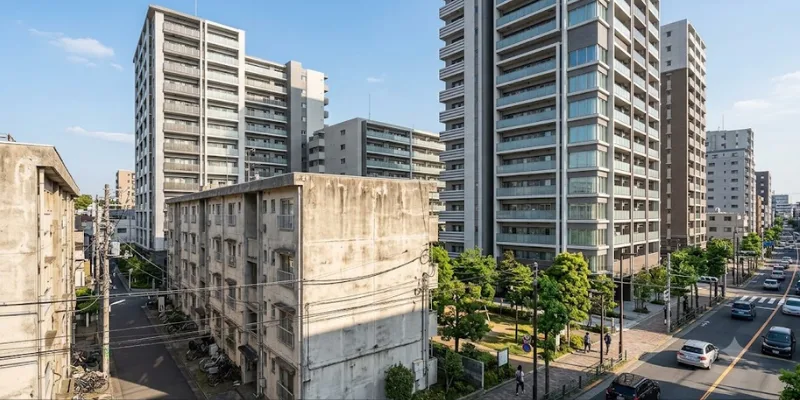
Third, supply. Wide roads around the station allow tall buildings, and Itabashi City has encouraged new housing along them. As a result, the area has many newer apartment buildings with auto-lock entrances, delivery boxes, and modern layouts.
The neighborhood also has deep roots. Itabashi-juku was the first post town on the old Nakasendo highway out of Edo. The original wooden bridge over the Shakujii River, the “itabashi,” gave the whole ward its name. Parts of that history still shape the streets today.
If you want the wider ward picture first, read our Itabashi City guide. This article zooms in on Itabashi-Honcho itself.
How fast is the commute from Itabashi-Honcho?
Commute time is the main reason people choose this area. The table below shows typical journey times from Itabashi-Honcho Station on weekday daytime trains.
| Destination | Route | Approx. time |
|---|---|---|
| Sugamo | Toei Mita Line (direct) | 8 min |
| Otemachi | Toei Mita Line (direct) | 20 to 22 min |
| Hibiya | Toei Mita Line (direct) | 25 min |
| Ikebukuro | Mita Line + transfer, or bus | about 17 min |
| Shinjuku | Mita Line + transfer | about 26 min |
| Akabane | Bus (Aka 31) | about 20 min |
Sugamo is the key transfer point. There you can change to the JR Yamanote Line for Ikebukuro, Ueno, and the rest of the loop. South of Meguro, many Mita Line trains continue onto the Tokyu Meguro Line, which is useful if you work or study in the southwest.
Buses fill the gaps. Route Oh 54 runs to Oji Station and Kami-Itabashi, and Route Aka 31 runs to Akabane East Exit and Koenji. These lines connect you to the JR Keihin-Tohoku, Namboku, and Tobu Tojo lines without a train transfer.
One honest limit: Itabashi-Honcho has only one train line. If the Mita Line is delayed, your backup is a bus or a 15 to 20 minute walk to JR Jujo Station. Always check your exact route with a journey planner before you commit.
How much is rent in Itabashi-Honcho in 2026?
Here are average monthly rents for properties within a 10-minute walk of Itabashi-Honcho Station. These figures exclude management fees.
| Layout | Average rent (JPY/month) |
|---|---|
| 1R (studio) | ¥89,400 |
| 1K | ¥99,500 |
| 1DK | ¥118,400 |
| 1LDK | ¥162,100 |
| 2DK | ¥145,900 |
| 2LDK | ¥203,300 |
| 3LDK | ¥233,300 |
Source: LIFULL HOME’S Itabashi-Honcho Station rent data, updated weekly.
The station average for single-person layouts (1R, 1K, 1DK) is about ¥100,800. Compare that with its Mita Line neighbors:
| Station | Single-person layout average |
|---|---|
| Shin-Itabashi | ¥110,300 |
| Itabashi-Kuyakushomae | ¥108,400 |
| Itabashi-Honcho | ¥100,800 |
| Motohasunuma | ¥96,600 |
| Shimura-Sakaue | ¥93,600 |
The pattern is clear. Every stop you move north on the Mita Line saves a few thousand yen a month. Itabashi-Honcho sits in the middle, cheaper than the stations closer to Sugamo but still well connected.
A useful tip: 2DK units are often cheaper than 1LDK units here. Many 2DKs are in older buildings. If you care more about space than a new kitchen, a 2DK can be the best value in this Itabashi-Honcho neighborhood guide.
Keep in mind that move-in costs add up quickly in Japan. Budget for deposit, key money, guarantor fees, and the first month’s rent. Our apartment move-in cost guide breaks down each item.
Itabashi-Honcho neighborhood guide: which area should you live in?
Itabashi-Honcho is small, but the streets around it feel very different from one another.
Yamatocho and the station front: newest buildings, busiest roads
The station sits under the Yamatocho intersection. Here, Kan-nana Dori crosses Route 17, with the Shuto Expressway running overhead. This is where you find most of the tall, newer apartment buildings.
The upside is convenience. You get supermarkets, convenience stores, clinics, and banks within a few minutes’ walk. The downside is noise and exhaust from one of Tokyo’s busiest road junctions. If you rent here, choose a unit that faces away from the main roads, or pick a higher floor with good windows.
Honcho and Nakajuku: the old Nakasendo side
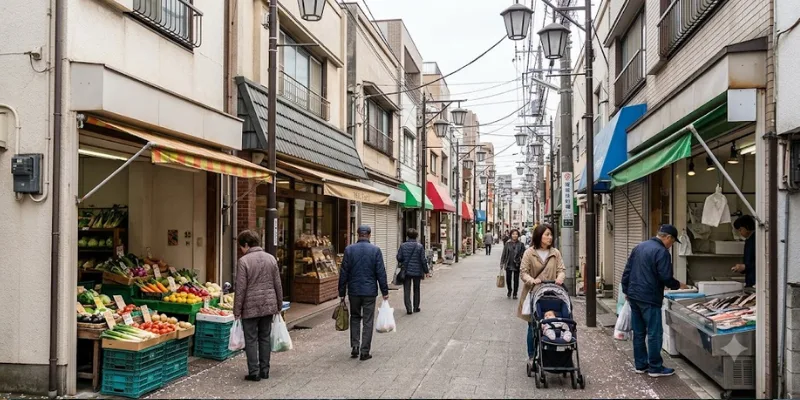
Walk south along the old Nakasendo road and the mood changes. This is the heart of the former Itabashi-juku post town. You will find long shopping streets with small grocers, bakeries, and family-run restaurants.
Along the way is Enkiri Enoki, a small shrine famous for helping people “cut ties” with bad relationships, illness, or habits. Locals and visitors leave wooden prayer plaques there. It is a quirky, memorable part of daily life.
This side suits people who want a local, walkable neighborhood. Buildings are a mix of older low-rise apartments and newer small blocks, so prices vary widely.
Shimizucho and the Motohasunuma side: quieter and cheaper
West and north of the station, the streets become more residential. Traffic drops quickly once you leave the main roads. Many renters here split the difference between Itabashi-Honcho and Motohasunuma stations.
This area works well for couples and small families. You get calmer streets, and rents move closer to the Motohasunuma average. Arealty’s own listings near here include a furnished 1R about 5 minutes from Itabashi-Honcho Station.
Toward Jujo: two lines within reach
East of the station, toward the Kita-ku border, you can live within walking distance of both the Mita Line and the JR Saikyo Line at Jujo. That gives you a direct train to Ikebukuro and Shinjuku as a backup.
The trade-off is a longer walk to one of the two stations. Still, for commuters who need both the Otemachi area and the west side, this is a smart compromise. Read our Kita City guide if you are also considering the Jujo side.
What is daily life like in Itabashi-Honcho?
Daily life is practical and budget-friendly. Several supermarkets sit close to the station, including a Gyomu Super discount grocery that many foreign residents use for bulk buys and imported ingredients. Drugstores, 100-yen shops, and convenience stores are all easy to find.
Local residents often mention two things in reviews: prices are low, and shopping is easy. Many also say the area has a friendly, neighborly feel, especially along the old shopping streets.
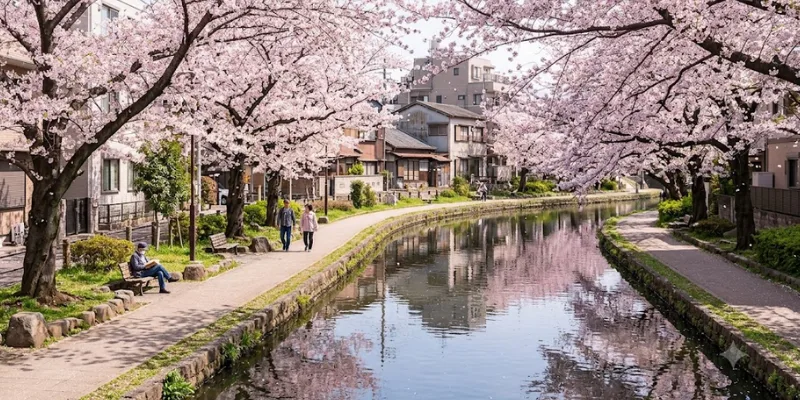
For green space, the Shakujii River runs through the southern part of the old post town. Its banks are lined with cherry trees, which makes spring walks a highlight. Small neighborhood parks are scattered across the residential blocks as well.
Healthcare access is good. The Teikyo University hospital complex sits to the southeast, and the station area has many clinics. For English-language medical options and ward services for foreign residents, see our Itabashi City guide.
One thing to know: the area is not a nightlife destination. Evenings are quiet, with neighborhood izakayas rather than bar streets. If you want more energy, Ikebukuro is a short ride away.
What should you check before renting in Itabashi-Honcho?
A few Itabashi-Honcho checks will save you trouble later.
Check which road the unit faces. This is the most important point for this station. A unit facing Kan-nana Dori or Route 17 will hear traffic day and night. Ask your agent for the window direction, and visit in the evening.
Check the flood hazard map. Most of the station area is on higher ground, but some streets dip toward the Shakujii River. Itabashi City publishes a hazard map. For a step-by-step method, see our guide on how to evaluate a safe neighborhood in Japan.
Check the property’s history. If a listing looks unusually cheap for its size and age, look into the building’s past. Our guide on how to check a property’s history before renting explains how to use Oshimaland and what landlords must disclose.
Compare the building age. Itabashi-Honcho has both brand-new towers and buildings from the 1980s. Rent differences can be large for similar floor sizes, so compare carefully.
Ask about the guarantor. Most Tokyo rentals require a guarantor company. If you are new to Japan, read our no-guarantor apartment guide before you apply.
Check affordability. A common rule is to keep rent around one-third of monthly income. Our average salary in Japan 2026 article shows how Tokyo rents compare with typical pay.
Is Itabashi-Honcho right for you?
Itabashi-Honcho suits you if you work near Otemachi, Hibiya, or Mita and want a direct subway ride. It also suits renters who want newer buildings at below-central prices, and people who like a quiet, local neighborhood.
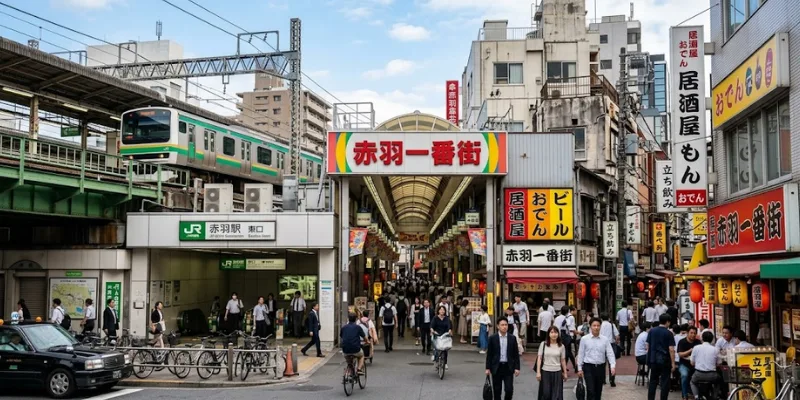
It may not suit you if you need JR access at your door, or if you are very sensitive to road noise. In that case, look at the Jujo side, or compare with a JR hub such as Akabane in our Akabane neighborhood guide.
Overall, this Itabashi-Honcho neighborhood guide points to one conclusion. For Mita Line commuters, it is one of the best-value stations in Tokyo’s 23 wards.
Frequently asked questions
Yes. Rent is affordable, the subway runs directly to central business areas, and daily shopping is easy. Itabashi-ku also has a large foreign-resident community and ward support services.
Itabashi-Honcho is generally safe, like most of Tokyo. The main concern is traffic around the Yamatocho intersection, not crime. Residential streets away from the main roads are calm.
A 1K within a 10-minute walk of the station averages about ¥99,500 a month, excluding management fees.
About 20 to 22 minutes on the Toei Mita Line, with no transfer.
Yes. Its single-person layout average is about ¥100,800, compared with about ¥108,400 at Itabashi-Kuyakushomae.
Look at the Shimizucho and Motohasunuma side for quieter streets and larger layouts. A 2DK can offer more space for less money than a new 1LDK.
Find your apartment in Itabashi-Honcho with Arealty
Ready to start your search? Browse Itabashi-ku apartments for rent to see current listings around Itabashi-Honcho, Itabashi-Kuyakushomae, and Motohasunuma. You can filter by station, layout, and initial costs such as no deposit.
Looking in other parts of Tokyo? Explore all apartments for rent or visit Arealty for English-language support from search to contract.

Real estate advisor at Arealty Japan, specialising in helping foreign residents navigate the Tokyo and Osaka rental markets. Lucy has guided hundreds of international renters — from Working Holiday visa holders to corporate relocations — through Japan’s apartment application process. Her writing draws on firsthand experience with landlord screening, guarantor companies, and foreigner-friendly listings across all 23 Tokyo wards and major Kansai cities.




Leave a Reply