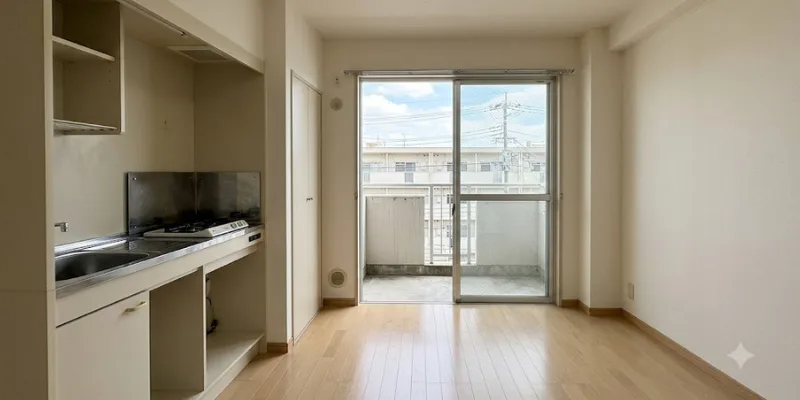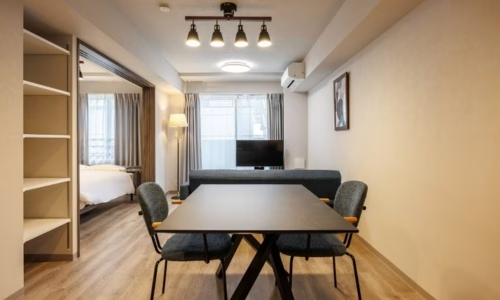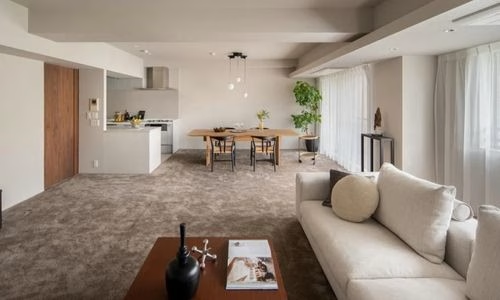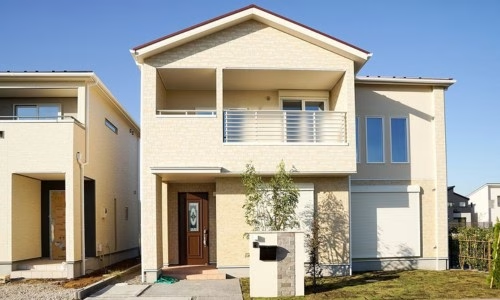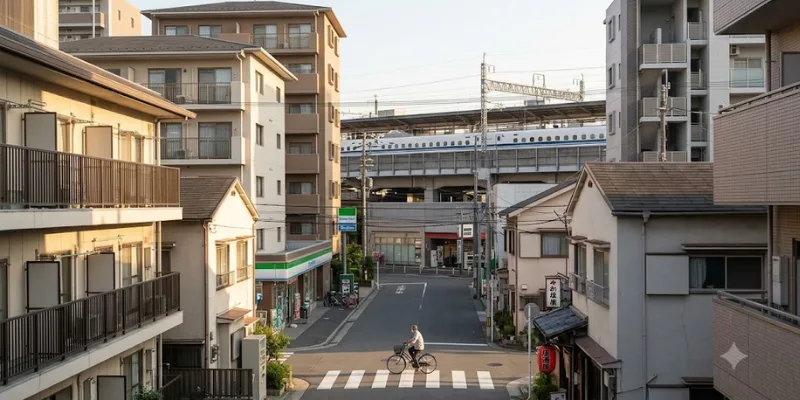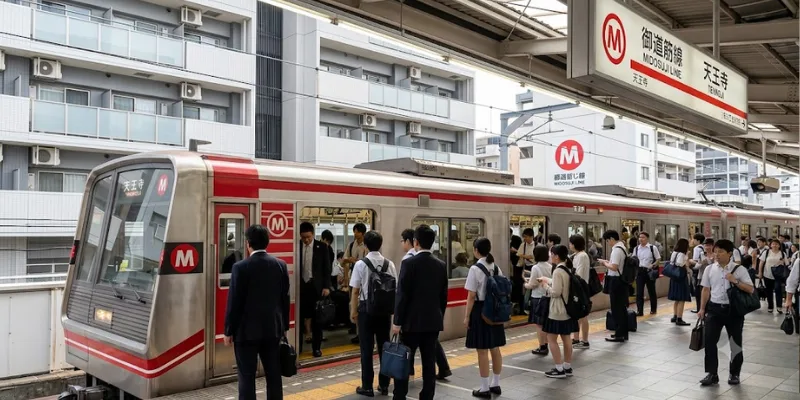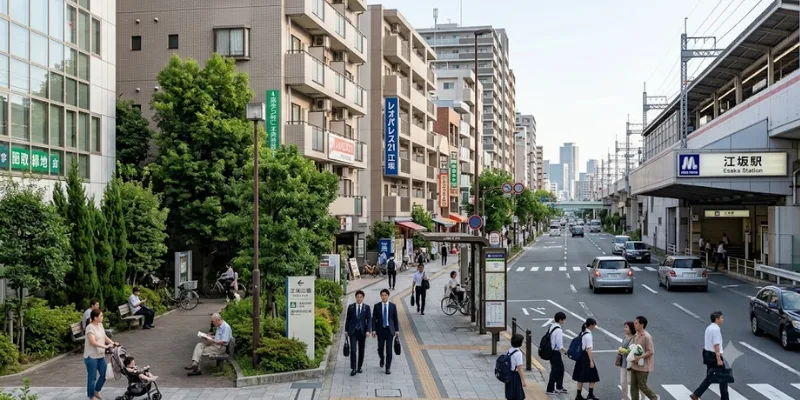

Living in Esaka means paying around ¥72,000 a month for a 1K and about ¥136,700 for a 2LDK, with Umeda roughly 12 minutes away on the Midosuji Line and no transfer. Esaka sits just outside Osaka City in Suita, so you get a calmer, more residential base while keeping a direct line into the center. It suits office workers in north Osaka, couples and families who want parks nearby, and anyone who wants Shin-Osaka within two stops.
Esaka is not the cheapest option in the north: one stop up, Ryokuchi-koen averages about ¥11,000 less for a 1K. This guide compares both, so you can decide which trade-off fits you.
| Key fact | Esaka (2026) |
|---|---|
| City | Suita City, Osaka Prefecture (outside Osaka City) |
| Station | Esaka, Osaka Metro Midosuji Line, with through trains on Kita-Osaka Kyuko |
| To Umeda | About 12 minutes, direct |
| To Shin-Osaka | About 5 minutes, direct |
| To Namba | About 20 minutes, direct |
| Average rent, 1K | ¥72,000 |
| Average rent, 2LDK | ¥136,700 |
| Big draw | Hattori Ryokuchi Park one stop north |
| Main caution | Kita-Osaka Kyuko fare if you travel north |
Rent figures are athome averages for listings near Esaka Station over the latest three months, checked 7 October 2026 (athome). Last updated: 7 October 2026.
Where Is Esaka, and What Is It Like?
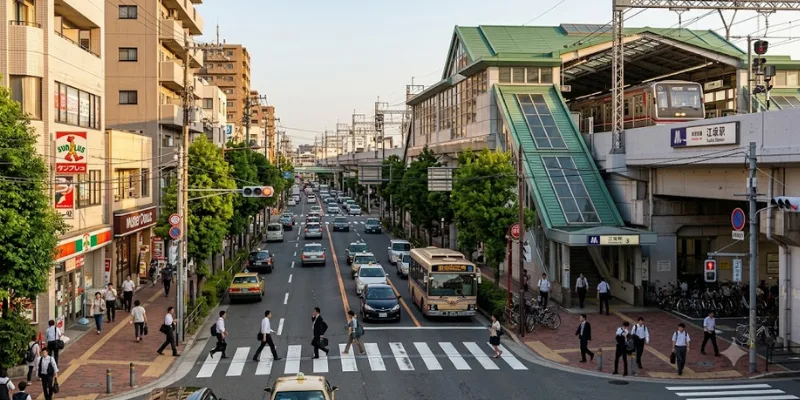
Esaka is a business and residential district in the south of Suita City, directly north of Osaka City’s Yodogawa and Higashiyodogawa wards. It grew quickly after 1970, when the Midosuji Line was extended here and the Kita-Osaka Kyuko line opened for Expo ’70. Today it mixes mid-size office buildings with a dense stock of rental apartments.
The area has a few distinct parts:
- Station area: offices, restaurants, cafes and many 1K and 1LDK rental buildings within a few minutes’ walk. Busy on weekday mornings and at lunch.
- Esaka Park and surrounding blocks: quieter residential streets with a neighborhood park near the station.
- East toward Hankyu Toyotsu Station: more residential, with access to the Hankyu Senri Line and Kansai University one stop further up that line.
- North toward Ryokuchi-koen (Toyonaka City): larger homes, family apartments and the huge Hattori Ryokuchi Park.
One point that matters for paperwork: Esaka is in Suita City, not Osaka City. You register your address, National Health Insurance and My Number with Suita City, not a ward office. Our address registration guide explains the steps.
Why people choose Esaka over central Osaka
Living in Esaka gives you a direct line to Umeda, Namba and Tennoji without central-city crowds. The pace is calmer after office hours, and you are close to some of the largest parks in northern Osaka.
How Much Is Rent in Esaka in 2026?
A 1K near Esaka Station averages about ¥72,000 a month, and a 2LDK about ¥136,700. That is close to Shin-Osaka for a 1K, but the bigger gap is with Umeda, where a 1K costs about ¥11,800 more.
| Layout | Esaka | Ryokuchi-koen | Toyotsu | Higashi-Mikuni |
|---|---|---|---|---|
| 1R (studio) | ¥72,600 | ¥61,600 | ¥70,800 | ¥72,500 |
| 1K | ¥72,000 | ¥60,900 | ¥71,700 | ¥72,100 |
| 1LDK | ¥93,500 | ¥81,000 | ¥91,900 | ¥97,700 |
| 2LDK | ¥136,700 | ¥114,000 | ¥133,000 | ¥133,600 |
| 3LDK | ¥160,300 | ¥135,600 | ¥151,500 | ¥177,300 |
Source: athome station averages for the latest three months, checked 7 October 2026 (Esaka, Ryokuchi-koen, Toyotsu, Higashi-Mikuni). Base rent only; management fees are usually extra.
What the table shows:
- Ryokuchi-koen is the value pick. One stop north on Kita-Osaka Kyuko, it averages about ¥11,000 less for a 1K and ¥22,700 less for a 2LDK. The catch is the extra Kita-Osaka Kyuko fare on every trip into the city.
- Esaka, Toyotsu and Higashi-Mikuni price almost the same for singles. A 1K sits around ¥72,000 at all three, so choose by line and street, not by rent.
- Esaka is good value for families compared with Higashi-Mikuni. A 3LDK costs about ¥17,000 less a month in Esaka.
For the full picture on upfront costs, see our move-in cost guide. For rent at every stop on the line, see our Midosuji Line apartments guide.
How Is the Commute from Esaka?
Esaka has one station, but it is a strong one: the Midosuji Line runs straight through Osaka’s four main hubs, and through trains continue north onto Kita-Osaka Kyuko without a change.
| From Esaka | Approx. time | Route |
|---|---|---|
| Shin-Osaka (Shinkansen) | 5 min | Midosuji Line, direct |
| Umeda | 12 min | Midosuji Line, direct |
| Hommachi | 16 min | Midosuji Line, direct |
| Namba | 20 min | Midosuji Line, direct |
| Tennoji | 27 min | Midosuji Line, direct |
| Senri-Chuo | 8 min | Kita-Osaka Kyuko, direct |
| Kansai Airport | About 60 min | Midosuji to Shin-Osaka, then Haruka |
Times are typical and vary by train and time of day.
The fare boundary at Esaka
Esaka is the last Osaka Metro station going north. Trains continue to Ryokuchi-koen, Senri-Chuo and Minoh-Kayano on Kita-Osaka Kyuko, a separate company with its own fare. If you live in Esaka and travel south into Osaka, you pay only the Metro fare. If you live one stop north in Ryokuchi-koen, every trip into the city adds a Kita-Osaka Kyuko fare on top. Check whether your employer’s commuting allowance covers both before you choose.
Easy access to the Shinkansen and Itami
With Shin-Osaka just two stops away, Esaka works well for people who travel for work. For domestic flights, Itami Airport is reachable via Senri-Chuo and the Osaka Monorail, or by airport bus from Shin-Osaka. See our Shin-Osaka neighborhood guide for more on the Shinkansen side.
Rush hour
Morning trains from Esaka fill up quickly, because many passengers board further north on Kita-Osaka Kyuko. Expect to stand during the weekday morning peak, but the ride to Umeda is short.
What Is Daily Life in Esaka Like?
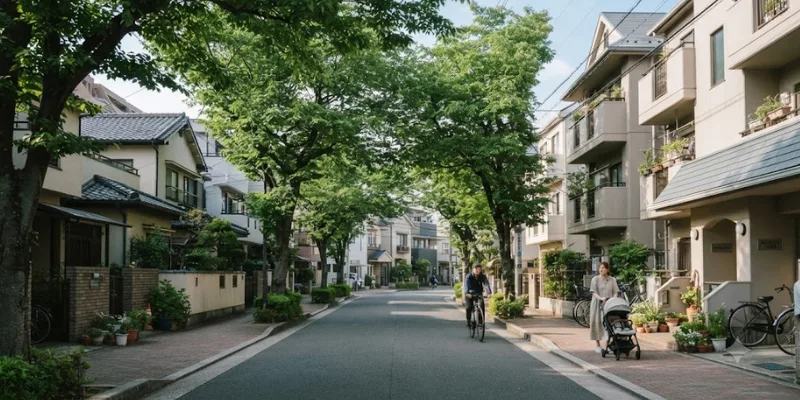
Daily life in Esaka is easygoing and practical. Most errands can be done on foot, and green space is never far away.
Food and errands. The station area is full of restaurants, cafes and lunch spots that serve the office crowd, plus supermarkets, drugstores and 100-yen shops for daily needs. Evenings are quieter than in central Osaka, which many residents see as a plus.
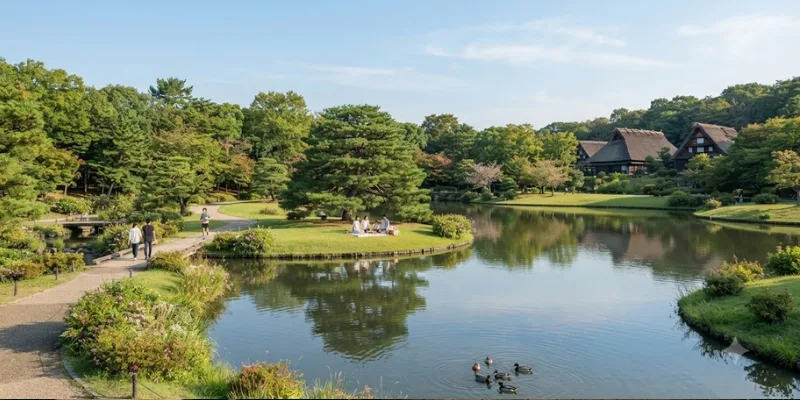
Parks. Hattori Ryokuchi Park, one stop north at Ryokuchi-koen, is one of the largest urban parks in Osaka Prefecture. It has open lawns, sports facilities and the Japan Open-Air Folk House Museum, where traditional farmhouses from around Japan are preserved. Closer to home, Esaka Park offers a smaller green space near the station.
Weekend trips. Expo ’70 Commemorative Park, home to Taro Okamoto’s Tower of the Sun, is in Suita too and reachable via Senri-Chuo and the Osaka Monorail. Senri-Chuo itself, three stops north, has large shopping centers.
Health care. Suita is home to major medical institutions, including Osaka University Hospital and the National Cerebral and Cardiovascular Center. Everyday clinics are spread around the Esaka station area.
City services. As a Suita City resident, you handle residence registration, insurance and garbage rules through Suita City. Garbage sorting rules differ from Osaka City’s, so ask for the local guide when you move in.
What Are the Downsides of Living in Esaka?
Living in Esaka has three main drawbacks: a single rail line, limited nightlife and rent that is not as low as some expect for a suburb.
One line does most of the work
Esaka relies on the Midosuji Line. When it is delayed, there is no quick backup except the Hankyu Senri Line from Toyotsu, a walk away. If your job is far from the Midosuji corridor, such as Kyoto or Kobe, you will usually change trains at Umeda or Shin-Osaka.
Quiet evenings
Esaka is lively at lunch but calmer at night. If you want bars and late dining on your doorstep, Umeda and Namba are better fits.
Suburban rent, city price
A 1K in Esaka costs about the same as in Higashi-Mikuni, which is inside Osaka City and closer to the center. You pay a small premium for Esaka’s office-district convenience. If rent matters most, look one stop north.
What Are the Best Alternatives to Esaka?
These three nearby stations give you a similar lifestyle with different trade-offs:
| Area | Average 1K | Line | Best for |
|---|---|---|---|
| Ryokuchi-koen (Toyonaka) | ¥60,900 | Kita-Osaka Kyuko | Lowest rent nearby and the big park, but an extra fare |
| Toyotsu (Suita) | ¥71,700 | Hankyu Senri Line | Hankyu access to Umeda and Kansai University |
| Higashi-Mikuni (Osaka City) | ¥72,100 | Midosuji Line | Inside Osaka City, one stop from Shin-Osaka |
Source: athome station averages, checked 7 October 2026.
Need a place while you search? Our Osaka short-term rental guide compares monthly mansions, including options in Esaka.
Who Is Living in Esaka Best For?
Living in Esaka works best for people who want a calm home base with a fast, direct ride into central Osaka.
| You are… | Is Esaka a good fit? | Why |
|---|---|---|
| Working in Esaka, Shin-Osaka or Umeda | Yes | 5 to 12 minutes direct, no transfer |
| A family wanting parks and space | Yes | Ryokuchi Park nearby; 3LDK cheaper than Higashi-Mikuni |
| A frequent business traveler | Yes | Shin-Osaka two stops away |
| A student at Kansai University | Maybe | Toyotsu or Kandaimae on the Hankyu Senri Line are closer |
| On the tightest budget | Maybe | Ryokuchi-koen saves about ¥11,000 a month on a 1K |
| Wanting nightlife on foot | Probably not | Esaka is quiet at night; Umeda or Namba suit you better |
How to pick the right building in Esaka
- Check the walk to Esaka Station. Many listings say “Esaka” but sit closer to Toyotsu or Ryokuchi-koen. Confirm which station you will actually use.
- Look at the street, not just the building. Units facing Shin-Midosuji, the main road through Esaka, can be noisy. Side streets are much quieter.
- Confirm the city. Some addresses near Esaka are in Toyonaka City or Osaka City, which changes your city office and garbage rules.
- Compare commuting costs. If you consider Ryokuchi-koen, add the Kita-Osaka Kyuko fare to your monthly budget.
- Ask about foreign tenants. Most listings accept a guarantor company instead of a Japanese guarantor. See our guide to renting without a guarantor.
Living in Esaka: FAQ
Yes, for people who want a calm, residential base with a direct Midosuji Line ride to Umeda in about 12 minutes. It has good everyday shops, big parks nearby and Shin-Osaka two stops away. Nightlife is limited.
About ¥72,000 a month on average near Esaka Station, based on athome data checked October 2026. One stop north, Ryokuchi-koen averages about ¥60,900.
No. Esaka is in Suita City, just north of Osaka City. You register your address with Suita City, and garbage rules follow Suita’s system.
About 12 minutes on the Midosuji Line, with no transfer. Namba is about 20 minutes and Shin-Osaka about 5.
Shin-Osaka is better if you take the Shinkansen often and want a lower 1K rent. Esaka is better if you prefer a calmer residential feel and easy access to parks.
Yes. Esaka is a quiet business and residential area with little late-night activity. As anywhere, choose a building on a well-lit street.
Yes, though acceptance depends on each landlord. Most listings that welcome foreign tenants use a guarantor company instead of a Japanese guarantor. An English-speaking agent like Arealty can confirm acceptance before you apply.
Find Your Apartment in Esaka with Arealty
Living in Esaka gives you a calm, green neighborhood with Umeda 12 minutes away and Shin-Osaka two stops up the line. The key is the right building: a short walk to Esaka Station, on a quiet side street, with a landlord who welcomes foreign tenants.
Arealty lists apartments across Suita City, including Esaka, with English support from viewing to contract.
About this guide
Written by Lucy Nguyen at Arealty. Rents are athome asking-rent averages over the last three months, checked on 7 October 2026. Travel times are typical and vary by train.
Sources
- athome rent by station: Esaka, Ryokuchi-koen, Toyotsu, Higashi-Mikuni
- athome: Midosuji Line rent by station

Real estate advisor at Arealty Japan, specialising in helping foreign residents navigate the Tokyo and Osaka rental markets. Lucy has guided hundreds of international renters — from Working Holiday visa holders to corporate relocations — through Japan’s apartment application process. Her writing draws on firsthand experience with landlord screening, guarantor companies, and foreigner-friendly listings across all 23 Tokyo wards and major Kansai cities.