
Quick answer: Midosuji Line apartments in 2026 average ¥59,400 to ¥106,300 a month across all layouts, depending on the station. A 1K ranges from about ¥47,100 at Nagai in the south to ¥83,800 at Umeda. The best value stops are Tennoji and Shin-Osaka, which pair big-hub access with 1K rents in the ¥60,000s.
| Your priority | Best station | Average 1K rent | Why |
|---|---|---|---|
| Lowest rent | Nagai | ¥47,100 | Lowest 1K among the stations we checked; direct ride to Tennoji and Namba |
| Budget, quiet suburb | Nakamozu (Sakai) | ¥51,000 | First train of the day starts here, so you can usually sit |
| Best value hub | Tennoji | ¥62,500 | JR, Kintetsu and Metro in one station |
| Shinkansen access | Shin-Osaka | ¥67,300 | Bullet trains plus a 1K under ¥70,000 |
| Northern suburb | Esaka (Suita) | ¥72,000 | Office district with a residential feel |
| Nightlife and shopping | Namba | ¥72,600 | Central Minami for under ¥75,000 |
| Top business address | Umeda | ¥83,800 | Osaka’s main office and transit hub |
Source: athome station rent averages, last 3 months of listings, checked 7 October 2026.
Midosuji Line key facts
| Fact | Detail |
|---|---|
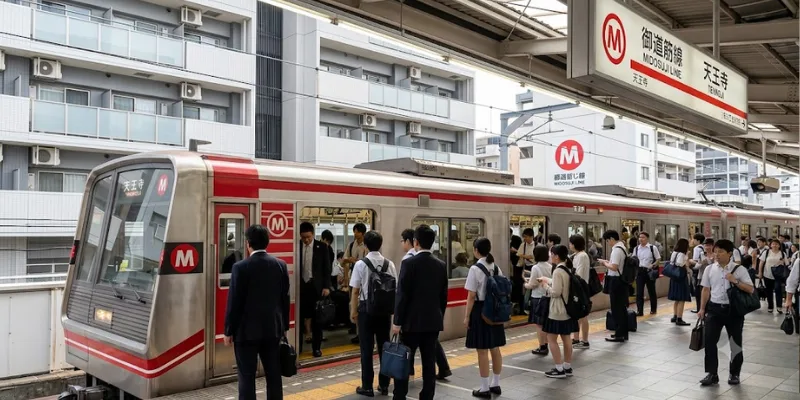
| Operator | Osaka Metro (Line M, colored red) |
| Route | Esaka (Suita) to Nakamozu (Sakai) |
| Stations | 20 on the Osaka Metro section |
| Through service | Kita-Osaka Kyuko to Senri-Chuo and Minoh-Kayano (separate fare) |
| Major hubs | Shin-Osaka, Umeda, Namba, Tennoji |
| Cheapest 1K checked | Nagai, about ¥47,100 |
| Priciest area | Umeda to Shinsaibashi, about ¥104,000 to ¥106,000 average |
Last updated: 7 October 2026. We refresh rent data every quarter.
Why Choose an Apartment on the Midosuji Line?
The Midosuji Line is Osaka’s north-south backbone: one Osaka Metro line with 20 stations from Esaka in Suita to Nakamozu in Sakai, running through every major hub on the way. Midosuji Line apartments give you one train, no transfer, to the places most people work, shop and travel from.
The four hubs it connects
- Shin-Osaka: Tokaido and Sanyo Shinkansen to Tokyo, Kyoto, Hiroshima and Fukuoka
- Umeda: JR Osaka Station, Hankyu and Hanshin lines, and the city’s largest office district
- Namba: Nankai trains to Kansai International Airport, plus Kintetsu toward Nara
- Tennoji: JR lines including the airport express, Kintetsu Abenobashi and Abeno Harukas
Travel times to keep in mind
Umeda to Namba takes under 10 minutes. From Showacho, just south of Tennoji, Umeda is about 19 minutes without a transfer. From Nakamozu at the southern end, Tennoji and Namba are roughly 25 minutes away.
Beyond Esaka: the Kita-Osaka Kyuko extension
North of Esaka, trains continue onto the Kita-Osaka Kyuko line to Senri-Chuo and, since March 2024, to Minoh-Kayano. It feels like one line, but Kita-Osaka Kyuko is a separate company with its own fare, so commuting from those stations costs a little more each day.
How Much Do Midosuji Line Apartments Cost at Each Station?
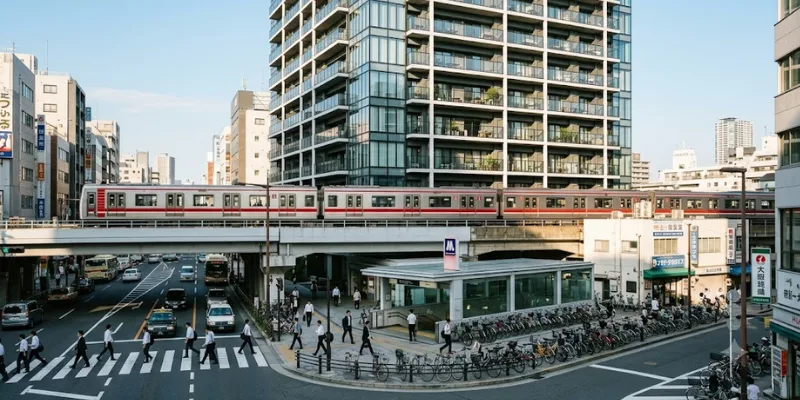
Rent peaks in the four central stations from Umeda to Shinsaibashi, all above ¥104,000 on average, then drops fast in both directions. Namba, just one stop past Shinsaibashi, averages about ¥23,000 less, and the southern stops beyond Tennoji are the cheapest on the line.
| Station (north to south) | Ward or city | Average rent, all layouts | Average 1K |
|---|---|---|---|
| Esaka | Suita City | ¥82,000 | ¥72,000 |
| Higashi-Mikuni | Yodogawa | ¥80,900 | |
| Shin-Osaka | Yodogawa | ¥75,300 | ¥67,300 |
| Nishinakajima-Minamigata | Yodogawa | ¥74,600 | |
| Nakatsu | Kita | ¥94,700 | |
| Umeda | Kita | ¥105,600 | ¥83,800 |
| Yodoyabashi | Chuo | ¥106,200 | |
| Hommachi | Chuo | ¥104,700 | |
| Shinsaibashi | Chuo | ¥106,300 | |
| Namba | Chuo / Naniwa | ¥83,200 | ¥72,600 |
| Daikokucho | Naniwa | ¥76,600 | |
| Dobutsuen-mae | Nishinari | ¥66,000 | |
| Tennoji | Tennoji / Abeno | ¥72,000 | ¥62,500 |
| Showacho | Abeno | ¥76,000 | |
| Nishitanabe | Abeno | ¥78,100 | |
| Nagai | Sumiyoshi | ¥61,400 | ¥47,100 |
| Abiko | Sumiyoshi | ¥59,400 | |
| Kitahanada | Sakai (Kita) | ¥77,500 | |
| Shin-Kanaoka | Sakai (Kita) | ¥76,100 | |
| Nakamozu | Sakai (Kita) | ¥72,000 | ¥51,000 |
Source: athome Midosuji Line rent averages and individual station pages, last 3 months of listings, checked 7 October 2026. “All layouts” mixes studios with family units, so suburban stations with many larger homes can look pricier than they feel for a single renter.
What the numbers mean for you
- Single renters: the 1K column is the one to watch. A Tennoji 1K costs about ¥21,000 a month less than one at Umeda, for a ride of roughly 15 minutes.
- Couples and families: a 2LDK averages about ¥99,100 at Nagai and ¥94,900 at Nakamozu, versus ¥164,100 at Namba.
- Rents are rising. Asking rent near Higashi-Mikuni rose about 24% in three years, according to estie, driven by demand from Shin-Osaka commuters.
For citywide averages by ward, see our Osaka apartment for rent guide.
What Is Each Section of the Midosuji Line Like?
The line splits into three zones with very different characters: a northern business and commuter belt, a high-rent central core, and a residential south. Knowing the zone tells you more than the station name alone.
North: Esaka to Nishinakajima-Minamigata
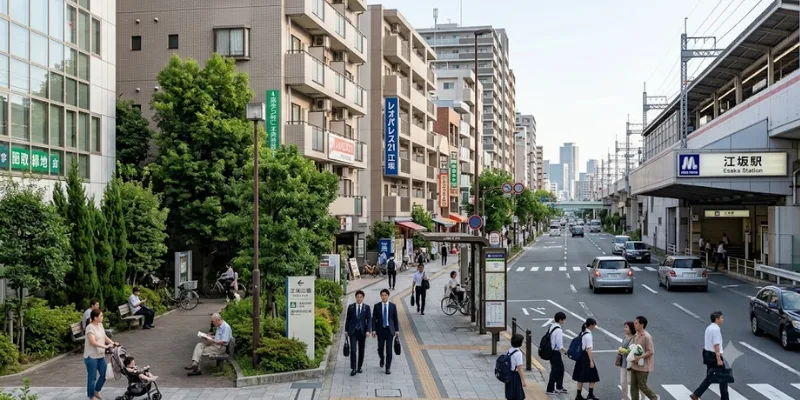
- Esaka: an office district in Suita City with Esaka Park nearby and many mid-rise rental buildings. Popular with people working in northern Osaka.
- Higashi-Mikuni: a quiet residential stop one station from Shin-Osaka, with a large stock of 1K units for commuters.
- Shin-Osaka: the Shinkansen station for Tokyo, Kyoto, Hiroshima and Fukuoka. Hotels and offices around the station, residential streets a few minutes’ walk away.
- Nishinakajima-Minamigata: links to Hankyu’s Minamikata Station and sits just north of the Yodo River. Rents are among the lowest north of Umeda.
Center: Nakatsu to Namba
- Nakatsu: a calm pocket right next to Umeda, with older streets and newer towers side by side.
- Umeda: Osaka’s main business and shopping hub, home to JR Osaka Station and the new Grand Green Osaka development. See our Umeda neighborhood guide.
- Yodoyabashi and Hommachi: the financial and office core around Nakanoshima and Midosuji Boulevard. Few cheap units, mostly newer buildings.
- Shinsaibashi: a famous shopping street area with the highest average rent on the line.
- Namba: the heart of Minami, with Dotonbori, Nankai trains to Kansai Airport and Kintetsu trains to Nara.
South: Daikokucho to Nakamozu
- Daikokucho: one stop past Namba and changing fast, with new residential towers built since 2023.
- Dobutsuen-mae: next to Shinsekai, Tsutenkaku Tower and Tennoji Zoo. Very low rents, but often older buildings.
- Tennoji: a major hub beside Abeno Harukas, one of Japan’s tallest buildings, with JR, Kintetsu and Metro lines.
- Showacho and Nishitanabe: quiet residential neighborhoods in Abeno Ward, popular with families.
- Nagai and Abiko: home to Nagai Park and its stadiums. Some of the cheapest 1K rents on the line.
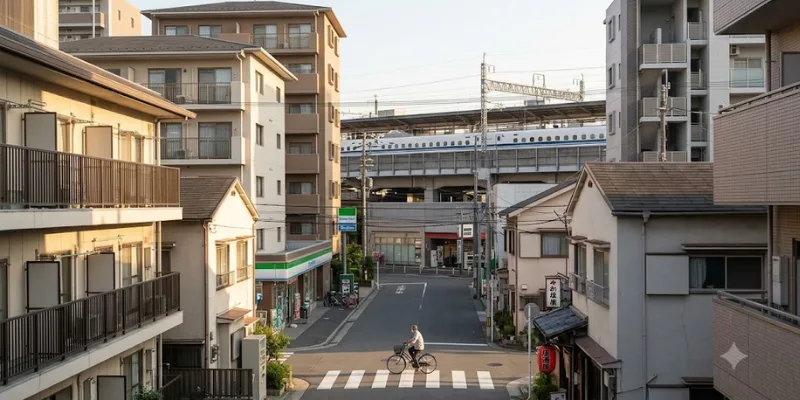
- Kitahanada, Shin-Kanaoka and Nakamozu: the Sakai City end, with a large shopping mall at Kitahanada and Osaka Metropolitan University’s Nakamozu campus near the terminus. The UNESCO-listed Mozu kofun burial mounds are nearby.
Which Midosuji Line Station Is Best for You?
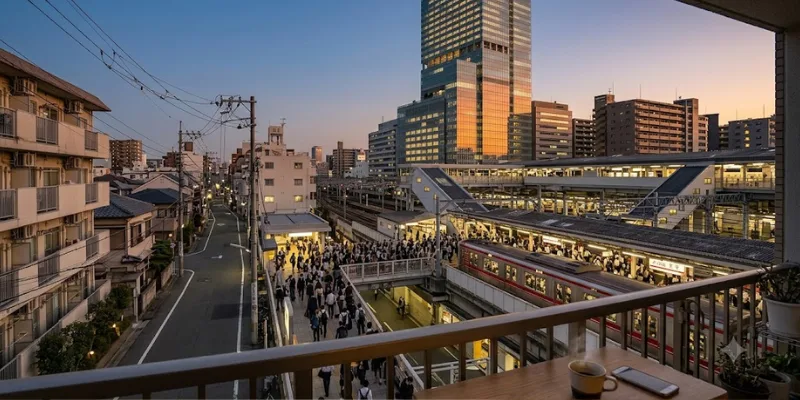
The right stop depends on where you go every day and what you can spend. These picks balance rent against the trip you will make most often.
Office workers in Umeda or Hommachi: Shin-Osaka or Higashi-Mikuni
Shin-Osaka sits a few stops north of Umeda and averages ¥67,300 for a 1K, about ¥16,500 less than Umeda itself. It also puts the Shinkansen at your door for business trips. Higashi-Mikuni, one stop further, is quieter and more residential.
Budget renters and students: Nagai, Abiko or Nakamozu
The southern end has the lowest rents on the line, with 1K averages of ¥47,100 at Nagai and ¥51,000 at Nakamozu. Nakamozu is the line’s southern terminus, so morning trains start empty. Compare these with our list of cheap Osaka apartments under ¥70,000.
Families: Nishitanabe, Showacho or Kitahanada
These stops are residential, with 2LDK and 3LDK homes that cost far less than in the center. Showacho and Nishitanabe are a short ride from Tennoji’s shopping and hospitals, while Kitahanada has a large shopping mall next to the station.
First year in Osaka: Tennoji or Namba
If you are new to Japan, being on a hub makes life easier. Tennoji gives you JR, Kintetsu and Metro at a 1K average of ¥62,500. Namba costs more but puts food, shopping and the airport train within walking distance. Read our full Tennoji guide and Namba guide.
City-center lifestyle: Umeda or Nakatsu
Umeda is the most connected address in Osaka, at ¥83,800 for a 1K. Nakatsu, one stop north, is calmer and slightly cheaper overall. Our Umeda neighborhood guide covers the area street by street.
Northern suburbs: Esaka
Esaka is a busy office and residential district in Suita, with a 1K at about ¥72,000. It suits people working in northern Osaka or studying in Suita, and you can browse Suita listings here.
How Do You Choose Between Midosuji Line Apartments?
Use these six checks to compare two apartments on the line fairly. They take ten minutes and prevent the most common regrets.
- Start from your daily destination. Count the stops to your office or school and aim for 30 minutes or less door to door. A cheaper station that adds a transfer often costs more in time than it saves in rent.
- Set a rent ceiling. Landlords and guarantor companies in Japan often expect monthly rent to be no more than about one-third of your monthly income. Work back from that figure before you shortlist.
- Read walking times correctly. Japanese listings count one minute of walking as 80 meters, measured on flat ground with no traffic lights. Add a few minutes for real life.
- Check the building age. Buildings approved after June 1981 follow Japan’s newer earthquake standard (shin-taishin). Very cheap units near some southern stations are often older than that.
- Watch the fare boundary. Stations north of Esaka are on Kita-Osaka Kyuko and add a second base fare, which matters if your employer caps commuting allowance.
- Visit at rush hour. Ride the line between 8 and 9 a.m. once before you sign. It shows you how crowded your real commute will be.
If you are not sure whether a listing accepts foreign tenants, our guide to foreign-friendly apartments in Osaka explains the labels to look for.
What Are the Downsides of Midosuji Line Apartments?
The convenience comes with trade-offs. Knowing them helps you pick the right station, not just the cheapest one.
- Rush-hour crowding. This is Osaka’s busiest subway line. Trains between Shin-Osaka and Tennoji are packed on weekday mornings, so living at a terminus like Nakamozu, where you can board an empty train, is a real advantage.
- A fare jump north of Esaka. Stations past Esaka belong to Kita-Osaka Kyuko, a separate company. Living there adds a second base fare to every trip, unless your employer covers the full commute.
- Noise and crowds near the big hubs. Apartments right next to Umeda, Namba or Tennoji stations hear late-night traffic and tourist foot traffic. A 5 to 10 minute walk away is usually quieter and often cheaper.
- Old buildings at low prices. Very low rents near Dobutsuen-mae and some southern stops often mean older buildings. Check the construction year and earthquake standard before you apply.
- Busy moving season. From February to April, the best-value stations go quickly. If your move date is flexible, autumn usually has more choice.
Need a place while you search? Our Osaka short-term rental guide compares monthly mansions and share houses.
Frequently Asked Questions
Average asking rent runs from about ¥59,400 at Abiko to ¥106,300 at Shinsaibashi across all layouts. For a 1K, expect about ¥47,100 at Nagai, ¥62,500 at Tennoji and ¥83,800 at Umeda.
Abiko has the lowest average across all layouts. For single renters, Nagai had the lowest 1K average among the stations we checked, at about ¥47,100.
Tennoji and Shin-Osaka are good first choices. Both are major hubs with 1K rents in the ¥60,000s, so you get easy transport without central prices.
Under 10 minutes on the Midosuji Line, with no transfer.
Yes. Shin-Osaka is three stops north of Umeda and connects to the Tokaido and Sanyo Shinkansen.
South, in general. Stations beyond Tennoji, such as Nagai, Abiko and Nakamozu, have the lowest rents. North of Umeda, Shin-Osaka and Nishinakajima-Minamigata offer good value too.
Yes, though not every landlord accepts foreign tenants. Look for listings marked foreigner OK, and expect to use a guarantor company. An English-speaking agent like Arealty can confirm acceptance before you apply.
Nakamozu suits students at Osaka Metropolitan University’s Nakamozu campus, with a 1K around ¥51,000. Nagai and Abiko are also good budget options with a direct ride to Tennoji and Namba.
Find Midosuji Line Apartments with Arealty
Arealty lists apartments along the Midosuji Line from Esaka to Nakamozu, with English support from your first enquiry to move-in. Tell us your station, budget and move date, and our bilingual team will send matching options.
About this guide
Written by Lucy Nguyen at Arealty. Rents are asking-rent averages from athome listings over the last 3 months, checked on 7 October 2026. Actual contract rents vary by building age, size and walking distance.
Sources
- athome: Midosuji Line rent by station
- athome station pages: Esaka, Shin-Osaka, Namba, Tennoji, Nagai, Nakamozu
- estie: Higashi-Mikuni rent growth
- Showacho to Umeda travel time (share house listing)
- DIME: Nakamozu travel time and rent ranking

Real estate advisor at Arealty Japan, specialising in helping foreign residents navigate the Tokyo and Osaka rental markets. Lucy has guided hundreds of international renters — from Working Holiday visa holders to corporate relocations — through Japan’s apartment application process. Her writing draws on firsthand experience with landlord screening, guarantor companies, and foreigner-friendly listings across all 23 Tokyo wards and major Kansai cities.