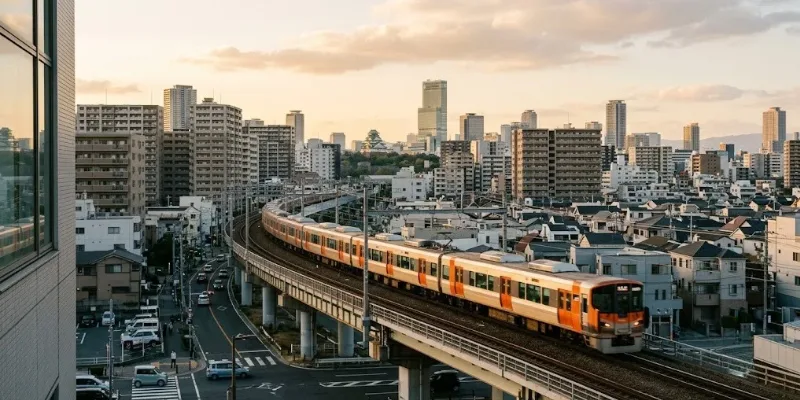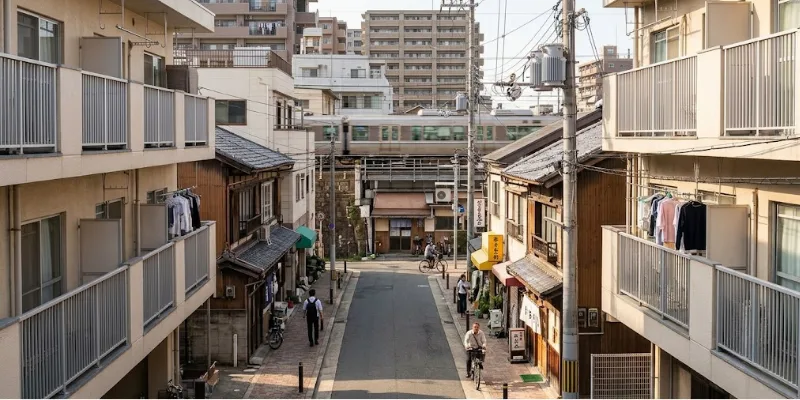

The average rent in Osaka is about ¥75,700 per month for a single-person unit in Osaka City, based on October 2025 listings. A 1K studio ranges from ¥56,000 to ¥75,500 depending on the ward, and a 1LDK from ¥85,000 to ¥134,000. Single units in the six central wards average ¥89,173, while family units across the city average ¥141,372.
Those figures are rising quickly. Single-person rent in Osaka City climbed 12.4% year on year to October 2025 (LIFULL HOME’S), and some stations have jumped more than 20% in a single year. This guide breaks down the numbers by ward, layout and station, compares Osaka with Tokyo, and shows how much income you need to cover a typical lease.
What Is the Average Rent in Osaka in 2026?
The average rent in Osaka City is ¥75,681 a month for a single-person unit and ¥141,372 for a family unit, according to LIFULL HOME’S data for October 2025. The table below summarizes the key figures.
| Measure | Average rent | Period |
|---|---|---|
| Single-person unit (1R to 2K), Osaka City | ¥75,681 / month | Oct 2025 |
| Single-person unit, central 6 wards | ¥89,173 / month | Oct 2025 |
| Family unit (2DK and up), Osaka City | ¥141,372 / month | Oct 2025 |
| Family unit, central 6 wards | ¥207,172 / month | Oct 2025 |
| Single-person unit, Osaka Prefecture outside the city | ¥57,104 / month | Oct 2025 |
| 1K studio, cheapest to most expensive ward | ¥56,000 to ¥75,500 / month | Jun 2026 |
| 1LDK, cheapest to most expensive ward | ¥85,000 to ¥134,000 / month | Sep 2026 |
| Year-on-year change, single units in Osaka City | +12.4% | Oct 2025 |
The six central wards are Kita, Chuo, Nishi, Fukushima, Tennoji and Naniwa. The premium for living centrally is modest for singles, about ¥13,500 a month above the city average. For families it is far larger: the central family average is roughly ¥66,000 above the city-wide figure.
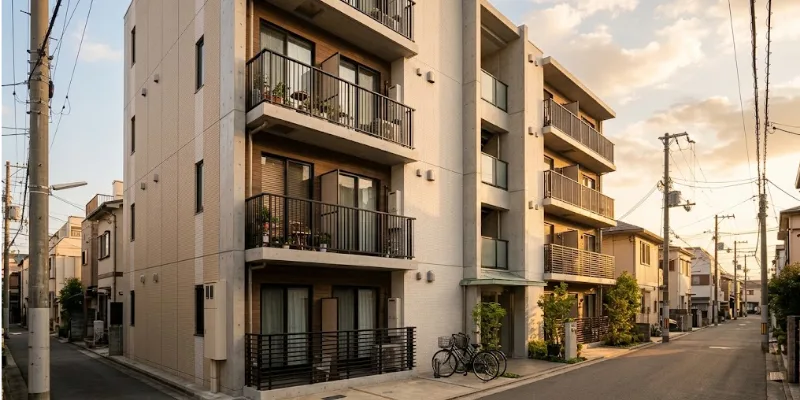
Which Osaka Ward Has the Highest and Lowest Rent?
Minato-ku has the highest 1K average at ¥75,500, and Sumiyoshi-ku the lowest at ¥56,000. For a 1LDK, Tennoji-ku is the most expensive at ¥134,000 and Ikuno-ku the cheapest at ¥85,000. That is a spread of about ¥19,500 for a 1K and almost ¥50,000 for a 1LDK. Figures are market averages from CHINTAI listings (1K, June 2026; 1LDK, September 2026).
| Ward | 1K average | 1LDK average | Price position |
|---|---|---|---|
| Minato-ku | ¥75,500 | ¥123,000 | Top of the 1K range, driven by bay-area demand |
| Fukushima-ku | ¥74,000 | ¥125,000 | Priced like Umeda’s neighbor, which it is |
| Nishi-ku | ¥74,000 | ¥116,000 | Central location, slightly cheaper 1LDKs |
| Tennoji-ku | ¥72,000 | ¥134,000 | Highest 1LDK average, strong family demand |
| Naniwa-ku | ¥71,500 | ¥125,000 | Namba premium on larger units |
| Higashinari-ku | ¥71,200 | ¥96,400 | 1K rents catching up fast with the center |
| Miyakojima-ku | ¥69,700 | ¥110,500 | Mid-range, Kyobashi access |
| Higashiyodogawa-ku | ¥69,500 | ¥89,000 | Cheap 1LDKs near Shin-Osaka |
| Joto-ku | ¥67,000 | ¥107,000 | Below average for both layouts |
| Abeno-ku | ¥66,000 | ¥91,500 | About ¥6,000 cheaper than Tennoji for a 1K |
| Ikuno-ku | ¥58,500 | ¥85,000 | Lowest 1LDK average in the table |
| Sumiyoshi-ku | ¥56,000 | Not listed | Lowest 1K average in the table |
Kita and Chuo are left out because new towers make their averages swing widely from month to month. Budget for the upper end there; newer 1K units near Umeda often exceed ¥80,000. For what each area is like to live in, see our guides to Kita, Namba and Tennoji, or the overview of Osaka’s 24 wards.
How Does Rent in Osaka Change by Layout?
Layout affects your monthly cost more than the ward does. Moving from a 1K to a 1LDK in the same ward adds ¥19,500 to ¥62,000 a month. By comparison, the full spread in 1K rent across all wards in our table is ¥19,500.
| Layout | Typical size | Rent range in Osaka City | Best for |
|---|---|---|---|
| 1R / 1K | 20 to 25 m² | ¥56,000 to ¥75,500 | Singles, students, first year in Japan |
| 1LDK | 30 to 45 m² | ¥85,000 to ¥134,000 | Couples, remote workers needing a separate room |
| 2DK and larger | 40 m² and up | ¥141,372 city average | Families |
The jump from 1K to 1LDK is smallest in the outer wards. In Higashiyodogawa, a 1LDK costs about ¥19,500 more than a 1K. In Tennoji, the gap is ¥62,000. If you need extra space, the outer wards give you far more for each extra yen. For a full breakdown of what each layout code means, read our guide to 1R, 1K, 1DK and 1LDK apartments in Japan.
Is Rent in Osaka Cheaper Than Tokyo?
Yes, by a wide margin. The average rent in Osaka City is a little over half of the Tokyo 23-ward figure. Single-person units in Tokyo listed at ¥135,764 in August 2026, against ¥75,681 for Osaka City (LIFULL HOME’S, August 2026). The two figures come from different months, but the gap is far larger than the time difference could explain.
| Unit type | Osaka City | Tokyo 23 wards | Osaka as % of Tokyo |
|---|---|---|---|
| Single (1R to 2K) | ¥75,681 (Oct 2025) | ¥135,764 (Aug 2026) | 56% |
| Family (2DK and up) | ¥141,372 (Oct 2025) | ¥263,148 (Aug 2026) | 54% |
In practice, the budget for a Tokyo 1K will often cover a 1LDK in Fukushima or Nishi. That makes Osaka attractive for remote workers and couples who want a separate bedroom without a Tokyo salary.
Where Is Rent in Osaka Rising Fastest?
Midoribashi in Higashinari-ku had the fastest rent rise in Osaka, up 27.4% in one year, followed by Abiko (+21.8%) and Tamatsukuri (+18.3%). A Daito Kentaku study compared single-person rents in 2025 and 2026 on a standard 25 m² basis (Kenbiya, August 2026).
| Rank | Station (ward) | One-year rise | Lines |
|---|---|---|---|
| 1 | Midoribashi (Higashinari) | +27.4%, about +¥17,000 | Chuo, Imazatosuji |
| 2 | Abiko (Sumiyoshi) | +21.8%, about +¥11,000 | Midosuji |
| 3 | Tamatsukuri (Tennoji) | +18.3%, about +¥12,400 | JR Loop, Nagahori Tsurumi-ryokuchi |
Stations in Joto and Higashinari took four of the top ten spots. The pattern is clear: renters priced out of Kita and Chuo are moving one or two stops east, and landlords there are raising prices to match. Stations close to Namba, such as Daikokucho and Imamiya, already sit in the high ¥80,000 range for a 25 m² unit.
This is why the ward table above should be read as a floor, not a ceiling, for 2026. If you are budgeting for a move next spring, build in a buffer above the ward averages, especially for stations on the Chuo and Midosuji lines.
Does Your Train Line Change the Rent?
Yes. Apartments on the Midosuji Line, which runs through Shin-Osaka, Umeda, Namba and Tennoji, carry a clear premium over similar units elsewhere. The Tanimachi Line, which serves the eastern wards, often gives similar travel times to the center for less rent. The JR Osaka Loop Line sits in between and adds direct access to Kyoto, Kobe and Nara.
For station-by-station figures, see our guide to Osaka Loop Line apartments and rent at all 19 stations.
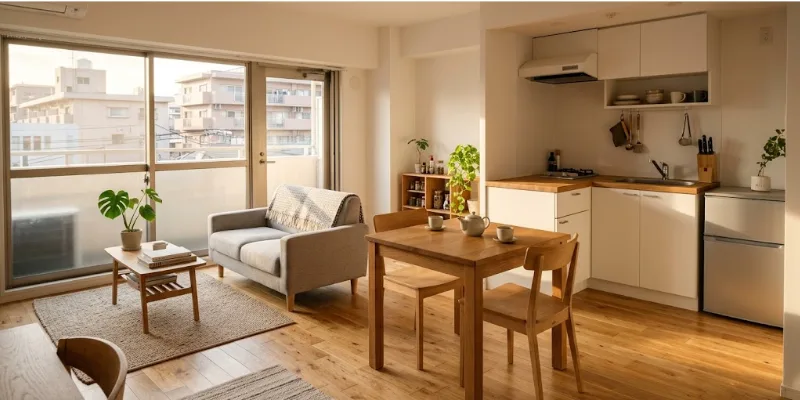
How Much Income Do You Need for the Average Rent in Osaka?
You need a take-home pay of about ¥227,000 a month to cover the average rent in Osaka City for a single unit. That figure comes from the one-third rule: most screening companies expect rent to be no more than one third of your monthly take-home pay.
| Rent level | Monthly rent | Minimum take-home pay |
|---|---|---|
| Cheapest 1K ward (Sumiyoshi) | ¥56,000 | About ¥168,000 |
| Osaka City single-unit average | ¥75,681 | About ¥227,000 |
| Central 6 wards single-unit average | ¥89,173 | About ¥267,500 |
| Osaka City family-unit average | ¥141,372 | About ¥424,000 |
Students and new arrivals without Japanese income can still pass screening with savings, a certificate of enrollment or a company guarantee, but expect more questions. For a view of what typical salaries look like, see average salary in Japan in 2026.
What Does Renting in Osaka Cost Upfront?
Renting in Osaka costs about 4 to 6 months of rent upfront. On a ¥70,000 1K, that means roughly ¥280,000 to ¥420,000 before you get the keys.
| Cost | Typical amount | Notes |
|---|---|---|
| Deposit (shikikin or hoshokin) | 0 to 2 months | Kansai contracts may use shikibiki, a portion kept at move-out |
| Key money (reikin) | 0 to 1 month | Many Osaka listings now set this to zero |
| Agency fee | 0.5 to 1 month + tax | |
| Guarantor company | 50% to 100% of 1 month | Needed when you have no Japanese guarantor |
| First month + prorated rent | 1 to 2 months | |
| Fire insurance | ¥15,000 to ¥20,000 for 2 years | |
| Lock change | ¥15,000 to ¥25,000 |
Shikibiki is the detail that most often surprises renters arriving from Tokyo. Ask for the deducted amount in writing before you sign. Our deposit and key money guide explains each term, and apartment move-in cost in Japan shows a full worked example. If you have no Japanese guarantor, read renting with no guarantor and what foreign-friendly means in Osaka.
How Can You Pay Less Than the Average Rent in Osaka?
You can pay less by searching outside spring, choosing outer wards and checking the full contract. These five habits can bring your real cost well below the averages.
- Search outside February and March. Spring is peak moving season. Rents are firmer, good units go within days and landlords rarely negotiate. Summer and autumn give you more choice.
- Look one stop past the hot list. Midoribashi and Tamatsukuri have already jumped. Nearby stations that have not yet appeared in rent-rise rankings still offer older pricing.
- Compare the full contract, not the headline rent. Zero key money listings often add a short-term cancellation fee (tanki kaiyaku iyakukin) of one or two months’ rent if you leave within the first year.
- Use the outer wards for space. Ikuno, Sumiyoshi, Asahi and Joto keep 1K rent under ¥70,000 with direct Metro access to the center. Our cheap Osaka apartments under ¥70,000 guide lists the best stations.
- Start furnished if you are staying under a year. Furnished monthly units cost more per month but skip the deposit, key money and furniture. Read why a furnished apartment in Osaka can be the smarter first step.
Also budget ¥50,000 to ¥100,000 for setup in your first month: gas activation, internet and basic furniture. See our guide to setting up utilities in a Japanese apartment.
FAQ
About ¥75,700 for a single-person unit in Osaka City and ¥141,400 for a family unit, based on October 2025 listings. A 1K studio ranges from ¥56,000 to ¥75,500 by ward.
Sumiyoshi and Ikuno have the lowest 1K averages, at around ¥56,000 and ¥58,500. Ikuno also has the cheapest 1LDK average in our table, at about ¥85,000.
Single units in the six central wards average ¥89,173, about ¥13,500 above the city average. For family units the central premium is around ¥66,000 a month.
Yes. Single-person rent in Osaka City rose 12.4% year on year to October 2025, and stations such as Midoribashi rose more than 25% in one year.
Using the one-third rule, the city’s average single-unit rent requires a take-home pay of roughly ¥227,000 a month.
A 1LDK in Osaka City averages ¥85,000 to ¥134,000 a month depending on the ward. Ikuno-ku is the cheapest and Tennoji-ku the most expensive.
Expect 4 to 6 months of rent upfront, covering deposit, key money, agency fee, guarantor company, first month’s rent and insurance. Many Osaka listings now charge zero key money.
Shikibiki is a fixed part of the deposit that the landlord keeps at move-out, common in Kansai contracts. Ask for the exact amount in writing before you sign.
Ready to Compare Real Listings?
Averages tell you what to expect; live listings tell you what is available this week. Browse Osaka apartments for rent on Arealty and filter by ward, station or budget, with English support from inquiry to contract. Prefer to talk first? Contact our team.
Sources
- LIFULL HOME’S Market Report, October 2025 (Osaka rent trends)
- LIFULL HOME’S Market Report, August 2026 (Tokyo rent trends)
- Kenbiya: Osaka stations with the fastest-rising single-person rents, 2026
- CHINTAI: Osaka City 1K rent by ward
- CHINTAI: Osaka 1LDK rent by ward