
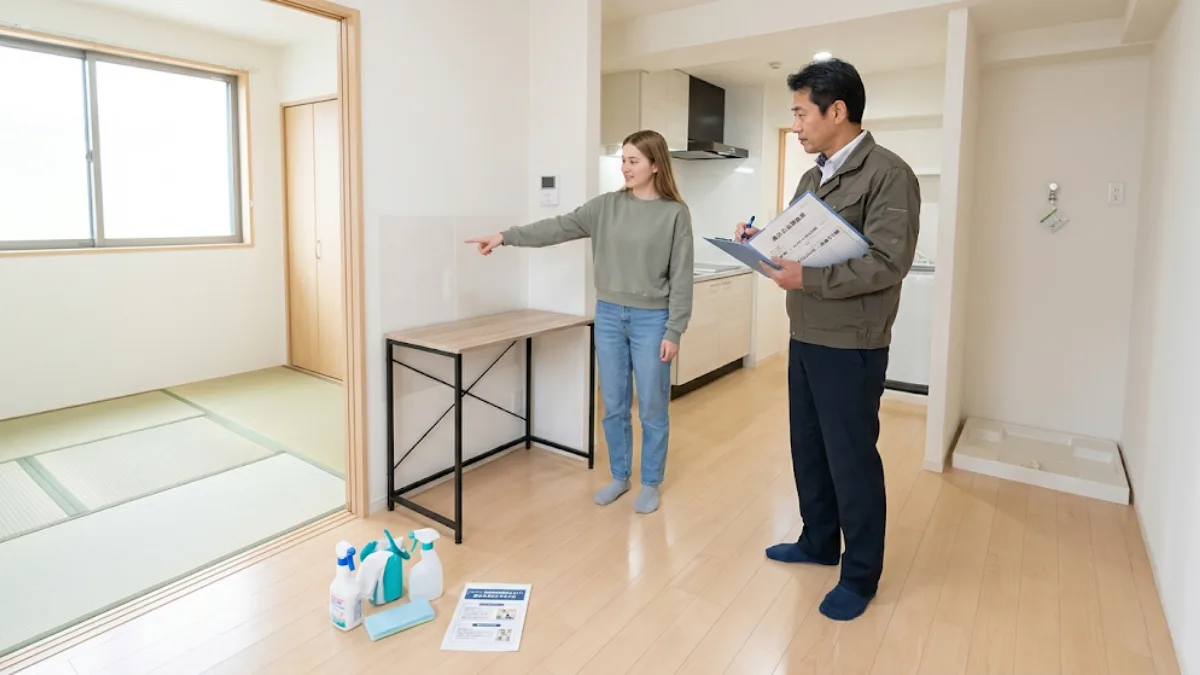

Navigating the rental landscape in Japan requires more than just finding the perfect home; it demands a rigorous understanding of the Apartment Move-out Inspection process. For foreign tenants, this final walkthrough is often the most stressful part of their stay. Misunderstandings regarding “wear and tear” versus “damage” can lead to significant financial losses and the forfeiture of your security deposit (shikikin).
This guide provides professional, deep-dive insights into managing move-out procedures effectively for those living in apartments in Japan, specifically focusing on the high-standard Tokyo market.
The Legal Framework: What is “Genjo Kaifuku”?
The Apartment Move-out Inspection is not merely a courtesy visit; it is a formal assessment to determine the financial responsibility for property restoration. In Japan, this is governed by the principle of “Restoration to Original Condition” (Genjo Kaifuku).
Understanding the MLIT Guidelines
To prevent unfair treatment of tenants, the Ministry of Land, Infrastructure, Transport and Tourism (MLIT) established a set of standardized guidelines. These guidelines create a clear distinction between:
- Natural Wear and Tear: Deterioration caused by daily life (e.g., fading of wallpaper from sunlight).
- Tenant-Responsible Damage: Damage resulting from negligence, abuse, or lack of proper maintenance (e.g., cigarette burns, pet scratches, or deep gouges in flooring).
When you prepare to vacate apartments in Tokyo, Japan, understanding these rules is your first line of defense against excessive restoration claims.
Common Areas of Concern & Detailed Restoration Costs
To avoid “bill shock” during your inspection, you must identify high-risk areas. Below is a breakdown of the most common issues and the estimated restoration costs you might encounter in the Japanese market.
Surface Flooring and Flooring Damage
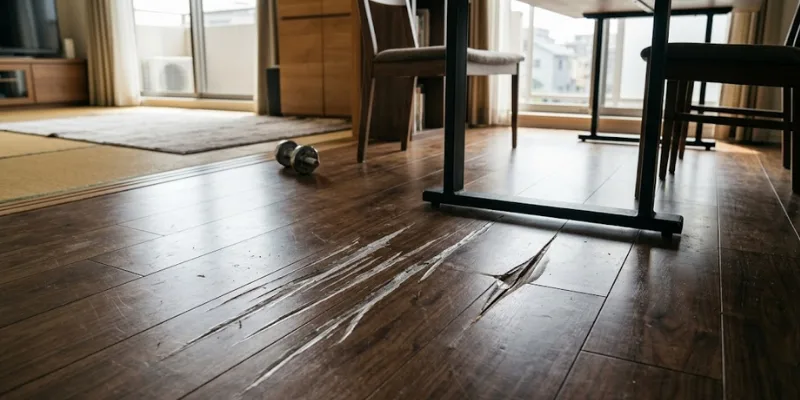
Wooden floors in Japanese apartments are sensitive. While the landlord is responsible for color fading due to UV rays, the tenant is liable for physical impact damage.
- Issues: Deep scratches or gouges caused by dragging heavy, unprotected furniture (dining tables, bookcases, heavy sofas) or dropping heavy objects.
- Estimated Costs:
- Partial Repair: Professional wood filling and color matching typically start at ¥15,000 per visit.
- Plank Replacement: If the floor is genuine wood, replacing a single damaged plank can cost ¥8,000 – ¥15,000.
- Cushion Floor (CF) Replacement: For vinyl-based flooring, costs are roughly ¥2,500 – ¥4,500 per m². However, landlords often charge for the entire section of the room to maintain visual consistency.
Wall and Ceiling Issues (Wallpaper/Cloth)
Wallpaper is the most frequent source of disputes. While standard color changes over 5–10 years are expected, structural damage is not.
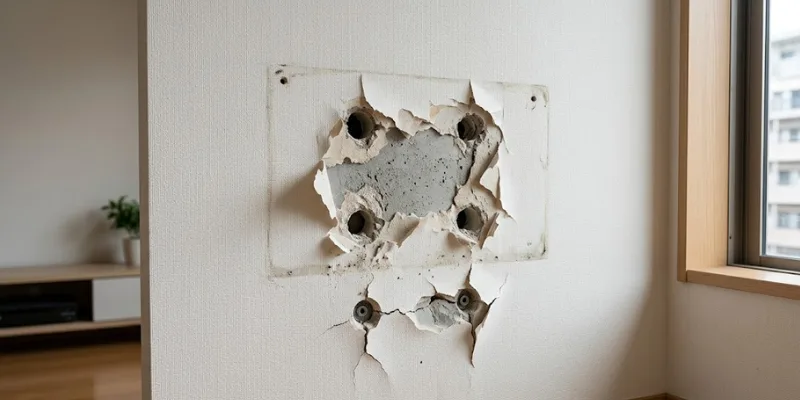
- Issues: Holes from heavy wall-mounted TVs, deep-set screws for shelving, or large-scale decals that peel the surface material upon removal.
- Estimated Costs:
- Standard Replacement: Approximately ¥1,200 – ¥1,800 per m².
- The “Full Wall” Rule: Because partial patching is aesthetically unpleasing, landlords frequently charge for the entire wall face, even for a small tear. Expect to pay ¥30,000 – ¥50,000 for a full wall replacement in a standard living room.
Sanitation, Hygiene, and Specialized Cleaning
While a basic “cleaning fee” is usually fixed in the contract, “negligence-based cleaning” is an extra charge.
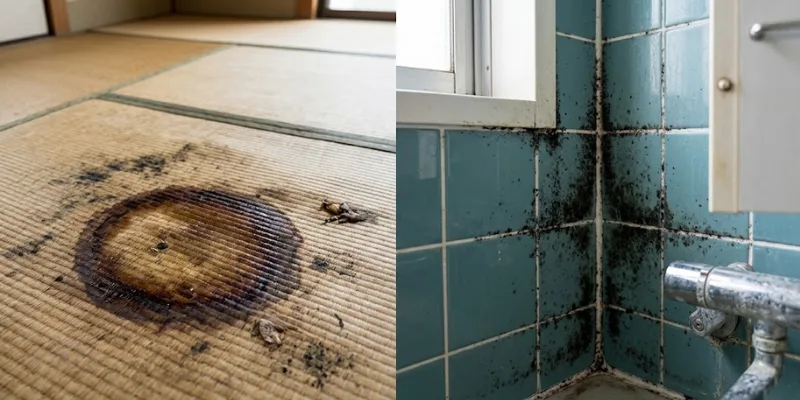
- Issues: Persistent stains on tatami mats or carpets caused by spills, neglected pet accidents, or preventable mold growth in bathrooms due to improper ventilation.
- Estimated Costs:
- Tatami Replacement: Approximately ¥8,000 – ¥15,000 per mat.
- Mold Remediation: If mold has penetrated the walls due to lack of airflow, specialized chemical treatment can cost ¥10,000 – ¥25,000.
- Odor Removal: Tobacco smoke or pet odors may require Ozone treatment, costing ¥30,000+.
The “6-Year Rule”: The Power of Depreciation
One of the most critical pieces of knowledge for a tenant in Japan is the Depreciation Schedule. According to MLIT guidelines, most interior items have a “useful life” of 6 years.
- Wallpaper and Carpets: After 6 years of residency, the “residual value” of the material reaches ¥1.
- What this means for you: If you have lived in an apartment for 6 years and accidentally tear the wallpaper, you should only be responsible for the labor cost of replacement, not the full cost of the new material.
Note: This rule does not apply to structural damage like broken windows or deep holes in the drywall, which do not depreciate in the same way.
Preparation Strategy: Before the Inspection Day
Preparation for a successful move-out begins long before you hand over the keys. If you currently reside in an apartment for rent in Japan, implement this structured approach:
The Documentation Strategy
Documentation is your strongest evidence. You should maintain a meticulous record from move-in to move-out.
- High-Resolution Photography: Capture time-stamped images of every corner, including inside closets and behind appliances.
- Defects List Comparison: Refer to the initial inspection sheet provided by your property manager. Compare it to the current state to ensure you aren’t billed for pre-existing issues.
- Video Walkthroughs: Record the functionality of sliding doors, window locks, and the drainage of sinks. This provides context that static photos might miss.
Pre-Inspection Cleaning Tips
While you may have a professional cleaning fee in your contract, performing a “deep clean” yourself can prevent the landlord from claiming “excessive filth.”
- Kitchen Grease: Clean the stove hood and filters thoroughly.
- Bathroom Mold: Use mold-remover (Kabi-killer) on grout lines.
- Window Tracks: Remove dust and debris from window sills and tracks.
Executing the Final Walkthrough: Tips for Success
The actual inspection usually takes 30–60 minutes. How you conduct yourself can influence the final report.
- Be Present: Always attend the inspection in person. Do not leave the keys and walk away.
- Stay Professional: If the inspector points out a flaw, remain objective. Use phrases like, “I believe this falls under natural wear and tear according to MLIT guidelines.”
- The Right to Delay: You are not legally obligated to sign the “Settlement Agreement” on the spot. If the costs seem high, tell them: “I will take these documents home to review them against my records and will respond in writing.”

Addressing Disputes and Protecting Your Rights
Occasionally, tenants encounter disagreements regarding the final cost calculations for apartments in Tokyo, Japan. If you believe a request for payment is excessive, follow these protocols:
Step 1: Formal Written Inquiries
Submit all objections via email. Cite specific evidence (photos) and refer to the MLIT guidelines. For example: “Per the MLIT guidelines, wallpaper is subject to a 6-year depreciation. Since I have lived here for 4 years, I should only be responsible for 33% of the material cost.”
Step 2: External Mediation
If the landlord refuses to budge, contact your local Consumer Affairs Center (Shohi Seikatsu Center). They provide free, unbiased guidance and can often act as a mediator to settle the dispute.
Step 3: Small Claims Suit (Shogaku Soshō)
In extreme cases, you can file a Small Claims Suit. This is for disputes involving less than 600,000 yen. The process is fast (usually settled in one day) and does not require a lawyer, making it an accessible option for foreign residents.
Reviewing “Special Clauses” (Tokuyaku) in Contracts
Before signing any new lease for apartments in Japan, look out for “Special Clauses” that might bypass standard guidelines. Common (and sometimes unfair) clauses include:
- Mandatory Cleaning Fees: A fixed amount you pay regardless of how clean the room is.
- Air Conditioner Cleaning: A clause requiring you to pay for professional internal cleaning.
- Full Wallpaper Replacement: A clause forcing you to pay for entire rooms of wallpaper even for a small mark.
While some of these are standard in Japan, knowing about them beforehand allows you to budget correctly or negotiate before signing.
Professional Assistance with A-realty
For those seeking expert guidance through the complexities of the Japanese rental market, A-realty offers specialized services to protect international tenants.
Why Choose A-realty?
- Contractual Clarity: We provide accurate translations and focus on the “Genjo Kaifuku” clauses to ensure you aren’t signing away your rights.
- Pre-Departure Audits: Our team can conduct a pre-walkthrough of your unit, identifying potential “red flag” areas that might lead to high charges.
- Expert Intermediation: During the inspection, we can act as your professional representative, ensuring the report reflects the honest condition of the property.
Whether you are currently searching for a new home or preparing to vacate your current apartment in Tokyo, A-realty ensures your interests are protected at every stage.
Contact A-realty today to schedule a consultation and secure your investment in your Japanese home.
Conclusion
Successfully completing an Apartment Move-out Inspection is a critical skill for any resident in Japan. By adhering to the MLIT guidelines, maintaining thorough documentation, and understanding the financial costs of restoration, you transform a potential source of stress into a manageable business transaction.
Remember, your security deposit is your money. Protecting it requires diligence, a professional attitude, and—when necessary—the support of experts like A-realty. Move forward to your next destination with total peace of mind, knowing you’ve handled your tenancy with absolute excellence.

Real estate advisor at Arealty Japan, specialising in helping foreign residents navigate the Tokyo and Osaka rental markets. Lucy has guided hundreds of international renters — from Working Holiday visa holders to corporate relocations — through Japan’s apartment application process. Her writing draws on firsthand experience with landlord screening, guarantor companies, and foreigner-friendly listings across all 23 Tokyo wards and major Kansai cities.





Leave a Reply