

Disclosure: Arealty is a licensed real estate advisory service operating in Japan. Price data in this article is sourced from government and independent research organisations — not Arealty’s own listings. This article covers property purchase costs. For rental costs, see our Tokyo apartment rent trends 2026 guide.
Search “average house price in Japan” and you’ll get a single number back. That number is close to useless for an actual buyer — because it blends ¥0 akiya in depopulating villages with ¥150M+ apartments in Chiyoda, a 30x+ spread that no average can represent honestly. A new condo nationwide runs ¥55.9M; a used detached house starts around ¥26M; central Tokyo averages ¥91.4M and is still climbing, up 10.7% year-on-year.
What actually matters for your decision isn’t the national average — it’s how that number breaks down by property type, by region, and against what you actually earn. That’s what the rest of this guide covers, starting with the full price table below.
What this guide covers:
Tips tailored to foreign buyers navigating mortgages and visas
Property prices by type and region, with actual transaction data
The ¥35M budget test: what it buys in each market
All-in acquisition costs most buyers underestimate
The rent vs. buy decision for foreign residents specifically
Japan real estate outlook for 2026–2027
Japan property prices by type — 2026
The most reliable source for what buyers actually pay is the Japan Housing Finance Agency Flat 35 Borrower Survey FY2024, which tracks real financed transactions — not listing prices.
| Property type | Average price (¥) | Average price (USD) | Notes |
| New condominium | ¥55.9M | $358,000 | Nationwide; Tokyo much higher |
| New house with land | ¥50.1M | $321,000 | Custom-built, includes land |
| Pre-built new house | ¥38.3M | $245,000 | Developer-built estates |
| Used condominium | ¥30.3M | $194,000 | Strong value option |
| Used detached house | ¥26M | $167,000 | Often priced at land value |
| Akiya (abandoned home) | ¥0–5M | $0–32,000 | Renovation costs: ¥3.5–20M |
One important nuance: new homes in Japan cost approximately 45% more than comparable used homes in the same area. This is the opposite of many Western markets, where location matters more than age. Japanese buyers have a strong cultural preference for new construction, which sustains the premium on new builds.
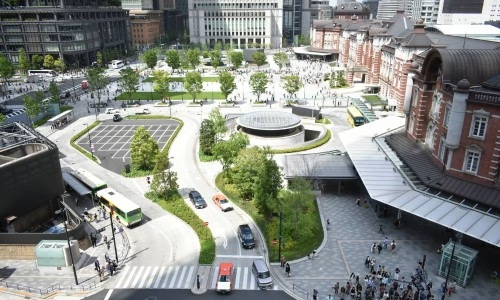
New developments near Tokyo Station
Tokyo vs other regions — how much more does it cost?
Tokyo is by far the most expensive market in Japan. As of early 2026, the average residential price across all types in Tokyo stands at ¥91.4 million ($589,000), up 10.7% year-on-year according to PropertyAccess Japan. In the Capital Region more broadly, the Land Research Institute reported that new condominiums averaged ¥83.8 million ($540,000) in January 2026 alone — a 14.2% increase year-on-year.
| Location | Avg. new condo price | Avg. used condo (¥/sqm) | Context |
| Central Tokyo (Chiyoda) | ¥150M+ | ¥2.5–3.3M/sqm | Most expensive ward |
| Central Tokyo (Minato) | ¥130M+ | ¥1.8–2.5M/sqm | Finance & luxury hub |
| Tokyo 23 Wards (avg.) | ¥110M+ | ¥800K–1.2M/sqm | +7.8% YoY asking rents |
| Tokyo Suburbs (Saitama, Chiba, Kanagawa) | ¥45–70M | ¥300K–500K/sqm | Value commuter zones |
| Osaka / Kinki Region | ¥45.9M | Varies | +13.8% YoY (Land Research Institute) |
| Regional cities (Sapporo, Fukuoka, Sendai) | ¥20–35M | Below ¥200K/sqm | 40–50% below Tokyo |
| Rural areas | ¥0–25M | Minimal | Akiya opportunities |
Sources: LIFULL HOME’S listing data, Land Research Institute (Jan 2026), PropertyAccess Japan, BambooRoutes Japan Housing Prices H1 2026. Per-sqm figures based on 70sqm reference units.
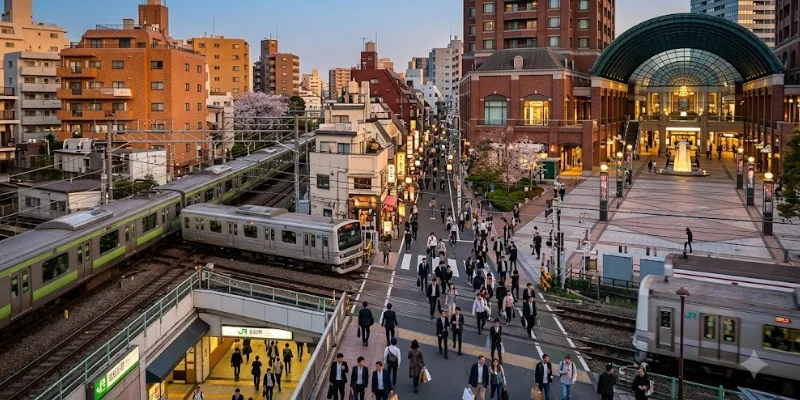
For foreign buyers, the Tokyo suburbs — particularly areas along the Yamanote Line, or suburban cities like Yokohama, Kawasaki, and Tsukuba — offer a meaningful cost reduction while maintaining workable commutes into central Tokyo.
What does a ¥35 million ($224,000) budget actually buy?
¥35 million is approximately the median transaction price across all used properties in Japan. Here is a realistic breakdown of what that budget gets you in different markets:
| Location | Property type | Approx. size | Condition |
| Rural / countryside | Detached house (akiya) | 80–150sqm+ | Needs renovation |
| Regional city (Fukuoka, Sapporo) | Used 3LDK apartment | 60–75sqm | Good condition |
| Tokyo suburbs (Chiba, Saitama) | Used 1LDK–2LDK condo | 40–60sqm | Good condition |
| Tokyo 23 Wards | Very old used 1K–1DK | 20–30sqm | Likely dated |
| Central Tokyo (Shibuya, Minato) | Not realistic | — | — |
Additional buying costs most foreigners underestimate
The listing price is only part of what you pay. Buyers should budget an additional 7–12% on top of the purchase price for a used property, or 4–8% for a new one:
- Agent commission: 3% of purchase price + ¥60,000 (plus 10% consumption tax)
- Real Estate Acquisition Tax: 3% for residential land and buildings (until March 2027)
- Registration and notary fees: For legally recording the title transfer
- Property tax: Approximately 1.4% of assessed value per year, ongoing
- Building maintenance fees (manshon): Monthly shuzen-tsumitatekin, varies by building
- Renovation costs (akiya/used homes): ¥3.5M–20M depending on condition
For a complete breakdown of what you are responsible for when you eventually sell or leave a property, see our restoration costs guide.
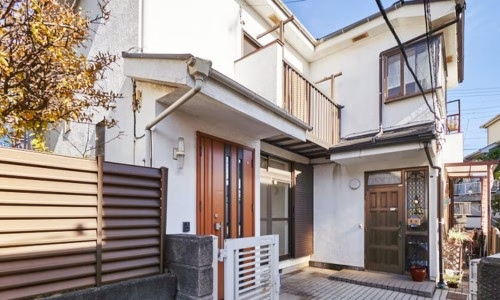
Affordable housing in Greater Tokyo
Can the average Japanese salary support homeownership in 2026?
As of 2026, the median annual salary in Japan is approximately ¥4.5 million ($29,000). In Tokyo, household incomes are higher, with the median falling between ¥7.5–8 million ($48K–$52K) annually. The table below illustrates the gap between income and housing costs across regions:
| Area | Median household income | Avg. home price | Price-to-income ratio |
| Central Tokyo | ¥7.5–8M | ¥91.4M+ | ~12x — very stretched |
| Tokyo Suburbs | ¥6–7M | ¥45–70M | ~7–10x — tight |
| Osaka / Kinki | ¥5–6M | ¥45.9M | ~8–9x — tight |
| Nationwide average | ¥4.5–5M | ¥35–42M | ~7–9x — manageable outside cities |
| Regional cities | ¥4–5M | ¥20–35M | ~5–7x — most accessible |
Income data: Ministry of Health, Labour and Welfare 2025 estimates. Property prices: Japan Housing Finance Agency Flat 35 Survey FY2024, PropertyAccess Japan 2026.
For most workers at the national median, purchasing in central Tokyo is financially out of reach without significant existing capital. The most accessible path to homeownership is in regional cities or suburban areas where price-to-income ratios are sustainable. For context on income benchmarks across industries and visa types, see our Japan average salary guide.
Should foreigners rent or buy in Japan? A practical comparison
For many foreign residents, this is the real question. Japan’s property market has historically been unusual: homes depreciate (especially wooden structures), land holds value, and the buying process for non-residents carries additional complexity around mortgages and residency status.
| Factor | Renting | Buying |
| Upfront cost | 1–2 months deposit + agency fee | 7–12% of property price on top |
| Monthly cost (Tokyo 1LDK) | ¥85K–150K/month | ¥100K–180K mortgage (at ¥45–70M loan) |
| Flexibility | High — lease typically 2 years | Low — selling takes 4–6 months avg. |
| Depreciation risk | None | Wooden homes depreciate rapidly after 22 yrs |
| Mortgage (foreigner) | N/A | Harder: needs PR or stable visa + income proof |
| Long-term value | No equity built | Land value typically holds; building depreciates |
| Ideal for | First 1–5 years in Japan | Permanent residents, long-term commitment |
Three factors that make the rent-vs-buy decision different in Japan compared to most Western countries:
1. Building depreciation is real and fast. Wooden structures (most pre-2000 detached houses) depreciate to near-zero assessed value within 22–30 years. You are effectively buying land when you purchase an older wooden house — which has implications for resale price and financing.
2. Mortgage access is genuinely harder for foreigners. Most Japanese lenders require permanent residency, documented Japanese income history of at least 3 years, and stable employment. Non-permanent residents face significantly limited options, though some specialist lenders exist. Our guide to buying property without permanent residency covers this in detail.
3. The flexibility premium of renting is higher in Japan. Lease terms are typically 2 years with standardised renewal options, and rental inventory in major cities is deep. For a foreigner on a limited-term visa, the optionality of renting has genuine financial value.
For most foreigners in their first 1–5 years in Japan, renting is the lower-risk, more flexible option. Buying makes stronger financial sense once you have permanent residency, at least 3–5 years of documented income history in Japan, and a clear long-term plan.
For a full breakdown of current rental costs across Tokyo’s wards, see our Tokyo apartment rent trends 2026 guide.
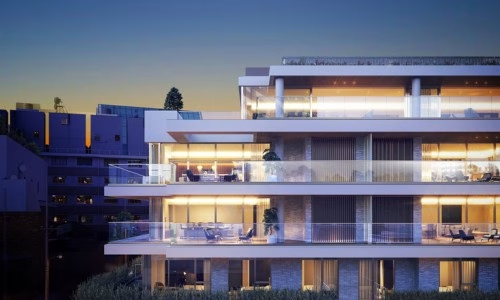
Luxury condos in central Tokyo
Japan real estate outlook for 2026 and beyond
Several data points shape the near-term outlook for buyers:
Price growth continuing in major cities. Fitch Ratings forecasts nationwide price growth of 3–4% in 2026. Tokyo and Osaka are expected to grow 5–6%, driven by tight supply and rising construction costs.
Rents rising faster than before. Asking rents for newly listed properties in Tokyo’s 23 Wards rose 7.8% year-on-year in Q3 2025, according to At Home and Sumitomo Mitsui Trust Research Institute. This increases the buy-side appeal for those who qualify for a mortgage, but also raises the cost of renting while saving for a deposit.
Rural areas facing continued price pressure. Population decline and urban migration are driving vacancy rates higher in rural prefectures, creating akiya opportunities but carrying resale risk that buyers should model carefully.
Foreign buyer demand increasing. Yen weakness continues to attract foreign investment into Tokyo’s premium districts. This has contributed to the 10.7% year-on-year increase in central Tokyo residential prices.
Interest rates. The Bank of Japan’s gradual rate normalization may add modest upward pressure to mortgage costs, though rates remain low by global standards. Variable-rate mortgage holders who locked in pre-2025 rates should monitor this carefully.
The market remains stable but increasingly polarized: premium urban cores are rising fast; rural areas are declining. For foreign buyers, the window for value purchases in suburban Tokyo and regional cities remains open but is narrowing each quarter.
For Japan housing loan rate trends specifically, see our Japan housing loan interest rates 2026 guide.
Tips for foreign buyers in 2026
- Use property type, not just location, to set your budget. A ¥30M used condo in a regional city is a very different asset from a ¥30M akiya needing ¥10M in renovation — in terms of livability, financing options, and resale outlook.
- Calculate all-in cost before you compare options. Budget 7–12% above listing price for used properties. On a ¥40M property, that is ¥2.8M–4.8M in additional costs — enough to shift your decision.
- Check mortgage eligibility before viewing properties. Japanese lenders typically require permanent residency or a stable long-term visa with documented Japanese income. Getting pre-qualification clarity avoids wasted time and protects your negotiating position.
- Work with a bilingual licensed agent (宅地建物取引士). Real estate transactions in Japan involve substantial paperwork in Japanese, including disclosure documents (jūyō jikō setsumeisho) that carry legal implications. A licensed, bilingual agent reduces legal and translation risk significantly. See our guide to top real estate agencies in Tokyo for foreigners for vetted options.
- Factor in the depreciation rate for wooden structures. Older wooden homes are effectively land purchases. If the land itself has limited value (rural areas, declining population), the asset may not hold its value as an investment.
- For first-time foreign buyers — start with suburban Tokyo. Areas like Funabashi, Kawasaki, or Yokohama offer 30–50% lower prices than central wards with manageable commutes. Our Tokyo commute time guide can help you model door-to-door journey times before committing to a location.
Frequently asked questions
As of 2026, the average price for a new condominium nationwide is ¥55.9M ($358K). Used condominiums average ¥30.3M ($194K) and used detached houses around ¥26M ($167K). In central Tokyo, average residential prices across all types exceed ¥91.4M ($589K).
Yes. Japan places no restrictions on foreign nationals purchasing real estate. However, obtaining a Japanese mortgage as a foreigner typically requires permanent residency or a stable long-term visa, plus documented income history in Japan.
For most foreigners in the early years of residence, renting is lower-risk and more flexible. Buying makes stronger financial sense once you have permanent residency and a long-term commitment to staying in Japan.
The average residential property price in Tokyo across all types is approximately ¥91.4 million ($589,000) as of early 2026, representing a 10.7% year-on-year increase.
Yes. Akiya (abandoned homes) are available in rural areas for as little as ¥0–5 million, though renovation costs typically range from ¥3.5M to ¥20M depending on condition. Used detached houses in regional cities can also be found in the ¥15–25M range.
No — you can purchase property without permanent residency. However, financing is significantly more difficult. Most major Japanese banks require permanent residency for housing loan approval. Non-PR buyers typically need to pay cash or find specialist lenders with stricter terms. Our guide to buying without permanent residency covers available options.
Sources referenced in this article
Japan Housing Finance Agency Flat 35 Borrower Survey FY2024 | Land Research Institute January 2026 | PropertyAccess Japan Real Estate Outlook 2026 | MLIT Official Land Price Survey 2026 | At Home / Sumitomo Mitsui Trust Research Institute Apartment Rent Index Q3 2025 | Fitch Ratings Japan Residential Forecast 2026 | BambooRoutes Japan Housing Prices H1 2026
Further Reading
Restoration costs when moving out in Japan.
Japan housing loan interest rates 2026
Buying property in Japan without permanent residency
Tokyo apartment rent trends 2026
Tokyo commute times — choosing where to live
Top real estate agencies in Tokyo for foreigners

Real estate advisor at Arealty Japan, specialising in helping foreign residents navigate the Tokyo and Osaka rental markets. Lucy has guided hundreds of international renters — from Working Holiday visa holders to corporate relocations — through Japan’s apartment application process. Her writing draws on firsthand experience with landlord screening, guarantor companies, and foreigner-friendly listings across all 23 Tokyo wards and major Kansai cities.




Leave a Reply