
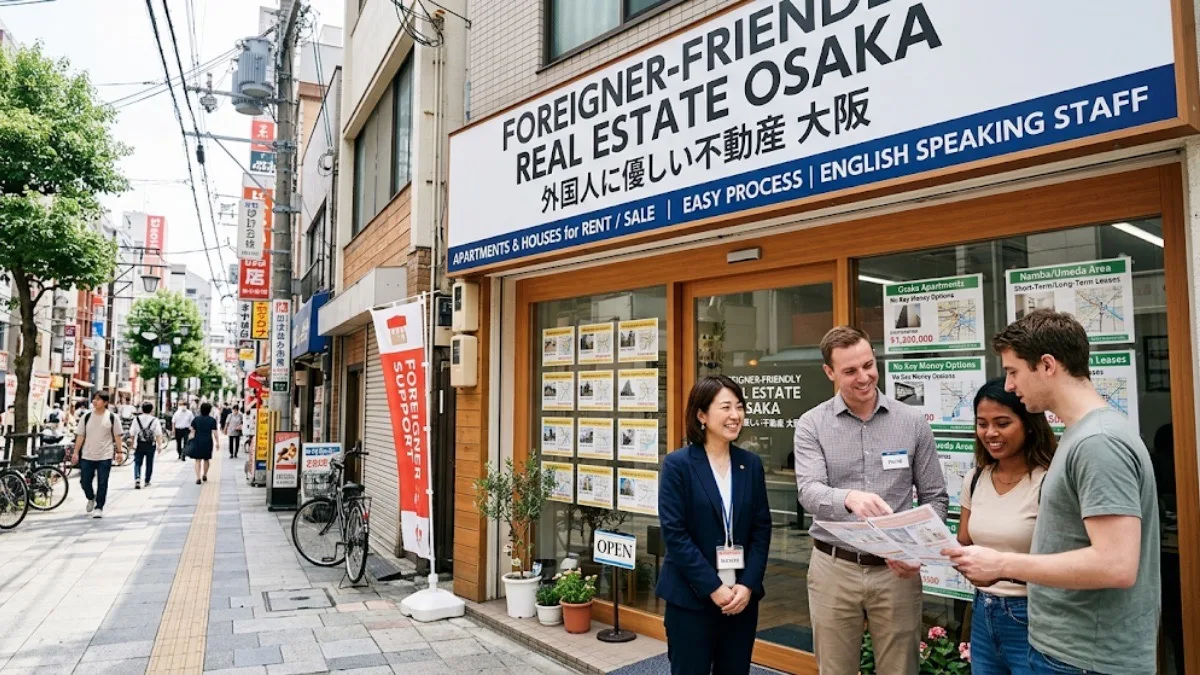

Navigating the Japanese rental market requires a sophisticated understanding of local legal frameworks, cultural expectations, and financial obligations. For international residents, finding a foreigner-friendly real estate Osaka service is not merely a convenience; it is a strategic necessity to bypass the historical barriers of the Japanese housing industry. While the market in 2026 has become increasingly globalized, the administrative path to securing apartments in Japan remains distinct from Western standards.
This comprehensive guide analyzes the intricacies of the Osaka rental landscape, providing the professional clarity needed to secure an apartment for rent Japan with confidence and legal security.
Categorizing Apartments in Japan: Which is Right for You?
The Osaka market offers three primary tiers of housing. Your choice depends on your visa status, your budget, and how much “setup” work you are willing to perform.
Type A: Managed Furnished Apartments
These are “plug-and-play” units often found in central districts. They include furniture, high-speed internet, and sometimes even kitchenware.
- Examples: Serviced apartments in the Umeda Grand Front area, “Monthly Mansions” in Nishi-ku, and international share houses in Tennoji.
- Advantages: No need to buy appliances; shorter lease terms (3–12 months); simplified utility setup.
- Disadvantages: Higher monthly premiums and limited privacy in share-house configurations.
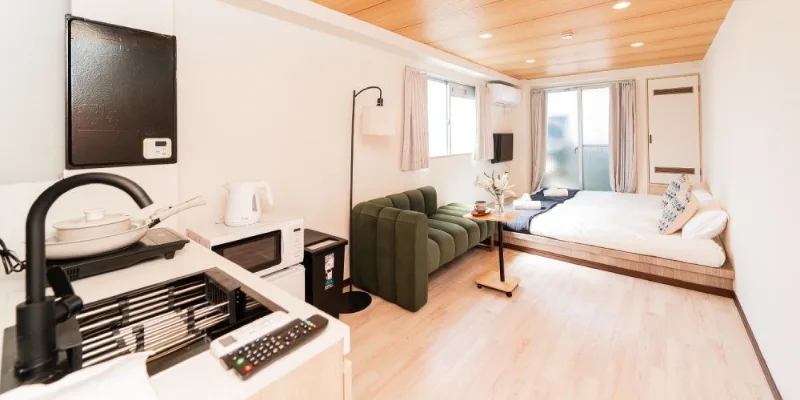
- Real-world Example: A 1LDK unit like the Minami-Horie Apartment Cielo in Nishi-ku, Osaka. This south-facing, 39.68 m^2 apartment is a prime example of modern urban living, situated just a 4-minute walk from Sakuragawa Station. It offers essential modern features like a system kitchen, separate toilet/washlet, and pre-installed internet/Wi-Fi, making it an ideal choice for professionals who value convenience and a quick move-in process.
Type B: Standard Unfurnished “Mansions”
In Japan, a “Mansion” refers to a concrete-structured apartment building. These are the gold standard for long-term living.
- Examples: High-rise 1LDK units in Namba, modern studio apartments in Fukushima-ku, and family-sized 3LDK units in the Chuo Ward.
- Real-world Example: The BRANZ Osaka Matsuyamachi (Chuo-ku, Osaka) perfectly illustrates this category. As a 2LDK unit with 61.22 m^2 of space, it offers the structural integrity and premium feel typical of high-end mansions. Built in 2020 with a steel frame structure, it provides top-tier amenities such as a delivery box, motorcycle parking, and advanced auto-lock security. Its location in the heart of Chuo-ku, just a 3-minute walk from Matsuya Machi Station, makes it a prime choice for those seeking stability and a high quality of life.
- Advantages: Superior soundproofing, higher security (Auto-lock), and long-term stability.
- Disadvantages: Requires a 2-year commitment and the purchase of all major appliances (refrigerator, washing machine, and often even ceiling lights). Additionally, initial costs for these units can be significant, often including key money and deposits, as seen with this property’s estimated initial cost of approximately ¥1,297,600.
Type C: Traditional Wood-Frame “Apartos”
These are typically two-story wooden structures. They are the most affordable option for students or those on a budget.
- Examples: Older 1K units near Osaka University in Suita, student housing in Higashiosaka, and renovated wooden houses (Kominka) in the retro Nakazakicho area.
- Real-world Example: A modern take on this category is the Prosper ESAKA 479 located in Yoshinocho, Suita-shi. While many “Apartos” are older, this reinforced concrete building offers a 1DK layout (29.09 m^2) at a very competitive monthly fee of ¥94,000. It perfectly balances the affordability of the Suita area with modern amenities like a system kitchen, separate washlet, and auto-lock security. Being an 11-minute walk from Esaka Station, it caters to those who want to stay within a budget while still having quick access to the Midōsuji Line.
- Advantages: Very low rent; often located in charming, quiet neighborhoods; significantly lower initial costs (this unit, for instance, requires No Key Money and No Deposit).
- Disadvantages: Traditional wood-frame versions often have poor insulation (cold in winter, hot in summer) and less effective soundproofing between floors compared to high-rise Mansions.
Geographic Analysis: Where to Live in Osaka
Location is the primary factor affecting rent prices for japan tokyo apartment rent and Osaka equivalents. Osaka is divided into “Kita” (North) and “Minami” (South), each offering a distinct lifestyle.
Kita (Umeda and Surroundings)
The business heart of the city. Rent here is the highest in Osaka but offers unparalleled convenience.
- Best for: Corporate professionals and those who crave a metropolitan lifestyle.
- Average Rent (1K): ¥75,000 – ¥95,000.
- Premium Example: For those seeking a high-end experience, the Adenium Tower Umeda in Ukida, Kita-ku, represents the pinnacle of this district. Located on the 15th floor of a 30-story skyscraper, this 60.26 m^2 (2LDK) residence offers a west-facing view and premium features like a delivery box and auto-lock security. Being just a 3-minute walk from Tenjinbashisujirokuchoume Station (serving the Hankyu Senri, Tanimachi, and Sakaisuji lines), it provides seamless access to the entire city. While the monthly fee of ¥226,000 and initial costs of approximately ¥1,399,830 are at the higher end, they reflect the prestige and strategic location of living in Osaka’s most vibrant business hub.
Minami (Namba, Shinsaibashi, Horie)
The cultural and entertainment hub. Horie and Nishi-ku are particularly popular among young foreigners for their trendy cafes and boutiques.
- Best for: Social butterflies, creatives, and those working in the hospitality or fashion sectors.
- Average Rent (1K): ¥70,000 – ¥85,000.
- Budget-Friendly Example: For those willing to live a bit further from the immediate buzz of Namba to save on costs, the Leonext KSPIRIT Yamamomo in Sakai-shi Minami-ku is an excellent reference. This 1R (one-room) apartment offers 31.82 m^2 of living space—quite generous for a studio—at a total monthly fee of ¥81,450. As a wooden structure (Wood) built in 2013, it comes fully furnished, which is a massive advantage for new arrivals in Japan. While it is a 12-minute walk from Izumigaoka Station, the southeast-facing balcony and inclusion of essential furniture make it a practical and comfortable home base in the southern metropolitan area.
The Northern Suburbs (Suita, Toyonaka, Minoo)
These areas are located along the Midosuji Line and the Hankyu Lines. They offer more greenery and larger floor plans.
- Best for: Families, researchers, and anyone looking for a quiet environment.
- Average Rent (2LDK): ¥110,000 – ¥150,000.
- Spacious Living Example: A standout option in this area is the TC – CASSIA Esaka 0 in Tarumicho, Suita-shi. While many 1LDKs in the city center are compact, this unit offers a massive 60.22 $m^2$ of space—equivalent to many 2LDK layouts. At a total monthly fee of ¥155,000, it provides a high-quality living environment with a system kitchen, delivery box, and separate washlet. Its location is ideal for commuters, being just an 8-minute walk from Esaka Station (Midosuji Line), allowing you to enjoy the peaceful atmosphere of Suita without sacrificing a quick 20-minute connection to central Osaka.
The Role of Arealty in Your Housing Journey
When searching for apartments in tokyo japan or the Osaka metropolitan area, the complexity of the “back-end” negotiations cannot be overstated. Arealty (A-Realty Co., Ltd.) serves as a specialized bridge between international tenants and the Japanese real estate market.
Professional Expertise and Specialized Services
Arealty understands that moving to a new country is a significant life event. We provide a structured approach to ensure your transition into foreigner-friendly real estate Osaka is seamless and legally sound.
- Pre-Vetted Property Database: We maintain an updated list of properties where landlords have a proven track record of welcoming international residents. This eliminates the “rejection fatigue” many foreigners experience.
- Strategic Negotiation: Our agents negotiate on your behalf to lower “Key Money” or ask for rent-free periods (Free Rent), which can save you thousands of dollars in upfront costs.
- Comprehensive Onboarding: Beyond the contract, we help you navigate the essential “Life Infrastructure” in Japan.
- Example 1: We provide guidance on how to register your address at the local Ward Office (Kuyakusho).
- Example 2: We offer assistance in setting up “Smart” utility meters that allow for easy digital payments.
- Example 3: We explain the specific rules of your building’s “Management Association” (Kanri-kumiai) to ensure you maintain a good relationship with your neighbors.
Why Arealty is the Market Leader
In 2026, the demand for high-quality, transparent real estate services is higher than ever. Arealty stands out by prioritizing the tenant’s long-term satisfaction over quick commissions. We treat every client as a partner, ensuring that your apartment for rent Japan becomes a true home.
If you are planning a move to Osaka or are looking to upgrade your current living situation, contact Arealty today. Our consultants are ready to provide you with a curated list of properties that match your lifestyle and visa requirements.
Financial Planning: A Detailed Cost Breakdown
To avoid surprises, you must budget for both the visible and hidden costs of renting apartments in Japan. Below is a professional estimate for a standard apartment with a monthly rent of ¥80,000.
| Item | Calculation | Estimated Cost |
| First Month’s Rent | Pro-rated or full | ¥80,000 |
| Security Deposit | 1 month | ¥80,000 |
| Key Money | 1 month | ¥80,000 |
| Agency Fee | 1 month + Tax | ¥88,000 |
| Guarantor Fee | 50% of rent | ¥40,000 |
| Fire Insurance | 2-year premium | ¥20,000 |
| Lock Exchange | One-time fee | ¥15,000 |
| Total Initial Cost | ¥403,000 |
Note: This does not include the cost of furniture or utility deposits.
The Step-by-Step Application Process
Securing a foreigner-friendly real estate Osaka property follows a linear path. Any deviation or missing documentation can result in an immediate rejection from the landlord or the insurance company.
Step 1: Initial Inquiry and Consultation
Contact your agent with your “Required Date of Entry,” “Budget,” and “Visa Status.” Be honest about your Japanese language ability, as this helps the agent choose the right landlord.
Step 2: Property Viewings (Uchigami)
In 2026, virtual tours via 3D scanning or video calls have become standard. However, if you are in Japan, visiting the neighborhood at night is recommended to check noise levels and street lighting.
Step 3: The Application (Juyo Jiko)
You will submit an application form along with your Residence Card and proof of income. If you are a student, you will need your “Certificate of Enrollment.”
Step 4: The Screening (Shinsa)
The landlord and the guarantor company will review your application. This usually takes 3 to 7 business days. They may call you or your employer to verify details.
Step 5: Contract Signing and Payment
Once approved, you will sign the official lease. The initial costs must be paid via bank transfer (Furikomi) before the key handover.
Step 6: Move-in and Inspection
On your move-in day, perform a thorough inspection of the walls, floors, and appliances. Take photos of any existing scratches to ensure you are not charged for them when you move out if you choose to relocate later.
Living in Osaka: Cultural Nuances for Tenants
Success in a foreigner-friendly real estate Osaka environment extends beyond the contract. Maintaining a positive relationship with your neighbors (Aisatsu) is a cornerstone of Japanese society.
- Noise Management: Japanese walls, especially in “Apartos,” can be thin. Avoid using washing machines or vacuum cleaners after 9:00 PM.
- Garbage Rules: Each ward in Osaka has specific days for “Combustible,” “Non-combustible,” and “Recyclable” waste. Failure to follow these rules is the #1 cause of friction between foreign tenants and landlords.
- Renewing Your Lease: Most contracts are for 2 years. If you wish to stay, you must pay a “Renewal Fee” (Koshinryo), usually equal to one month’s rent.
Conclusion
Finding the right apartment for rent Japan is the foundation of a successful life in the Kansai region. While the requirements for apartments in tokyo japan and Osaka might seem daunting at first, they are designed to maintain the high standard of safety and cleanliness that Japan is famous for.
By partnering with a dedicated foreigner-friendly real estate Osaka agency like Arealty, you gain an advocate who ensures your rights are protected and your transition is smooth. With the right preparation, a clear budget, and professional guidance, your search for apartments in Japan will result in a residence that serves as the perfect base for your Japanese adventure.

Real estate advisor at Arealty Japan, specialising in helping foreign residents navigate the Tokyo and Osaka rental markets. Lucy has guided hundreds of international renters — from Working Holiday visa holders to corporate relocations — through Japan’s apartment application process. Her writing draws on firsthand experience with landlord screening, guarantor companies, and foreigner-friendly listings across all 23 Tokyo wards and major Kansai cities.




Leave a Reply