Quick answer: Most international students in Tokyo pay ¥45,000 to ¥75,000 a month for housing. A share house or dorm is the fastest and cheapest way in, with no guarantor needed. A private 1R or 1K apartment costs from about ¥60,000 in outer wards like Nerima and Itabashi, plus 4 to 6 months’ rent upfront to move in.
International students in the Kanto region spend an average of ¥51,000 a month on housing, the highest of any region in Japan, according to JASSO’s latest student living survey. About 70% live in private apartments, and the rest live in school dorms, share houses and other housing. This guide compares each option with real costs, shows where to live near major universities, and explains how to rent as a student.
Student Accommodation in Tokyo: Costs Compared
| Dormitory | Share house | Guest house | Private apartment (1R/1K) | |
|---|---|---|---|---|
| Monthly cost | ¥45,000–¥65,000 | ¥45,000–¥75,000, utilities included | ¥45,000–¥70,000 | ¥60,000–¥95,000 + utilities |
| Move-in cost | About 1–2 months’ rent | About ¥80,000–¥150,000 | About ¥60,000–¥120,000 | 4–6 months’ rent (about ¥240,000–¥360,000 for a ¥60,000 room) |
| Guarantor | Not needed | Not needed | Not needed | Guarantor company required |
| Time to move in | Apply months ahead | 2–3 days | 2–3 days | 2–3 weeks |
| Contract | Semester or year | From 1 month | From 1 month | Usually 2 years, can leave with 1–2 months’ notice |
| Privacy | Often shared rooms | Private room, shared kitchen | Private room, shared facilities | Your own apartment |
| Best for | First semester | Short programs, first arrival | Stays under 6 months | Programs of 1 year or more |
Sources: housing cost and housing type from JASSO Student Living Survey FY2023. Apartment rents from Hato Mark Site rent statistics (April 2026). Dorm, share house and guest house ranges are typical prices on Arealty listings.
How Much Is a Student Dormitory in Tokyo?
A dorm in Tokyo costs about ¥45,000 to ¥65,000 a month, often with utilities and sometimes meals included. It is the easiest first home because you need no guarantor and no Japanese bank account. The catch is supply: dorm rooms fill fast, and many schools reserve them for first-year or exchange students.
There are three kinds:
- University dorms. Run by your school. Apply when you accept your offer, usually months before arrival.
- Public dorms. JASSO runs international student housing such as the Tokyo International Exchange Center in Koto ward. Check JASSO’s housing page for openings.
- Private student dorms. Company-run dorms open to students from many schools, often with meals. Prices are higher, but rooms are easier to get.
How Much Is a Share House in Tokyo for Students?
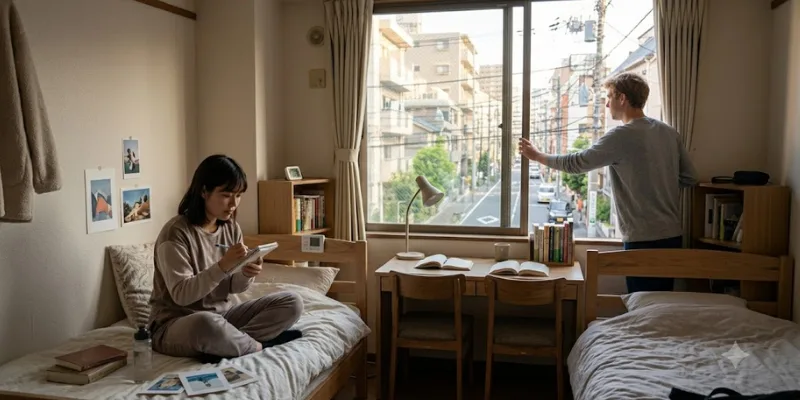
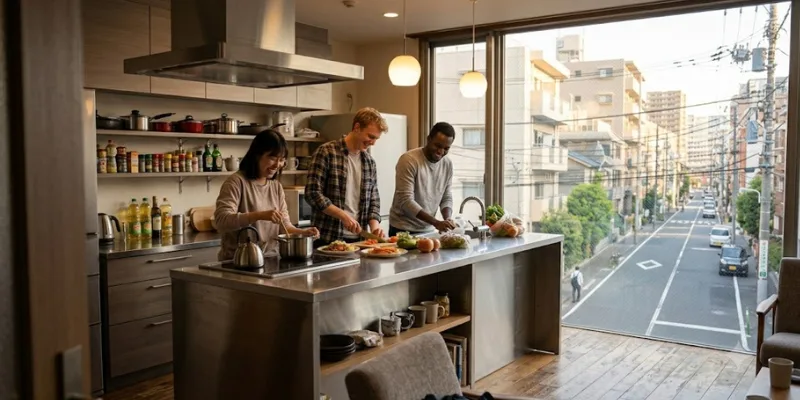
A private room in a Tokyo share house costs about ¥45,000 to ¥75,000 a month, usually with utilities and Wi-Fi included. You get your own bedroom and share the kitchen, bathroom and living room. Most share houses accept students without a guarantor and let you move in within days.
Share houses are a good first step if your dorm application fails or you arrive before your apartment is ready. Contracts usually start from one month, so you can move out once you know Tokyo better.
Guest House vs Share House: What Is the Difference?
In Tokyo, “guest house” and “share house” often mean the same thing: a furnished room with shared facilities. When there is a difference, guest houses are more hotel-like, with cleaning of shared areas included and shorter minimum stays. Share houses feel more like a home with long-term housemates. For stays under 6 months, either works. Compare the total monthly cost, including any common area fee.
How Much Is a Student Apartment in Tokyo?
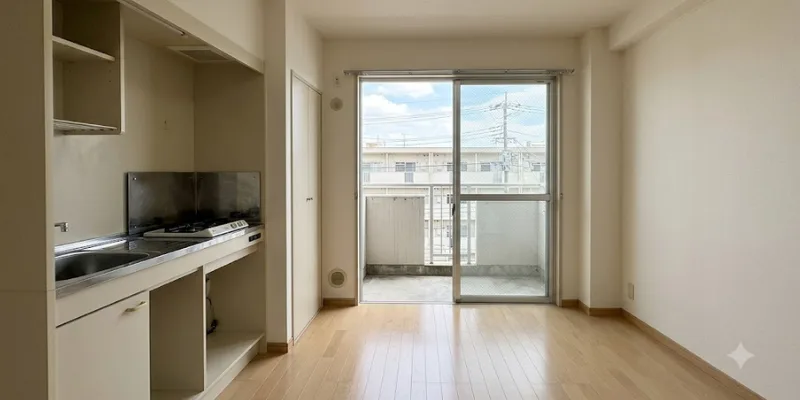
A private 1R studio in Tokyo’s 23 wards starts at about ¥60,000 a month in the cheapest wards, and 1K/1DK rent runs from ¥64,700 in Nerima to ¥150,300 in Minato. The cheapest wards for a 1R studio are:
| Ward | Average 1R rent (¥/month) | Good for students at |
|---|---|---|
| Nerima | 59,800 | Waseda, Rikkyo (Seibu Ikebukuro and Seibu Shinjuku lines) |
| Itabashi | 60,000 | Rikkyo, Toyo, schools around Ikebukuro |
| Arakawa | 60,700 | University of Tokyo, Tokyo University of the Arts |
| Edogawa | 61,100 | Schools in eastern Tokyo and along the Tozai line |
| Suginami | 66,700 | Sophia, Meiji, schools on the Chuo line |
Source: Hato Mark Site rent statistics, April 2026. See all wards in our 1-bedroom apartment in Japan guide.
An apartment makes sense for programs of a year or longer. You need a guarantor company, a Japanese phone number and proof of funds. Your own place usually costs more than a share house once you add utilities and move-in fees, but you get privacy, a full kitchen and a long-term address.
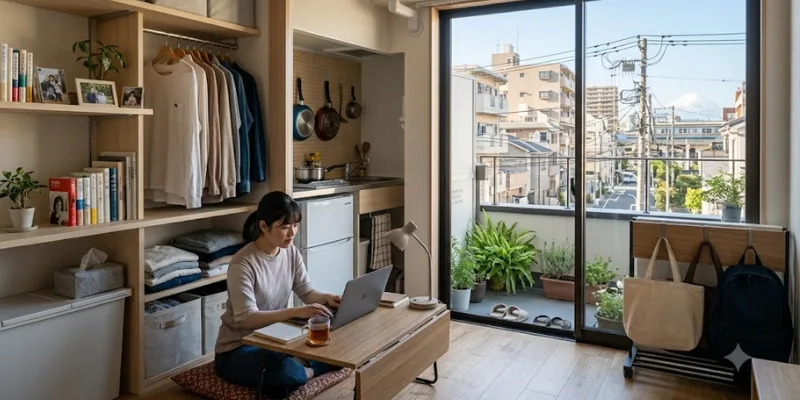
Example: a budget 1R near the Keio Line. A 19.87㎡ studio in Kyuden, Setagaya ward, a 7-minute walk from Sengawa Station, rents for ¥62,000 plus a ¥3,000 common fee, with no deposit and no key money. The building accepts foreign tenants. Rooms like this go fast in March and April, so if your start date is flexible, a move between May and January gives you more choice and better prices.
Where Should Students Live in Tokyo? Areas Near Major Universities
The best area is usually one stop or one transfer from campus, one or two wards further out. Moving out from Shinjuku or Shibuya to Nakano, Nerima or Itabashi often saves ¥10,000 to ¥20,000 a month.
| University | Campus station | Cheaper areas on a direct line | Guide |
|---|---|---|---|
| Waseda | Waseda, Takadanobaba | Nakano, Saginomiya, Kami-Shakujii | Waseda student housing |
| Keio (Mita, Hiyoshi) | Mita, Hiyoshi | Tsunashima, Motosumiyoshi, Kamata | Keio student housing |
| Temple University Japan | Sangenjaya | Sakura-shinmachi, Futako-Shinchi, Mizonokuchi | Temple University Japan housing |
| ISI Language School | Takadanobaba, Ikebukuro | Itabashi, NerimaWhere Should Students Live in Tokyo? Areas Near Major Universities | ISI student housing |
| University of Tokyo | Todaimae, Hongo-sanchome | Arakawa (Nippori), Kita ward | Student |
How Much Is a 1K Near Campus?
Living right next to campus costs ¥10,000 to ¥30,000 more a month than an outer ward on the same train line:
| Area | Near | 1K rent (¥/month) | Share house from |
|---|---|---|---|
| Bunkyo ward | University of Tokyo, Meiji, Tokyo Medical and Dental | 82,000–108,000 | |
| Takadanobaba (Shinjuku ward) | Waseda, ISI Language School | 80,000–105,000 | 48,000 |
| Ikebukuro (Toshima ward) | Rikkyo, schools around Ikebukuro | 78,000–100,000 | |
| Suginami ward | Hosei, Chuo line schools | 72,000–95,000 | |
| Nerima, Itabashi, Kita, Adachi | Commuting students | 58,000–75,000 |
Ranges are typical rents on Arealty listings. The trade-off is time: saving ¥15,000 a month by living in an outer ward can add around 270 hours of commuting over an academic year, so price your time too.
How Much Does It Cost to Move Into a Student Apartment?
Moving into a ¥60,000 1K apartment in Tokyo costs about ¥270,000 to ¥300,000 in total. Here is a real example from an Arealty listing, Maison Nishigikubo KM:
| Item | Amount |
|---|---|
| Key money | ¥30,000 |
| Guarantor company fee | ¥35,000 |
| Admin and other fees | ¥41,000 |
| Agency fee (1 month + 10% tax) | ¥66,000 |
| First month’s rent and fees | ¥71,050 |
| Security deposit | ¥0 |
| Subtotal | ¥243,050 |
| Fire insurance and lock change (typical) | About ¥30,000–¥55,000 |
Share houses and dorms cost far less to move into, usually one month’s rent plus a deposit or admin fee. Budget an extra 1 to 2 months of living costs on top for furniture, a phone plan and your first weeks in Tokyo.
Share House vs Apartment: Total Cost Over 12 Months
Over a one-year program, a share house costs about ¥300,000 to ¥700,000 less than a private 1K:
| Monthly rent | Move-in cost | 12-month total | |
|---|---|---|---|
| Share house | ¥58,000 (utilities included) | ¥50,000–¥80,000 | ¥746,000–¥776,000 |
| 1K in an outer ward | ¥68,000 | ¥250,000–¥340,000 | ¥1,066,000–¥1,156,000 |
| 1K in a central ward | ¥88,000 | ¥300,000–¥400,000 | ¥1,356,000–¥1,456,000 |
Totals do not include utilities for apartments (about ¥8,000–¥12,000 a month) or furniture. Most Tokyo apartments come unfurnished, so budget ¥80,000 to ¥150,000 to furnish a 1K.
How to Rent as a Student Without a Guarantor
Most Tokyo apartments need a guarantor company instead of a personal guarantor. As a student, you can usually pass screening with:
- Certificate of enrollment or admission letter
- Passport and residence card
- Proof of funds, such as a bank statement, scholarship letter or a parent’s sponsorship letter
- Emergency contact in Japan, often your school’s international office
- Japanese phone number
Part-time work income does not count as stable income for screening. Student visas allow up to 28 hours of work a week during term, and up to 8 hours a day during long school breaks, with a work permit.
Using Your Parents as Guarantor
If your landlord accepts a parent as guarantor or as the payer behind a guarantor company, they usually need to show income of about ¥240,000 a month (around ¥2.88 million a year) or more. For example, a parent earning AUD 7,000 a month, about ¥680,000, clears that easily. Prepare an income certificate or recent payslips, translated into English or Japanese.
When to Start Looking: Timeline
| Before arrival | What to do |
|---|---|
| 8–10 weeks | Confirm enrollment and apply for a dorm |
| 6–8 weeks | Start searching share houses and apartments |
| 4–6 weeks | Apply and start guarantor screening |
| 2–3 weeks | Sign the contract and pay move-in costs |
| Arrival week | Register your address at the ward office within 14 days |
Demand peaks before the April and September/October intakes, so start earlier if you arrive then. If your housing falls through, book a short stay for your first week and line up two or three share houses as backups. Our short-stay apartments under ¥50,000 guide lists options.
Student Accommodation in Tokyo: FAQ
A university or public dorm is the cheapest, from about ¥45,000 a month with utilities included. If no dorm room is available, a share house in an outer ward such as Nerima, Itabashi or Adachi is the next cheapest option.
International students in the Kanto region spend about ¥51,000 a month on housing on average, according to JASSO. A private studio in the 23 wards starts at about ¥60,000.
Yes. Students can rent with a guarantor company, a certificate of enrollment and proof of funds. Some landlords do not accept students, so search foreigner-friendly listings to save time.
Usually yes, but confirm with the operator before you sign. You need a registered address for your residence card, bank account and phone contract.
Yes. Many students start in a dorm or share house for the first semester, then move to an apartment once they know which area suits them.
Find Student Accommodation in Tokyo
Arealty lists foreigner-friendly apartments and share houses across Tokyo, with English support from search to move-in. Browse student-friendly apartments in Tokyo, or see average rent in Tokyo by ward.
Sources
- JASSO: International Student Living Survey FY2023
- Arealty: 1 Bedroom Apartment in Japan (Hato Mark Site rent statistics, April 2026; move-in cost example)
- Arealty: International Student Accommodation Tokyo (current version)
- Arealty: Student Apartments in Tokyo: Best Areas and How to Apply (merged into this article)
- Arealty: Best Rental Options for International Students in Japan (merged into this article)

Real estate advisor at Arealty Japan, specialising in helping foreign residents navigate the Tokyo and Osaka rental markets. Lucy has guided hundreds of international renters — from Working Holiday visa holders to corporate relocations — through Japan’s apartment application process. Her writing draws on firsthand experience with landlord screening, guarantor companies, and foreigner-friendly listings across all 23 Tokyo wards and major Kansai cities.