
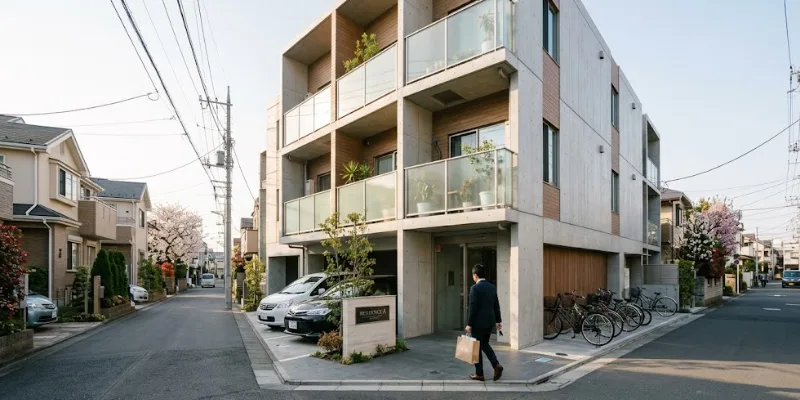

Building equity through ownership or maintaining lifestyle flexibility through rental is the core dilemma of the Japanese housing market. Purchasing property in Japan is generally the more cost-effective long-term financial strategy if you plan to reside in the same location for over 20 years, as mortgage repayments eventually end while rent remains a perpetual expense.
However, renting remains the superior choice for professionals prioritizing mobility and minimal maintenance liability, especially when navigating the high-density market of apartments in Tokyo Japan.
Strategic Financial Overview
To determine the optimal path between Renting vs Buying Japan, you must evaluate the total lifecycle cost beyond mere monthly payments. This professional analysis focuses on four critical pillars:
- Asset Depreciation vs. Land Value: In Japan, building structures depreciate rapidly (often reaching near-zero value in 22–47 years), whereas land in central urban areas remains a stable store of value.
- Recurring Lease Costs: Searching for an apartment for rent japan involves recurring expenses unique to the region, such as:
- Reikin (Key money) and Shikikin (Deposit) for initial contracts.
- Koushin-ryo (Renewal fees), typically one month’s rent every two years.
- Mandatory fire and liability insurance updates.
- Ownership Obligations: Buyers must account for annual Fixed Asset Taxes and long-term maintenance cycles (e.g., exterior waterproofing, seismic reinforcement, and mechanical system upgrades).
- Opportunity Cost: The capital required for a down payment and purchase fees must be weighed against the potential returns of investing that same capital in the global financial markets.
Whether your goal is securing a permanent residence or finding a high-end japan tokyo apartment rent, understanding these economic conditions is essential for making a data-driven decision in the 2026 market.
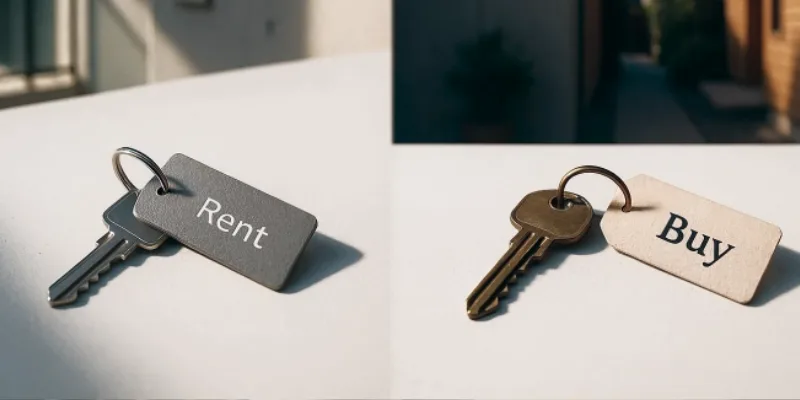
The Strategic Framework of the Japanese Housing Market
Before diving into the numbers, it is essential to understand the structural environment of real estate in Japan. Unlike many Western markets where property values generally appreciate over time, Japan sees a sharp distinction between land and “uwamono” (the building).
The Concept of Building Depreciation
In Japan, residential buildings are often treated as depreciating assets. A wooden house typically loses its economic value over a 22-year period, while reinforced concrete apartments in Japan depreciate over 47 years according to statutory useful life guidelines. This means that a buyer must prioritize the land value or the “location brand” to ensure their investment holds weight in the future.
The Rental Ecosystem
The rental market for a japan tokyo apartment rent is highly regulated to protect the tenant. Under the Landstripped and House Lease Act, tenants enjoy strong security of tenure. However, this protection comes with recurring costs that are absent in other countries, such as “Reikin” (key money) and “Koushin-ryo” (renewal fees).
Comprehensive Simulation: The 3LDK Family Home Case Study
To illustrate the financial trajectory of Renting vs Buying Japan, we examine a typical scenario for a family of four residing in the Tokyo 23-ward area, specifically Suginami-ku.
Scenario A: The Path of Ownership
Purchasing a detached 3LDK house in a prime residential area involves high upfront costs but offers a “finish line” for housing expenses.
- Purchase Price: 79,800,000 JPY.
- Initial Costs (6%): 4,788,000 JPY (Registration, brokerage fees, stamp duty).
- Mortgage Repayment: Based on a 35-year term at a 1.9% fixed rate, the total repayment is 109,313,730 JPY.
- Maintenance (50 years): 7,000,000 JPY. This is a realistic estimate for maintaining structural integrity. Examples of these costs include:
- External Enclosure: Re-sealing and painting the exterior walls every 15 years to prevent moisture ingress.
- Mechanical Systems: Replacing the eco-cute water heater, air conditioning units, and ventilation systems.
- Infrastructure: Reinforcing the foundation or roof tiles after extreme weather events or seismic activity.
- Taxes and Insurance: 9,000,000 JPY (Fixed Asset Tax and Fire Insurance over 50 years).
- Tax Credits: -4,500,000 JPY (Estimated mortgage interest deduction).
Total Lifetime Cost of Buying: 125,601,730 JPY.
Scenario B: The Path of Renting
Renting a similar apartment for rent japan provides flexibility but results in a “perpetual cost” that continues long after a mortgage would have been paid off.
- Monthly Rent: 310,000 JPY.
- Total Rent (50 years): 186,000,000 JPY.
- Initial Costs: 1,550,000 JPY (Deposit, Key Money, Agency Fee).
- Renewal Fees (24 times): 7,750,000 JPY.
- Insurance: 500,000 JPY.
Total Lifetime Cost of Renting: 195,800,000 JPY.
In this high-end Tokyo scenario, buying is approximately 70,000,000 JPY cheaper than renting over a 50-year period. However, this assumes the renter never moves to a cheaper location, which brings us to the importance of mobility.
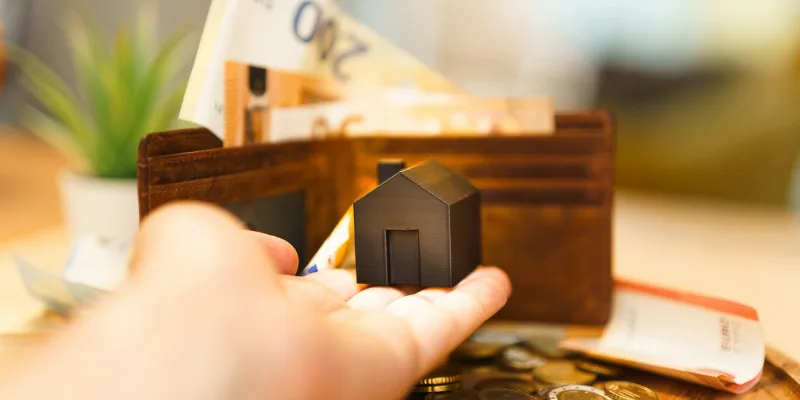
The Flexibility Factor: Adapting to Life Stages
The primary disadvantage of buying is the “immobility risk.” If a professional’s career trajectory changes, a owned home can become a financial anchor. Conversely, apartments in Japan allow for strategic downsizing.
Strategic Downsizing in the Rental Market
If a family rents a large 3LDK while children are at home (20 years) and then moves to a 1LDK japan tokyo apartment rent for the remaining 30 years, the total cost drops significantly.
- Phase 1 (3LDK): 79,250,000 JPY.
- Phase 2 (1LDK): 58,380,000 JPY.
- Total: 137,630,000 JPY.
While still more expensive than buying in this specific calculation, the gap narrows. The ability to move also mitigates risks such as:
- Environmental Changes: New construction blocking sunlight or increased noise from new infrastructure.
- Social Changes: Deteriorating neighborhood demographics or changes in school district quality.
- Economic Changes: A decrease in household income necessitating a lower monthly overhead.
Maintenance and Hidden Obligations of Ownership
When you move from a japan tokyo apartment rent to your own home, you assume the role of the facility manager. Professional property management for apartments in Tokyo Japan is usually seamless for tenants, but owners must be proactive.
Mandatory Maintenance Cycles
A well-maintained property in Japan requires a structured schedule to retain its value. Examples of essential maintenance include:
- Termite Prevention: Chemical treatments every 5 to 10 years are standard for wooden structures in humid climates like Tokyo.
- Wet Area Renovations: Replacing unit baths, system kitchens, and washstands every 20 years to ensure functional efficiency and hygiene.
- Seismic Retrofitting: For older properties, updating braces and dampers to meet the latest “Shin-Taishin” (New Earthquake Resistance) standards.
For owners of apartments in Japan (Condominiums), these costs are partially covered by monthly “Management Fees” and “Repair Reserve Funds.” These typically range from 20,000 to 50,000 JPY per month and must be added to the lifetime cost calculation.
Navigating the Search for Apartments in Tokyo Japan
For those who prioritize the lifestyle benefits of the city center, apartments in Tokyo Japan offer a level of convenience that is difficult to replicate with detached housing.
Why Choose High-Rise Living?
Modern towers (Tower Mansions) in areas like Minato or Chuo-ku provide integrated services that appeal to busy professionals. If you are looking for an apartment for rent japan, consider these standard features:
- 24/7 Security: Manned front desks, multiple layers of key-card access, and sophisticated surveillance.
- Waste Management: On-floor garbage disposal rooms available 24 hours a day, eliminating the need to follow strict city schedules.
- Guest Services: Communal lounges, fitness centers, and guest suites that can be booked for visiting family members.
Geographic Trends in Tokyo Rent
Rent prices are not uniform across the city. When searching for a japan tokyo apartment rent, data shows clear Tier structures:
- The Central 3 Wards (Minato, Chuo, Chiyoda): Highest premium, targeting C-suite executives and luxury seekers.
- The Residential West (Setagaya, Suginami, Nerima): Popular for families seeking quiet streets and reputable public schools.
- The Bay Area (Koto, Edogawa): Modern infrastructure with a focus on high-rise developments and park access.
ARealty: Expertise in the Japanese Real Estate Landscape
Navigating the complexities of Renting vs Buying Japan requires a partner who understands both the data and the cultural nuances of the market. ARealty (not Arrealty) stands as a premier marketing and consulting strategist for residential and commercial content in Japan. We specialize in providing transparent, professional-grade insights for the Japanese real estate market.
Our approach is built on “Optimal, Competitive, and Transparent” principles. We assist clients by:
- Data-Driven Selection: We use technical SEO and market analytics to identify properties with the highest potential for value retention.
- Multilingual Support: We bridge the gap for foreign residents searching for apartments in Japan, ensuring all contractual terms are understood without “flattering” language.
- Strategic Planning: Whether you need a 30-day branding campaign for a new development or a personal 50-year housing simulation, we deliver performance-based results.
Ready to find your ideal home in Japan? Whether you are looking for an apartment for rent japan or a strategic purchase, our team is ready to assist. Explore our professional listings at ARealty and secure your future in the heart of Tokyo.
Financial Prerequisites and Mortgage Eligibility for Foreigners
If the Renting vs Buying Japan debate leans toward buying for you, understanding the financing landscape is crucial. Japanese banks have strict criteria, especially for non-permanent residents.
Mortgage Requirements
To move from a japan tokyo apartment rent to ownership, you typically need:
- Stability of Income: At least 2-3 years of continuous employment with a Japanese company or a proven track record as a business owner.
- Visa Status: Permanent Residency (PR) is highly preferred and grants access to the lowest interest rates. Non-PR holders can still obtain loans but may face higher down payment requirements (20% or more).
- Health Status: Most Japanese mortgages require “Group Credit Life Insurance” (Danshin). If you have serious pre-existing conditions, securing a loan can be challenging.
The Down Payment Debate
While the simulation above assumes “zero down,” a professional recommendation often includes a 10-20% down payment. This reduces the total interest paid and prevents “negative equity,” where the loan balance exceeds the home’s market value—a common risk in a market where building values drop quickly.

Quality of Life: Beyond the Spreadsheet
While the numbers often favor buying over a 50-year period, the “Best” choice is ultimately a lifestyle decision.
The Case for Renting
- No Debt Stress: You are not committed to a 35-year financial obligation.
- Ease of Upgrading: As your income grows, you can move into better apartments in Tokyo Japan without the hassle of selling a property.
- No Tax Liability: You do not have to worry about Fixed Asset Taxes or the complexity of inheritance tax planning for your heirs.
The Case for Buying
- Customization: You can renovate your space to fit your exact aesthetic. For example, installing high-end soundproofing for a home theater, creating a custom home office with built-in shelving, or landscaping a private garden.
- Retirement Security: Having a paid-off home in your 70s and 80s drastically reduces the “longevity risk” of outliving your savings.
- Psychological Ownership: The sense of belonging to a community and the pride of owning a piece of land in a global city like Tokyo.
Conclusion
The debate of Renting vs Buying Japan does not have a single answer. If you are a young professional on a short-term assignment, focusing on high-quality apartments in Tokyo Japan is the optimal strategy to maintain liquidity and freedom. If you have committed to a life in Japan, the 50-year cost savings of ownership are too significant to ignore.
In the Tokyo market, the most successful individuals are those who treat their housing as a strategic component of their overall financial portfolio. By utilizing professional services like those offered by ARealty, you can ensure that whether you rent or buy, your choice is backed by data, transparency, and a deep understanding of the unique Japanese real estate environment.
Contact ARealty today to start your journey. We provide the professional terms and optimal solutions you need to find the perfect apartment for rent japan or your forever home in the 23 wards.
Sources & References:
- Ministry of Land, Infrastructure, Transport and Tourism (MLIT) – Statutory Useful Life Guidelines.
- National Tax Agency of Japan – Housing Loan Tax Deduction Regulations.

Real estate advisor at Arealty Japan, specialising in helping foreign residents navigate the Tokyo and Osaka rental markets. Lucy has guided hundreds of international renters — from Working Holiday visa holders to corporate relocations — through Japan’s apartment application process. Her writing draws on firsthand experience with landlord screening, guarantor companies, and foreigner-friendly listings across all 23 Tokyo wards and major Kansai cities.





Leave a Reply