
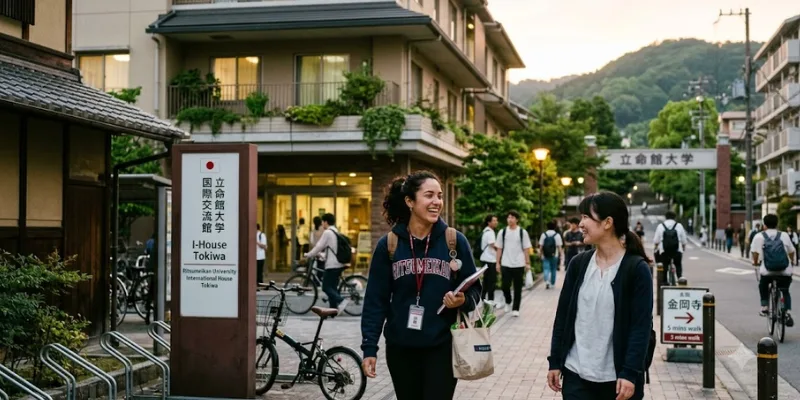

Quick answer: Ritsumeikan University offers international students two main housing paths at its Kyoto Kinugasa Campus — university-run International House (I-House) dormitories with three locations (Tokiwa, Utano, Taishogun), or private apartments arranged through partner agencies and platforms like Arealty. I-House rooms are single-occupancy, include utilities, and are reserved mainly for the first year, after which most students move into private rental housing near campus.
If you’ve been accepted into Ritsumeikan University’s Kyoto campus and are now facing the housing search, you’re not alone — this is one of the most common questions international students ask before their first semester in Japan. This guide walks through every ritsumeikan university student housing option available, what each one actually costs, and how to decide which path fits your situation.
Why Ritsumeikan University Student Housing Matters for Kyoto Arrivals
Kyoto’s rental market runs on rules that surprise a lot of newcomers: guarantor requirements, key money, and paperwork almost entirely in Japanese. For a first-year exchange or degree student, ritsumeikan university student housing support exists specifically to remove that friction during your first months, before you have the local track record landlords usually want to see.
Ritsumeikan’s main international programs are based at Kinugasa Campus, in Kita-ku, Kyoto — a historic part of the city near Kinkaku-ji (the Golden Pavilion). The university’s other campuses (Biwako-Kusatsu in Shiga, and Osaka Ibaraki) have their own separate housing arrangements, so this guide focuses on Kinugasa, where the vast majority of international degree-seeking and exchange students are placed.
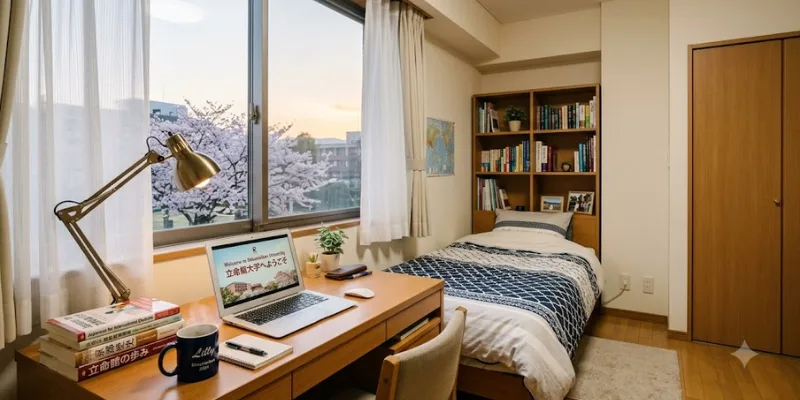
Option 1: University-Run International House (I-House) Dormitories
Ritsumeikan operates three dormitories collectively known as International Houses, all within a manageable distance of Kinugasa Campus:
- I-House Tokiwa — Ukyo-ku, Kyoto
- I-House Utano — Ukyo-ku, Kyoto
- I-House Taishogun — Kita-ku, Kyoto
These are the backbone of ritsumeikan university student housing for newly arrived students. Kinugasa Campus’s largest I-House offers 190 single-occupancy rooms specifically for newly-arrived international students, plus a small number of multi-occupancy and accessible rooms.
What’s included:
- Single-occupancy room (private)
- Water, electricity, and internet connection bundled into rent
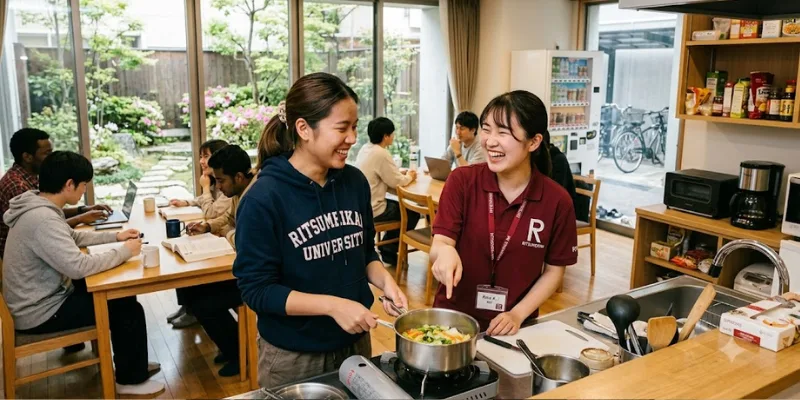
- A Resident Mentor (RM) system — current Ritsumeikan students who help new residents settle in, plan events, and handle day-to-day questions
- A separate one-time administrative processing fee on top of monthly rent
Who can apply:
- International students enrolled in a regular undergraduate program
- Exchange students on Ritsumeikan’s international agreements
How long you can stay: Residence periods are tied to the academic calendar — April enrollees are housed from mid-March through the end of February the following year; September enrollees from September through the end of August. Regular undergraduates can generally apply to extend for a second year, but I-House placement is not guaranteed and is not meant to be permanent housing for your whole degree.
Option 2: Private Apartments Near Kinugasa Campus
Once your I-House eligibility period ends — or if you’d simply prefer more independence from the start — the next step in ritsumeikan university student housing is the private rental market around Kinugasa.
Ritsumeikan’s own housing search center, run in partnership with the university co-op, has been placing students in private rooms since 1984 and maintains relationships with local landlords who are used to renting to international tenants. Independently, foreigner-friendly platforms and Kyoto rental agencies also list rooms specifically vetted for the no-Japanese-guarantor, English-support use case.
Typical private housing near Kinugasa includes:
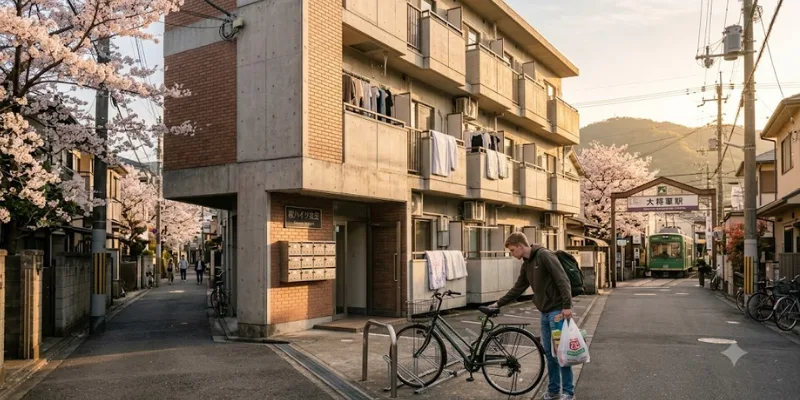
- Studio apartments (1K/1R) within a 10–20 minute walk or short bike ride of campus
- Shared houses, which tend to be cheaper and come furnished
- Monthly-lease “mansion” style apartments, popular with exchange students who don’t want a full 2-year contract
What to check before signing anything:
- Whether a guarantor company (hoshōgaisha) is required, and the fee involved
- Whether the landlord accepts a short-term or one-year lease (standard Japanese leases are typically two years)
- Distance to the nearest station on the Randen (Keifuku) line, which runs directly past Kinugasa Campus
- Whether utilities and internet are included or billed separately
Comparing I-House vs. Private Housing
| I-House (University Dorm) | Private Apartment | |
|---|---|---|
| Guarantor needed | No | Usually yes (or guarantor company) |
| Furnished | Yes, basic furnishings | Varies — check listing |
| Contract length | Tied to academic year | Often 1–2 years |
| Independence | Lower (shared building, RM oversight) | Higher |
| Best for | First year, first-time arrivals | Second year onward, or students confident with Japanese rental process |
Most students who ask about ritsumeikan university student housing are really asking which of these two fits their first semester — and for a first arrival with no local support network, I-House is almost always the lower-friction choice, even if it means moving again the following year. For a broader look at what the private Kyoto rental market involves once your I-House period ends, see Arealty’s Kyoto student housing manual.
Costs to Expect
I-House rent is set by the university and includes utilities, which makes budgeting simple but doesn’t always make it the cheapest option compared to a shared house further from campus. Private studio apartments near Kinugasa vary with size, age of the building, and proximity to the Randen line, and on top of monthly rent you should budget for the standard Japanese moving-in costs: deposit, agency fee, and — if applicable — key money and guarantor company fees.
How to Apply
For I-House: Applications go through the International Center at Kinugasa Campus as part of your admissions or exchange paperwork — you generally cannot apply independently once you’ve already arrived in Japan, so this needs to be handled before your move.
For private housing: You can start searching from overseas through platforms and agencies that specialize in foreigner-friendly Kyoto rentals, or wait until you arrive and use the campus housing search center for in-person support. Booking online before arrival is strongly recommended if you’re not planning to use I-House, since good rooms near a major university campus move fast at the start of each semester.
Frequently Asked Questions
No. The university makes every effort to provide housing, particularly through I-House, but placement is not guaranteed, especially for later applicants or those requesting a second year.
Location is generally assigned by the International Center based on availability rather than student preference, though preferences may be considered.
No — this is one of the main advantages of I-House for new arrivals, since a private rental almost always requires either a personal guarantor or a paid guarantor company.
It varies by dormitory, but most I-House locations are within a reasonable walk or short cycle/train ride, with several private student residences advertised as under 10 minutes on foot from campus gates.

Real estate advisor at Arealty Japan, specialising in helping foreign residents navigate the Tokyo and Osaka rental markets. Lucy has guided hundreds of international renters — from Working Holiday visa holders to corporate relocations — through Japan’s apartment application process. Her writing draws on firsthand experience with landlord screening, guarantor companies, and foreigner-friendly listings across all 23 Tokyo wards and major Kansai cities.



Leave a Reply