


Relocating to a new country involves navigating complex administrative landscapes, and Japan is no exception. Whether you are searching for apartments in Japan for a short-term stay or seeking a long-term Japan Tokyo apartment rent solution, the paperwork involved can be surprisingly extensive. Being well-prepared is not just a recommendation; it is a necessity to ensure you do not lose your dream home to a more prepared applicant.
This professional guide details every facet of the Required Documents for Renting in Japan, the financial breakdowns of initial costs, and the procedural nuances of the Japanese real estate market. By understanding these requirements, you can approach the leasing process with confidence and clarity.
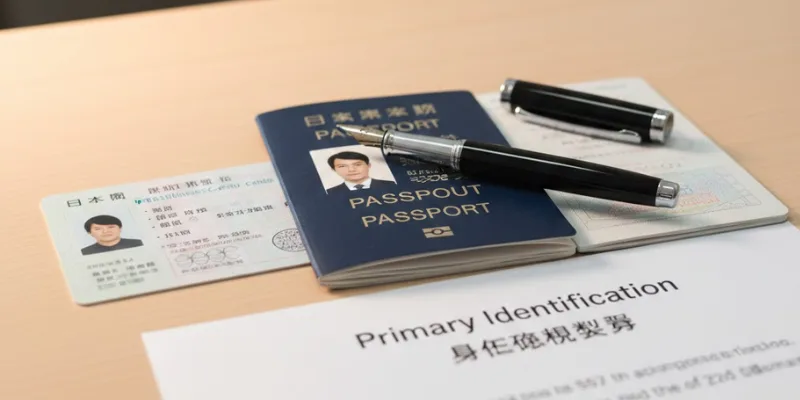
Primary Identification: Establishing Your Legal Identity
In the Japanese rental market, trust is the currency of every transaction. Property owners and management companies must verify your legal status to ensure the safety of the building and the reliability of the contract. For international residents, this process is particularly rigorous.
The Resident Record (Juminhyo)
The Resident Record is an official document that proves your current address as registered with the local government. You must provide an original copy, typically issued within the last three months, to validate your residency.
- Individual vs. Household: If you are living alone, a certificate for yourself is sufficient. If you are moving with family or partners, you must provide a record that includes all residents.
- Where to Obtain: You can request this at your local City Hall (Shiyakusho) or Ward Office (Kuyakusho). If you have a My Number card, many municipalities allow you to print this at convenience store kiosks.
- Validity: Most agencies strictly require the original document; a digital scan or a photocopy is rarely accepted for the final contract.
Personal Identification Documents
Providing clear, valid identification is the most basic requirement for any apartment for rent Japan. These documents serve to confirm your photo identity, birth date, and visa status.
Examples of essential identification for foreigners:
- Residence Card (Zaikyu Card): This is the most vital document. It must show your current visa status, period of stay, and your most recent address on the back.
- Passport: A copy of the photo page and the page containing your most recent entry stamp or visa sticker.
- My Number Card: The individual identification card used for social security and tax purposes in Japan.
Financial Verification: Proving Economic Stability
Landlords in Japan prioritize “repayment capability” above almost all else. To secure one of the many apartments in Tokyo Japan, you must demonstrate that your income is stable and sufficient to cover the rent, management fees, and living expenses.
For Salaried Employees
If you work for a Japanese company, your financial standing is verified through documents provided by your employer. These documents act as a guarantee that you have a consistent cash flow.
- Certificate of Withholding Tax (Gensen Choshu Hyo): This document summarizes your total earnings from the previous year. It is issued every December or January.
- Employment Contract: For those who have just started a job or are moving for a new position, an employment contract or an “Offer Letter” stating your projected annual salary is required.
- Pay Slips (Kyuryo Meisai): You may be asked for the three most recent pay slips to prove your current month-to-month earnings.
For Self-Employed and Freelancers
Individuals who are self-employed face a higher level of scrutiny. Since income can be variable, you must provide multiple years of data to prove long-term solvency.
Examples of financial proof for the self-employed:
- Tax Return (Kakutei Shinkoku): A copy of the stamped return submitted to the National Tax Agency.
- Tax Payment Certificate (Nozei Shomeisho): This proves you have no outstanding tax debts to the government.
- Bank Passbook Copies (Tsucho): Landlords may request a copy of your bank book to see the history of deposits and your current total savings.
The Seal Registration System (Inkan and Hanko)
Japan is one of the few remaining countries where a physical seal (Hanko) often carries more legal weight than a handwritten signature. While some modern agencies specializing in apartments in Japan for foreigners accept signatures, traditional contracts require a registered seal.
Seal Registration Certificate (Inkan Shomeisho)
A Seal Registration Certificate is an official document from the government stating that a specific seal is yours and is legally registered.
- Registration Process: You must take your carved seal (Inkan) to your local ward office and register it. Once registered, you are issued a “Seal Registration Card.”
- Why it is Required: For high-value contracts like real estate, the landlord needs to know that the seal on the paper is the one you have legally sworn is yours.
- Plan Ahead: In large cities, the wait times at ward offices can be long. Register your seal as soon as you settle into your temporary residence.
The Guarantor System: Ensuring Payment Security
The guarantor (Lien) system is a unique pillar of Japanese society. A guarantor is someone who agrees to pay your rent or cover damages if you are unable to do so. This person is legally tied to your contract.
Documentation for the Guarantor
If you use a physical person as a guarantor (usually a Japanese national with a stable income), they must provide a set of documents almost identical to yours. This ensures they have the “financial backbone” to support you if needed.
- Guarantor’s Resident Record: To verify their current location.
- Guarantor’s Proof of Income: To ensure they can actually afford to pay your rent in an emergency.
- Letter of Consent: A document signed and stamped by the guarantor, explicitly stating they understand and accept their legal obligations.

Breakdown of Initial Move-in Costs
Understanding the financial requirements is as important as the paperwork. When you look for a Japan Tokyo apartment rent, the “Initial Costs” (Shoki Hiyo) are often the biggest hurdle. These costs typically range from 4 to 6 months of the monthly rent.
Security Deposit (Shikikin)
The Security Deposit is money held by the landlord to cover any potential unpaid rent or repairs needed when you move out.
- Market Rate: Generally 1 to 2 months of rent.
- Refundability: This is refundable, but a “cleaning fee” is almost always deducted from it automatically upon move-out.
- Special Cases: If you have pets, landlords often ask for an additional month of deposit because of the increased risk of scratches or odors.
Key Money (Reikin)
Key Money is a non-refundable “gift” paid to the landlord as a sign of gratitude for allowing you to lease the property. While this practice is declining in some regions, it remains a staple for apartments in Tokyo Japan.
- Market Rate: Usually 1 month of rent.
- Zero Reikin Properties: Some newer buildings or less popular areas offer “Zero Key Money” to attract tenants.
Brokerage Fee (Chukai Tesuryo)
The Brokerage Fee is the payment made to the real estate agency for finding the property and managing the negotiations and paperwork.
- Legal Limit: The maximum fee an agency can charge is 1 month of rent plus consumption tax (10%).
- Comparison: Some agencies offer a 0.5-month fee to be more competitive, though 1 month is the standard.
Advance Rent and Pro-rated Rent
When you move in, you are expected to pay for the first full month of rent in advance. If you move in the middle of a month, you must also pay the Pro-rated Rent for the remaining days of that specific month.
Example Calculation (assuming ¥100,000 rent):
- Move-in Date: October 20th.
- Pro-rated Rent (11 days): ¥36,666.
- Advance Rent (November): ¥100,000.
- Total: ¥136,666.
Insurance and Safety Requirements
In Japan, protecting the property and your personal belongings is a contractual requirement. Most leases for apartments in Japan include mandatory insurance and safety-related fees. Consequently, your insurance policy details are often treated as Required Documents for Renting in Japan, ensuring both the landlord and tenant are fully protected before the keys are handed over.
Fire and Liability Insurance
Tenant insurance is vital in a country prone to natural disasters and high-density living. This insurance typically covers three main areas:
- Personal Property: Protection for your furniture and electronics against fire, theft, or water damage.
- Tenant Liability (Shakuya Baisho): Coverage if you accidentally damage the landlord’s property (e.g., causing a kitchen fire).
- Personal Liability: Coverage if you cause damage to a neighbor (e.g., your washing machine overflows and ruins the ceiling of the unit below).
- Cost: Usually between ¥15,000 and ¥20,000 for a two-year policy.
Key Replacement Fee
For security purposes, locks are changed every time a new tenant moves into an apartment for rent Japan.
- Standard Keys: ¥10,000 to ¥15,000.
- Dimple Keys (High Security): ¥20,000 to ¥30,000.
- Electronic/Smart Locks: Prices vary by manufacturer but are generally on the higher end of the spectrum.

Guarantor Companies (Hosho Gaisha)
As it becomes harder for even Japanese people to find individual guarantors, most apartments in Tokyo Japan now require or allow the use of a Guarantor Company. When using these services, you must include their specific forms within your Required Documents for Renting in Japan to verify your eligibility and ensure payment security.
How Guarantor Companies Work
Instead of a person, you pay a professional company to act as your guarantor. They charge an initial fee and a recurring annual or monthly fee.
- Initial Fee: Usually 50% to 100% of one month’s rent.
- Annual Renewal: Often around ¥10,000 per year.
- Monthly Fee: Some companies charge a small percentage (1-2%) of the rent every month instead of an annual renewal.
The Application and Screening Timeline
Timing is everything when securing apartments in Japan. The market moves incredibly fast, especially during the ‘moving seasons’ of March and September. To stay ahead of the competition, having your Required Documents for Renting in Japan prepared in advance is crucial to ensuring a smooth and successful application process.
Step-by-Step Timeline:
- Application Submission: Submit all Required Documents for Renting in Japan along with your application form.
- Screening (Shinsa): The management company and guarantor company review your documents. This takes 3–7 business days.
- Explanation of Important Matters (Juyo Jiko Setsumei): A licensed real estate agent explains the fine print of the contract to you.
- Contract Signing and Payment: You sign the final documents and transfer the initial costs.
- Key Handover: You receive the keys on the start date of your contract.
Common Reasons for Screening Rejection:
- Incomplete or blurry documentation.
- Insufficient income relative to the rent (rent should generally be 30% or less of your monthly income).
- Visa expiration date being too close to the move-in date.
Comprehensive Services with ARealty
Navigating the search for an apartment for rent Japan can be overwhelming due to language barriers and strict local customs. ARealty serves as your dedicated partner, ensuring that your transition into the Japanese housing market is seamless and professional.
The ARealty Advantage
ARealty understands the specific needs of international residents and maintains a vast network of landlords who are welcoming to global tenants. Their expertise goes beyond just finding a room; they manage the entire administrative lifecycle of your lease.
- Tailored Search: Whether you need a luxury Japan Tokyo apartment rent or a budget-friendly studio, ARealty filters through thousands of listings to find your perfect match.
- Contract Translation: They provide clear explanations of complex Japanese legal terms, ensuring you never sign a document you don’t fully understand.
- Utility Setup: ARealty can assist in setting up essential services such as electricity, water, and high-speed internet, which can be difficult to navigate without Japanese fluency.
If you are looking for a stress-free rental experience in Japan’s most competitive markets, we invite you to contact ARealty today. Our consultants are ready to help you secure your new home with efficiency and expertise.
Practical Example: Renting in Shinjuku for an Expat (2 Years Residency)
In this scenario, we assume you are a full-time employee (Seishain) with a stable monthly income of ¥300,000 to ¥350,000. You are targeting a 1K or 1LDK apartment in Shinjuku with a monthly rent of ¥100,000 (10 man).
1. Document Checklist
Since you have 2 years of local work history, your profile is considered “high stability” by landlords. You should prepare the following:
- Residence Card (Zaikyu Card): Must have at least 6 months of validity remaining.
- Passport: Photocopy of the ID page.
- Certificate of Residence (Juminhyo): Obtained from your current Ward Office (issued within the last 3 months).
- Financial Proof: * Gensen Choshu Hyo: Your tax withholding slip from the previous year (provided by your employer every January).
- Pay Slips (Kyuryo Meisai): The 3 most recent months to prove current income.
- Health Insurance Card: To prove you are enrolled in the social security system.
- Emergency Contact: Usually a Japanese national or a permanent resident.
2. Estimated Initial Move-in Costs
For a ¥100,000 apartment in a central area like Shinjuku, the initial costs typically range between 5 to 6 times the monthly rent.
| Item | Calculation Basis | Estimated Cost (JPY) |
| First Month’s Rent | 1 Month | ¥100,000 |
| Security Deposit (Shikikin) | 1 Month | ¥100,000 |
| Key Money (Reikin) | 1 Month (Standard for Shinjuku) | ¥100,000 |
| Brokerage Fee | 1 Month + 10% Tax | ¥110,000 |
| Guarantor Company Fee | 50% to 100% of Rent | ¥50,000 – ¥100,000 |
| Fire Insurance | 2-year Policy | ¥20,000 |
| Lock Exchange Fee | Standard/High Security | ¥15,000 – ¥25,000 |
| Pro-rated Rent | Depending on move-in date | ~¥20,000 – ¥30,000 |
| TOTAL ESTIMATE | ~¥515,000 – ¥585,000 |
Conclusion
Securing a Japan Tokyo apartment rent is a significant achievement that requires patience and meticulous organization. By treating the documentation process with the seriousness it deserves, you position yourself as a high-quality tenant.
The Japanese rental system is designed to create a stable and harmonious living environment for everyone. While the Required Documents for Renting in Japan may seem daunting, they are the foundation of a legal and secure home.
Are you ready to find your next apartment in Japan? Would you like ARealty to provide a customized list of available properties in your favorite Tokyo neighborhood?

Real estate advisor at Arealty Japan, specialising in helping foreign residents navigate the Tokyo and Osaka rental markets. Lucy has guided hundreds of international renters — from Working Holiday visa holders to corporate relocations — through Japan’s apartment application process. Her writing draws on firsthand experience with landlord screening, guarantor companies, and foreigner-friendly listings across all 23 Tokyo wards and major Kansai cities.



Leave a Reply