
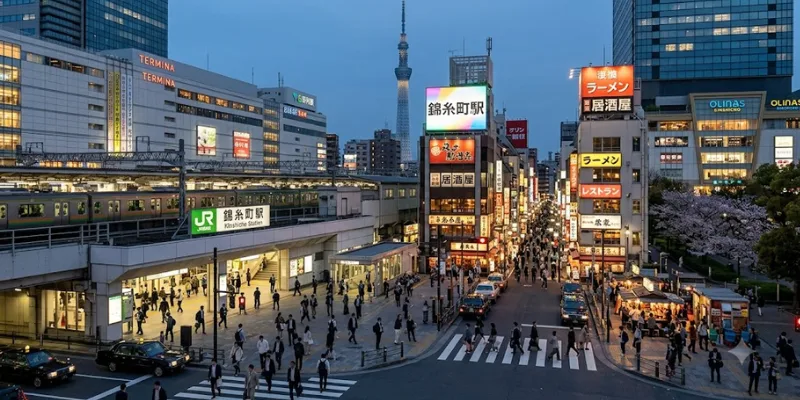

Kinshicho is Sumida-ku’s commercial core: a station-front cluster of department stores, izakaya streets, and office towers just eight minutes from Tokyo Station. This Kinshicho neighborhood guide covers rent, train access, daily life, and who the area actually suits, so you can decide if it fits your move to Tokyo.
Kinshicho at a Glance
| Category | Detail |
|---|---|
| Ward | Sumida-ku (east bank of the Sumida River) |
| Main station | Kinshicho (JR Sobu Line, JR Chuo-Sobu Line, Tokyo Metro Hanzomon Line) |
| To Tokyo Station | ~8 min |
| To Akihabara | ~9 min |
| To Shinjuku | ~23 min |
| 1R rent (Sumida-ku average) | ¥75,923/month |
| 1K / 1DK rent (Sumida-ku average) | ¥93,555/month |
| Best for | Young professionals, commuters who want a short ride into central Tokyo, anyone who wants shops and nightlife at street level |
| Less suited for | Renters who want a quiet, low-traffic residential street |
What This Kinshicho Neighborhood Guide Covers That Ward Overviews Don’t
Sumida-ku covers a wide range of character, from the sumo tradition of Ryogoku to the Skytree towers of Oshiage. Kinshicho is the ward’s most developed commercial pocket. Large department stores sit directly outside the station, and the surrounding blocks hold one of eastern Tokyo’s denser concentrations of restaurants, bars, and izakaya streets.
That density is the trade-off at the center of this Kinshicho neighborhood guide. You get a short commute and everything at street level. In exchange, you give up the quieter, more residential feel of nearby Honjo-Azumabashi or the traditional streets of Ryogoku. For a broader look at how Sumida-ku’s neighborhoods differ, see our Sumida City area guide.
Getting Around: Kinshicho’s Train Access
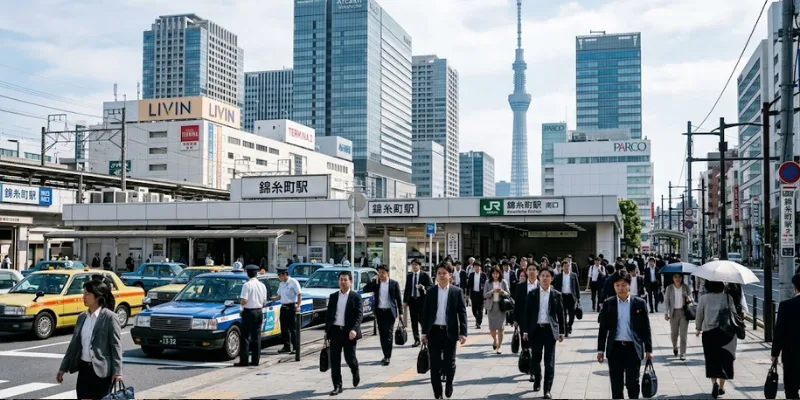
Kinshicho Station is Sumida-ku’s busiest transit hub, and it’s the reason this area draws so many commuters. Two JR lines run through it: the Chuo-Sobu Line and the Sobu Main Line. The Tokyo Metro Hanzomon Line also stops here, giving direct access to Shibuya without a transfer.
Typical travel times from Kinshicho Station:
- To Tokyo Station: About 8 minutes
- To Akihabara: About 9 minutes
- To Shinjuku: About 23 minutes
- To Shibuya: About 25 minutes
Few residential areas this close to central Tokyo offer commute times this short. That’s the main reason Kinshicho rents run higher than the Sumida-ku average, despite the ward overall being one of the more affordable eastern options.
How Kinshicho Became Sumida’s Commercial Center
Kinshicho’s role as a commercial hub isn’t a recent development. The area was largely leveled by the 1923 Great Kanto Earthquake, and the reconstruction that followed set the template still visible today: wide station-front streets built for commerce, with Kinshi Park laid out just north of the station as part of the same rebuilding effort (Kinshi Park, Wikipedia). The station itself became a major interchange as Tokyo’s rail network expanded through the 20th century, and the department stores and entertainment streets grew up around that transit traffic rather than the other way around.
That history matters for renters today. Because Kinshicho developed around commerce rather than residential planning, housing stock here is more mixed than in a neighborhood like Ryogoku or Yanaka, where entire blocks were built for family living. You’ll find compact studios above shops, mid-rise apartment buildings a few streets back from the station, and newer developments filling in gaps as older buildings are replaced. This is part of why unit quality and price vary more block to block in Kinshicho than in more uniformly residential parts of Sumida-ku.
Rental Market: What You’ll Actually Pay in Kinshicho
Sumida-ku as a whole is priced below wards on the west side of central Tokyo. Ward-wide averages put a 1R around ¥75,923 a month and a 1K or 1DK around ¥93,555. Kinshicho itself sits above these averages, since it’s the ward’s most in-demand station. Live listings near the station commonly run ¥150,000 to ¥190,000 for a 1K in a newer building, though older, more basic units can still be found closer to the ward average.
Two things to know before you search:
- Newer buildings cluster near the station. Genovia and similar mid-rise developments have gone up within a short walk of Kinshicho Station over the past several years. These carry a price premium over older stock a few minutes further out.
- Noise varies block by block. The entertainment streets directly around the station stay active into the evening. If quiet matters to you, ask your agent about the specific block before signing, not just the station distance.
- Family-sized units cost more, ward-wide. Sumida-ku averages run ¥218,167 for a 2K or 2DK and ¥290,556 for 3K and larger. Kinshicho itself has fewer family-sized layouts than smaller stations in the ward, since much of its housing stock was built for single renters near the commercial core.
Browse current Sumida-ku listings, including units near Kinshicho, on Arealty’s Sumida-ku rental page.
Daily Life in Kinshicho
Kinshicho functions as a genuine commercial center, not just a transit stop. Department stores and shopping complexes sit right at the station, covering groceries, clothing, and daily essentials without needing to travel further into central Tokyo. Terminal-facing retail here operates on the scale you’d expect from a Tokyo Station-adjacent commercial hub, which is unusual for a residential neighborhood this size.
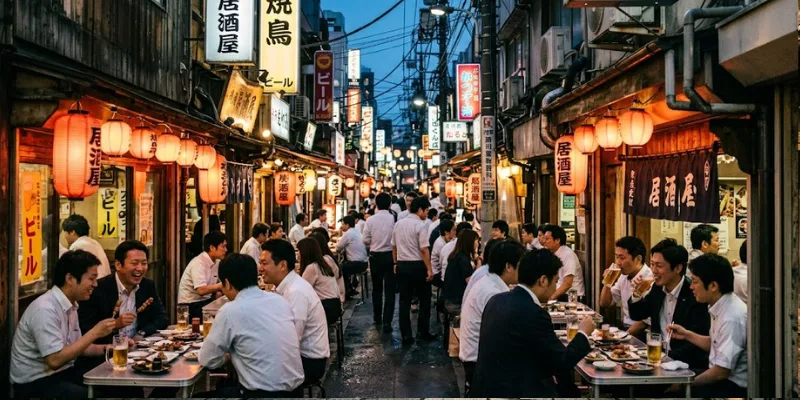
The area’s izakaya and restaurant streets are one of its defining features. Kinshicho has long been known among Tokyo residents as an after-work dining destination, with a density of bars and casual restaurants that rivals much larger entertainment districts, at lower prices. This is a genuine draw for renters who want an active weeknight social scene without needing to travel to Shibuya or Shinjuku after work.
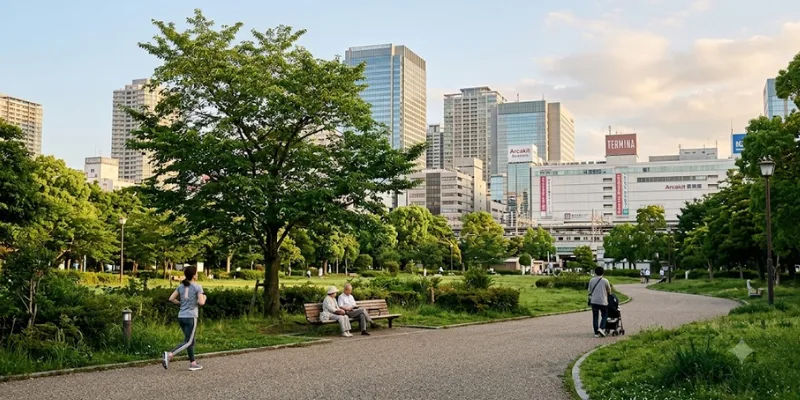
Kinshi Park, just north of the station, is one of Sumida-ward’s larger green spaces. It was built as part of the post-1923 earthquake reconstruction and today holds sports facilities, open lawns, and roughly 150 cherry trees (Kinshi Park, Wikipedia). It’s the main outdoor escape for residents who want green space without leaving the neighborhood.
For international residents specifically, Sumida-ku’s Kinshicho-based clinic and supermarket options provide English-language support that’s harder to find further from the station, a point covered in more depth in our Sumida City area guide.
Practical Notes for Foreign Renters
A few Kinshicho-specific points worth flagging before you start apartment hunting:
- Walk the block before you sign. Because housing stock is mixed here, distance from the station tells you less than it would in a more uniform neighborhood. A unit two minutes from Kinshicho Station could sit above a quiet street or right next to a busy izakaya row. Visit in the evening, not just during the day, to check the actual noise level.
- Ask what “newly built” actually means. Several developments near the station are recent, but older buildings sit right alongside them. Confirm construction year directly rather than relying on listing photos.
- Factor in the commute premium. Kinshicho’s short ride into Tokyo Station and Akihabara is real, but it comes at a price premium over the Sumida-ku average. If budget matters more than commute time, compare it against Sumida-ku’s other stations before deciding.
Who Should Actually Live in Kinshicho
This Kinshicho neighborhood guide would be incomplete without being direct about fit. The area isn’t right for everyone.
Kinshicho works well for:
- Young professionals who want a short commute and an active street-level scene
- Renters who eat out often and want restaurants and izakaya within walking distance
- Anyone who values proximity to Tokyo Station and Akihabara over quiet streets
- Commuters heading to Shibuya, since the Hanzomon Line runs direct
Kinshicho is a weaker fit for:
- Renters who want a quiet residential block, since the station area stays active into the evening
- Families wanting the traditional Shitamachi character found in Ryogoku or Honjo-Azumabashi
- Anyone on a tight budget, since Kinshicho prices sit above the Sumida-ku average
The Kinshicho vs. Nearby Sumida Areas
This place is often compared with Oshiage and Ryogoku, the other two anchor points of Sumida-ku. Oshiage trades Kinshicho’s commercial density for newer buildings and Skytree views, at a longer commute (about 15 minutes to Tokyo Station versus Kinshicho’s 8). Ryogoku trades it for a slower pace and sumo-culture history, sitting roughly in between the two on commute time. If your priority is minimizing travel time to central Tokyo, Kinshicho is the strongest option of the three. If quiet streets or newer housing stock matter more, Oshiage or Ryogoku are worth comparing directly against it before you decide. For how Sumida-ku compares with other eastern and central wards on rent and commute time, see our 23-ward Tokyo rental comparison guide.
Kinshicho Neighborhood Guide: FAQ
Yes, particularly for professionals who want a short commute and an active neighborhood. It suits people who like having shops and restaurants nearby more than it suits those wanting a quiet residential street.
Kinshicho Station itself is the hub, served by the JR Chuo-Sobu Line, JR Sobu Main Line, and Tokyo Metro Hanzomon Line.
Sumida-ku averages ¥75,923 for a 1R and ¥93,555 for a 1K or 1DK. Kinshicho itself runs higher, commonly ¥150,000 to ¥190,000 for a 1K in a newer building near the station.
The streets directly around the station host a dense cluster of izakaya and restaurants that stay active into the evening. Blocks a few minutes further out are noticeably quieter.
About 8 minutes by train, one of the shortest commutes into central Tokyo from any residential area in the eastern wards.
Looking for an apartment in Kinshicho or elsewhere in Sumida-ku? Browse verified listings on Arealty, all pre-confirmed for foreigner acceptance with English-language support throughout the application process. Or start from arealty.jp to search across all 23 Tokyo wards.

Real estate advisor at Arealty Japan, specialising in helping foreign residents navigate the Tokyo and Osaka rental markets. Lucy has guided hundreds of international renters — from Working Holiday visa holders to corporate relocations — through Japan’s apartment application process. Her writing draws on firsthand experience with landlord screening, guarantor companies, and foreigner-friendly listings across all 23 Tokyo wards and major Kansai cities.



Leave a Reply