
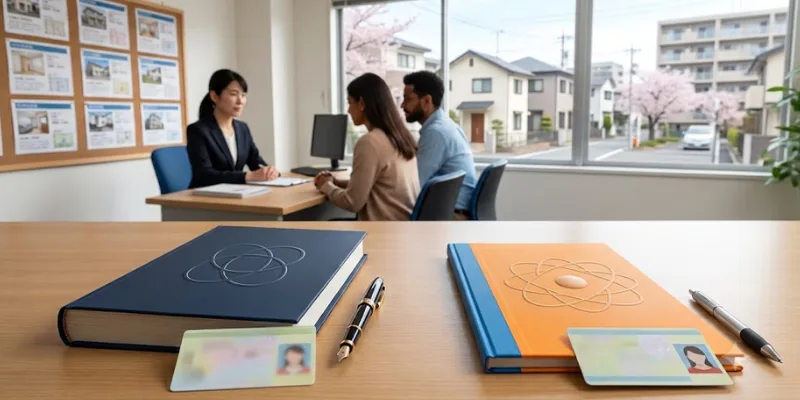

Quick answer: Permanent Residency (PR) gives access to nearly every mortgage lender in Japan, including the government-backed Flat 35 loan, at rates and terms close to those offered to Japanese citizens. The Long-Term Resident visa status, by contrast, still allows renting and even buying property, but with a smaller pool of mortgage lenders, larger down payments, and closer scrutiny of employment history and income. For renting, the practical gap between the two is much smaller than for buying.
If you’re comparing permanent residency long term resident visa housing outcomes because you’re deciding whether to apply for PR before or after buying a home, this comparison lays out exactly where the two statuses diverge — and where they don’t.
The Core Difference: Risk, Not Nationality
Japanese banks and landlords don’t discriminate by passport. What they weigh is the likelihood that a resident stays in Japan long enough to fulfill a lease or repay a decades-long mortgage. Permanent Residency status directly answers that concern, since PR carries no expiration date and no renewal requirement tied to a specific job or sponsor. A Long-Term Resident visa, along with other visas like work or spouse visas, still requires periodic renewal — and that periodic renewal is exactly what makes lenders and some landlords more cautious.
This single distinction explains almost every practical gap in permanent residency long term resident visa housing outcomes, from mortgage approval speed to which banks will even consider an application.

Renting: The Gap Is Small
For day-to-day apartment rental, PR and Long-Term Resident status are treated fairly similarly by most landlords and agencies, especially foreigner-friendly platforms that already build guarantor-company solutions into every application. A valid residence card, proof of income, and (in most cases) a guarantor or guarantor company are the standard requirements regardless of visa type.
Where a difference can show up:
- Some individual landlords, particularly older or smaller-scale owners, may still hesitate over any non-PR status out of unfamiliarity, though this is increasingly rare with agencies that specialize in foreign tenants.
- Long-Term Resident visa holders renewing their status may be asked for a copy of their most recent residence card renewal if the lease term extends close to a visa expiry date.
For renters, the practical takeaway is that permanent residency long term resident visa housing differences matter far less than for buyers — a guarantor company resolves most of the friction either way.
Buying: Where PR Changes Everything
This is where the two statuses diverge sharply.
With Permanent Residency:
- Access to the full range of major banks, online lenders, and specialist mortgage providers — commonly cited as 10 or more realistic options
- Eligibility for Flat 35, the government-backed fixed-rate loan administered by the Japan Housing Finance Agency, which in practice is largely restricted to Japanese citizens and permanent or special permanent residents
- Mortgage terms up to 35 years, with rates close to those offered to Japanese nationals
- Faster approval — typically weeks rather than a month or more
- Lower down payment requirements
With a Long-Term Resident visa (no PR):
- A smaller, but real, list of foreign-friendly lenders — banks like SMBC Trust Bank Prestia and Tokyo Star Bank actively build mortgage products for non-PR residents
- Flat 35 is generally not accessible
- Larger down payments typically expected
- Longer approval timelines and closer review of income stability and years of continuous employment in Japan
- Slightly higher interest rate premiums are common compared to what a PR holder would be offered
None of this means buying property is closed off to Long-Term Resident visa holders — it means the process takes more research into which of the smaller list of specialist lenders fits your situation, and it usually costs a bit more in rate and down payment. For the lender-by-lender mechanics of how visa status factors into a loan application, see Arealty’s guide to how visa status impacts your home loan application; for non-PR buyers specifically, Arealty’s guide to buying property without permanent residency covers the process in more depth.
Does Getting PR First Actually Save Money?
For anyone weighing permanent residency long term resident visa housing decisions around a near-term home purchase, this is the real question. If you’re within a year or two of PR eligibility, waiting can mean access to lower rates, Flat 35, and a much wider lender pool — often enough of a difference to outweigh a short delay in buying. If PR is still several years away, most people in a stable job on a Long-Term Resident or work visa proceed with one of the specialist non-PR lenders rather than wait.
How to Qualify for Permanent Residency
The standard path to PR requires ten years of continuous residence in Japan, generally including five or more years on a qualifying work or long-term visa category. Certain routes shorten this significantly — highly skilled professional visa holders, for example, can become eligible in as little as one to three years depending on points accumulated. Marriage to a Japanese national is another common accelerated path.

Practical Steps If You’re Not Applying for PR Yet
- Build a documented employment history in Japan — most non-PR mortgage products want to see one to three years of stable income before considering an application.
- Research specialist lenders directly rather than assuming your regular bank will offer a home loan — the major megabanks in Japan generally don’t extend mortgages to non-permanent residents.
- Budget for a larger down payment than a PR holder would need, so financing gaps don’t derail a purchase mid-process.
- Keep your visa renewal timeline in view — lenders will want assurance your status won’t lapse mid-loan.
Frequently Asked Questions
Can a Long-Term Resident visa holder get a mortgage in Japan at all? Yes. A specific group of banks — including SMBC Trust Bank Prestia, Tokyo Star Bank, and others — actively lend to non-PR foreign residents, though usually with a larger down payment and closer income review than a PR holder would face.
Is Flat 35 completely closed to non-PR residents? In practice, yes for most applicants — Flat 35 is restricted to Japanese citizens and permanent or special permanent residents, so Long-Term Resident visa holders should look at bank-specific mortgage products instead.
Does renting require PR in Japan? No. Renting is accessible on nearly any valid, current residence status, especially through agencies and platforms that already work with guarantor companies for foreign tenants.
Should I wait for PR before buying a home? It depends how close you are to PR eligibility. If you’re within a year or two, waiting can unlock significantly better mortgage terms; if PR is still years away, most buyers proceed through a specialist non-PR lender instead.

Real estate advisor at Arealty Japan, specialising in helping foreign residents navigate the Tokyo and Osaka rental markets. Lucy has guided hundreds of international renters — from Working Holiday visa holders to corporate relocations — through Japan’s apartment application process. Her writing draws on firsthand experience with landlord screening, guarantor companies, and foreigner-friendly listings across all 23 Tokyo wards and major Kansai cities.





Leave a Reply