
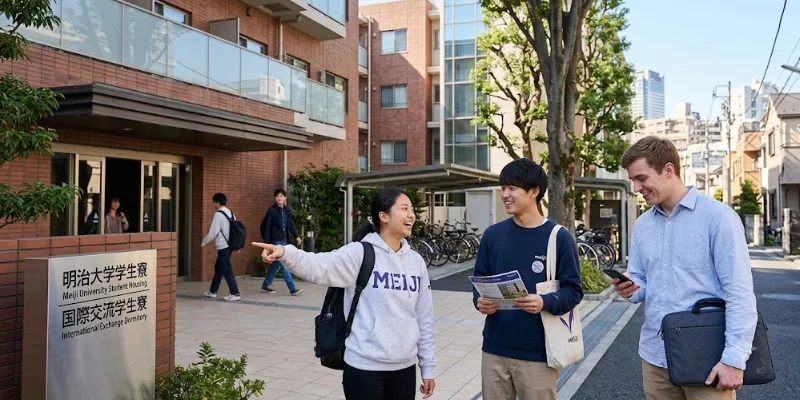

Quick answer: Meiji University student housing splits into three main paths. Exchange students usually get a university dorm — Izumi International House, Meiji Global Village, or Komae International House. Degree students often start in a dorm too, then move to a private apartment in Chiyoda, Suginami, or Kawasaki once they have a guarantor company and financial proof lined up. Which option fits you depends mostly on which of Meiji’s four campuses you’ll actually be attending.
Meiji University isn’t a single campus. It’s four, spread across central Tokyo and Kanagawa. That single fact changes everything about how you should search for housing. A “close to Meiji” apartment near Surugadai could still be an hour from Ikuta. This guide breaks down each campus, the official dorm system, realistic rent by neighborhood, and the paperwork foreign students need before signing a lease.
Meiji University’s Four Campuses at a Glance
Commute time should drive your housing decision more than rent does. Here’s what each campus covers:
- Surugadai Campus (Chiyoda-ku): The main campus. Junior and senior-year students and most faculties are based here, near Ochanomizu and Jimbocho stations.
- Izumi Campus (Suginami-ku): Home to first- and second-year humanities students. The closest station is Meidaimae, on the Keio Line and Keio Inokashira Line.
- Ikuta Campus (Kawasaki, Kanagawa): Science and Technology and Agriculture students study here. It’s reached via Mukogaoka-Yuen or Ikuta stations on the Odakyu Line.
- Nakano Campus (Nakano-ku): Houses Global Japanese Studies and Interdisciplinary Mathematical Sciences, a short walk from Nakano-Sakaue station.
Check your course schedule before signing a one-year lease. Commuting between Izumi and Ikuta on a regular basis can eat over an hour each way.
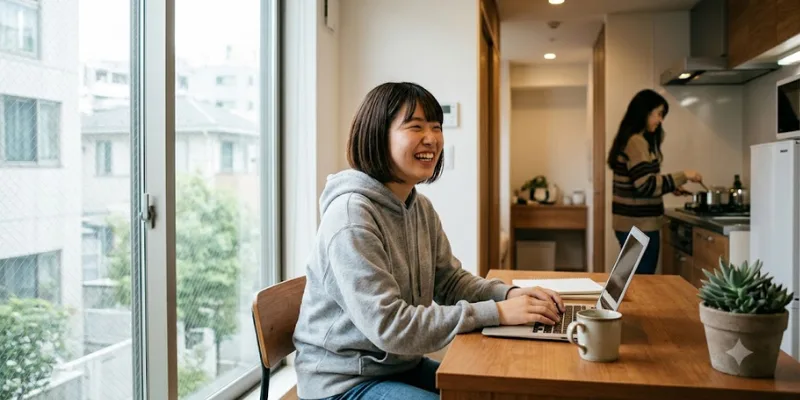
University-Run Meiji University Student Housing Options
For exchange students, a university-run dorm is usually the fastest route into Meiji University student housing. The university itself acts as your guarantor, which removes the biggest paperwork hurdle foreign renters normally face.
Izumi International House is owned directly by the university. It’s reserved for incoming exchange students and visiting researchers — not regular degree students. It sits about a 12-minute walk from Meidaimae Station, with reasonable access to Izumi, Surugadai, and Nakano campuses. Rooms are single-occupancy inside gender-separated units of 6–8 residents, each sharing a kitchen and laundry area. Budget roughly ¥80,000–¥90,000 per month, utilities included.
Meiji Global Village (MGV) sits on the Izumi Campus itself. A private company manages it under a Resident Assistant system that pairs Japanese and international students together. About half its rooms go to incoming exchange students. It’s one of the more social Meiji University student housing options, built around cultural exchange rather than independent living.
Komae International House serves students assigned to Ikuta Campus. It offers a far shorter commute than trying to live in central Tokyo and travel out to Kawasaki daily.
Apply through the International Student Center as soon as your acceptance letter arrives. Spots at Izumi International House and MGV fill months before each semester starts.
Best Neighborhoods for Meiji University Student Housing Off-Campus
Once you’ve spent a year or two in a dorm, many students move to independent housing. These are the areas that come up most often in an off-campus Meiji University student housing search.
Ochanomizu / Jimbocho, for Surugadai Campus, is central and walkable, full of bookstores and cafés. Rent runs higher here than in the outer wards. A small 1K apartment typically starts around ¥90,000–¥120,000 per month.
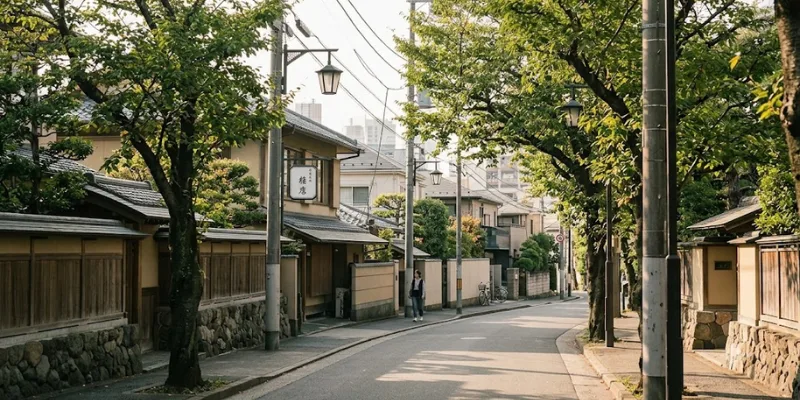
Meidaimae / Eifuku-cho, for Izumi Campus, is quieter and more residential. It sits in Suginami-ku with direct Keio Line access to Izumi and a short ride onward to Surugadai. A 1K or 1DK here usually runs ¥75,000–¥95,000 per month — noticeably cheaper than central Tokyo, with a manageable commute.
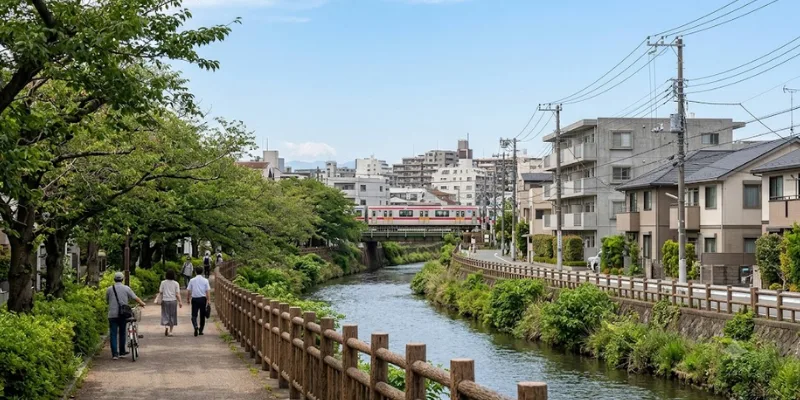
Mukogaoka-Yuen / Noborito, for Ikuta Campus, has the lowest rents of the four. Expect ¥60,000–¥80,000 per month for a comparable unit. The trade-off is a longer trip into central Tokyo on weekends.
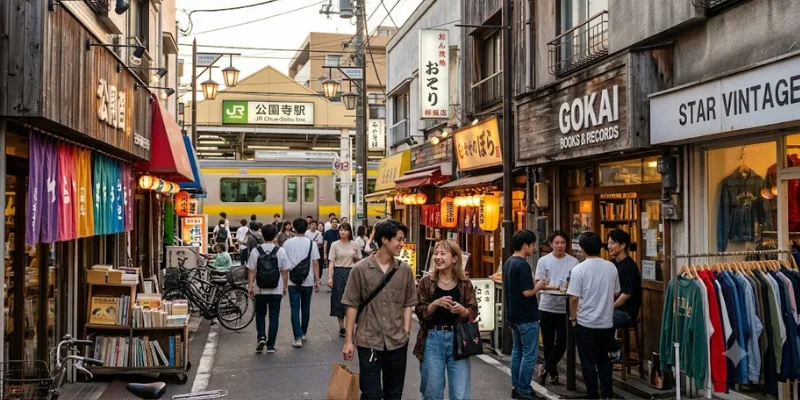
Nakano, for Nakano Campus, is a popular student and expat hub in its own right, with good nightlife and grocery access. Budget ¥85,000–¥100,000 per month for a studio near the station.
None of these areas is objectively “best” — the right one depends on your daily schedule. A science major spending most weekdays at Ikuta gains little from a trendy Ochanomizu address they only see on weekends. Conversely, a senior-year student with most classes at Surugadai will find the Meidaimae commute wears thin after a few months of early lectures. If your course load shifts between campuses by semester, it’s worth choosing a station on a line that touches more than one campus — Meidaimae’s Keio Line, for instance, links Izumi to Surugadai without a transfer.
For a wider comparison before you commit to a neighborhood, see our guide to renting an apartment in Tokyo, which breaks down typical costs across all 23 wards. Our average rent for international students in Tokyo guide gives a side-by-side view built specifically for student budgets.
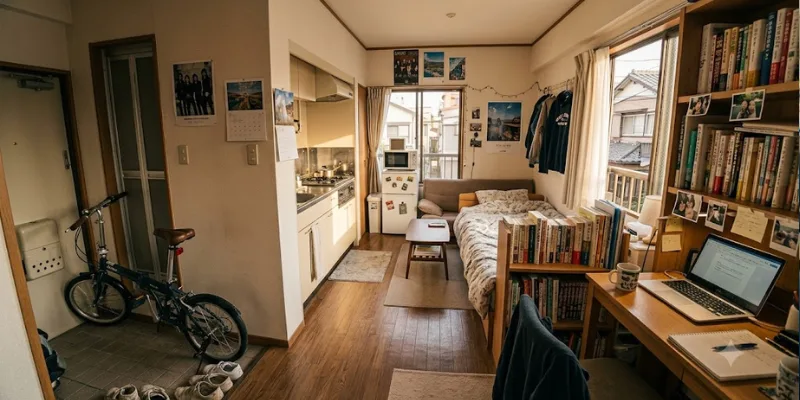
Move-In Costs Beyond Monthly Rent
The advertised rent for Meiji University student housing is rarely the full picture. Private apartments in Japan typically ask for several upfront payments before you get the keys:
- Shikikin (deposit): Usually one to two months’ rent, partly refundable when you move out.
- Reikin (key money): A non-refundable “thank you” payment to the landlord, often one month’s rent, though it’s becoming less common in student-heavy buildings.
- Agency fee: Typically one month’s rent plus tax, paid to the real estate agent who arranges the lease.
- Guarantor company fee: Often 50–100% of one month’s rent for the first year, then a smaller annual renewal fee.
- Fire insurance: A small mandatory fee, usually under ¥20,000 for a two-year policy.
Altogether, budget for roughly four to six months’ rent as a lump sum before move-in. University dorms avoid most of this, since they charge a simple monthly fee with no key money or agency commission. For a full walkthrough of what each fee covers and where landlords sometimes allow negotiation, see our guides on initial move-in costs in Japan and negotiating move-in costs as an expat. If landlord and lease terminology feels unfamiliar, our Japanese apartment vocabulary guide covers the words you’ll see on every contract.
Guarantor & Paperwork Requirements
This is where most students hit a wall. Japanese landlords almost always require a guarantor (hoshōnin), or a paid guarantor company, plus proof you can cover rent.
If you’re renting a private apartment rather than living in a dorm, expect to prepare:
- A valid student visa and Certificate of Eligibility
- A guarantor company — most landlords won’t accept a personal guarantor unless they’re a Japan-based relative
- Proof of funds, such as a scholarship award letter, a parent’s income statement, or a bank balance certificate
- An emergency contact based in Japan; the International Student Office can sometimes help arrange one
Our guide to the guarantor system in Japan explains how these companies price their fees. Required documents for renting in Japan walks through the exact paperwork checklist most landlords ask for. If a guarantor company turns you down because you have no local income, check guarantor-free rental listings before assuming you’re stuck.
Dorm vs. Private Apartment: Which Fits You
Three factors usually decide this for Meiji students:
Length of stay. A one-semester exchange rarely justifies a full apartment search. The university dorm system exists for exactly this case. A four-year degree is where private housing starts to make sense financially.
Budget flexibility. Dorms bundle utilities, and sometimes furniture, into one monthly fee. That’s easier to plan around than a bare apartment plus separate gas, water, electricity, and internet contracts.
Independence. Shared dorms come with rules. Izumi International House, for example, enforces a midnight curfew and restricts access between gender-separated floors. A private studio gives you full control, once you clear the guarantor and paperwork steps above.
Some students want the social side of dorm life without fully giving up independence. Our guide to renting a share house in Japan covers that middle-ground option for foreign students.
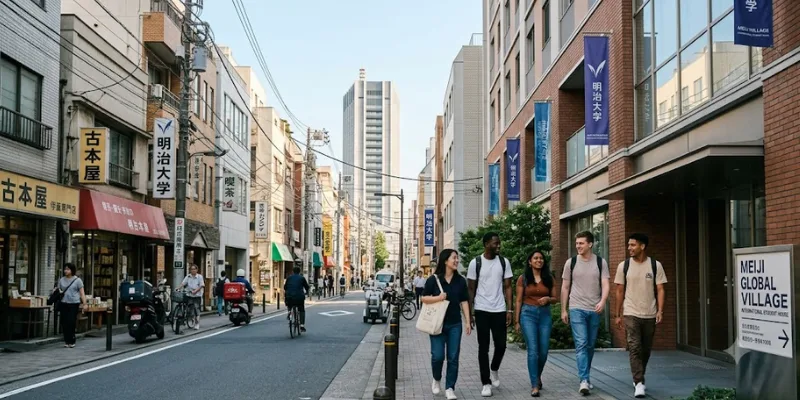
Step-by-Step: Securing Housing Before You Arrive
- Confirm your campus assignment as soon as your acceptance letter arrives. This decides whether you should search near Surugadai, Izumi, Ikuta, or Nakano.
- Apply for a university dorm immediately if you’re an exchange student or first-year. Izumi International House and MGV both fill early.
- Start a private apartment search 6–8 weeks before move-in if a dorm isn’t an option. Most landlords won’t hold a unit longer than that.
- Line up your guarantor company and financial documents in parallel, not after you find a place. This step causes the most move-in delays.
- Check the actual commute from any shortlisted apartment to your real campus. Surugadai, Izumi, and Ikuta sit far enough apart that “near Meiji” can still mean a long ride to your specific building.
FAQ: Meiji University Student Housing
No. It’s reserved for incoming exchange students and visiting researchers, not regular degree-seeking students.
University dorms generally run ¥75,000–¥90,000 including utilities. Private apartments range from around ¥60,000 in Kawasaki near Ikuta Campus up to ¥120,000 or more near central Surugadai Campus.
University dorms don’t require one, since the university acts as guarantor itself. Private apartments almost always require a guarantor company, which most first-time renters arrange through their real estate agent.
Ikuta Campus, in Kawasaki, consistently has the lowest rents of the four. It also has the longest average commute into central Tokyo.
Yes — this is common. Many students use a dorm for their first year to build local credit history and language ability, then move to a private apartment once a guarantor screening is easier to pass.
Start with Arealty’s Tokyo rental listings, filtered by the ward closest to your campus. Compare against the neighborhood rent ranges above before booking viewings.
Yes. Any stay longer than 90 days requires registering your new address at the local ward office within 14 days of moving in, which also updates your residence card. This applies whether you’re in a university dorm or a private apartment, and landlords or dorm staff can usually point you to the nearest ward office.
Sources: Meiji University International Student Center — Izumi International House; Meiji University Campus Directory

Real estate advisor at Arealty Japan, specialising in helping foreign residents navigate the Tokyo and Osaka rental markets. Lucy has guided hundreds of international renters — from Working Holiday visa holders to corporate relocations — through Japan’s apartment application process. Her writing draws on firsthand experience with landlord screening, guarantor companies, and foreigner-friendly listings across all 23 Tokyo wards and major Kansai cities.




Leave a Reply