
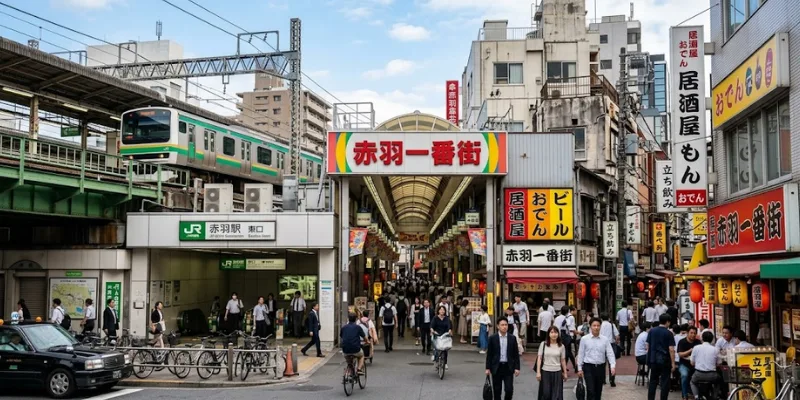

Akabane is one of the best-value places to rent inside Tokyo’s 23 wards. It sits at the northern edge of Kita-ku, right on the Saitama border. From Akabane Station you can reach Ikebukuro in about 10 minutes, Shinjuku in about 15, and Tokyo Station in about 15, without changing trains. A 1K apartment near the station rents for roughly ¥106,000 a month, well below central wards. This Akabane neighborhood guide covers rent, commute times, the best sub-areas, and what to check before you sign.
| Key facts | Akabane (Kita-ku) |
|---|---|
| Main station | JR Akabane Station |
| JR lines | Keihin-Tohoku, Saikyo, Shonan-Shinjuku, Ueno-Tokyo, Utsunomiya, Takasaki |
| Other stations nearby | Akabane-iwabuchi (Namboku Line, Saitama Rapid Railway), Kita-Akabane, Shimo |
| Average 1K rent (within 10 min walk) | about ¥105,800/month |
| Average 1LDK rent | about ¥161,300/month |
| Best for | Commuters, singles on a budget, couples, people who like a lively local food scene |
| Watch out for | Flood risk in low-lying streets near the Arakawa River, nightlife noise around Ichibangai |
Rent figures: LIFULL HOME’S station data, September 2026. Commute times are approximate and vary by train type.
Where is Akabane, and why do renters choose it?
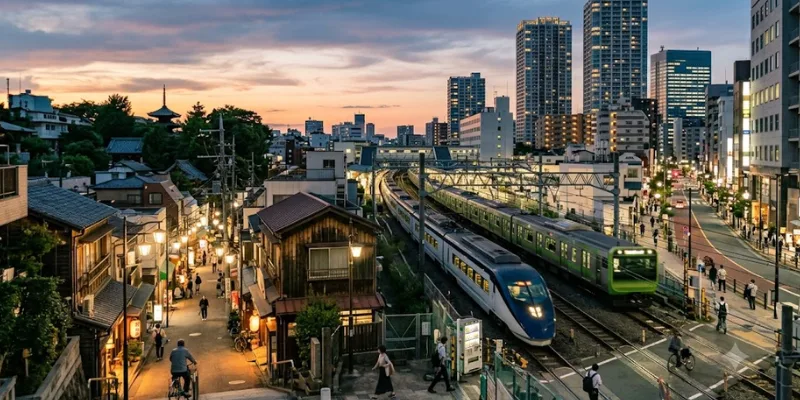
Akabane is a neighborhood in Kita Ward, at the very top of Tokyo’s 23 wards. The Arakawa River marks its northern edge, and on the other side of the river is Kawaguchi in Saitama Prefecture. That position makes Akabane Station a major transfer point for commuters heading into central Tokyo.
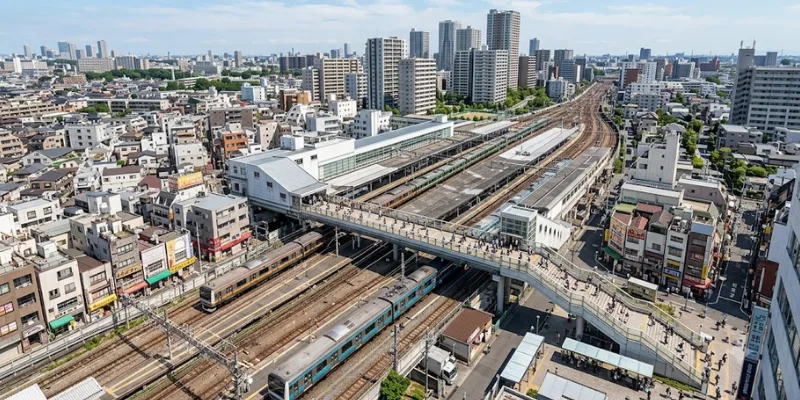
For renters, the appeal is simple. You get inner-city transit access at outer-ward prices. Akabane Station is served by six JR services, so you have direct trains to Shinjuku, Shibuya, Ikebukuro, Ueno, Tokyo, and even Shinagawa. Very few stations at this price level offer that kind of choice.
Akabane also has a strong personality. It is known across Tokyo for its old-school drinking streets, cheap and cheerful restaurants, and covered shopping arcades. At the same time, the area around the station is changing fast, with major redevelopment projects underway on the East Exit side.
If you want the wider ward picture first, read our Kita City guide and the Kita-ku apartments for rent ward guide. This article zooms in on Akabane itself.
How fast is the commute from Akabane?
Commute time is the main reason people move to Akabane. The table below shows typical journey times from JR Akabane Station with no transfers.
| Destination | Line | Approx. time |
|---|---|---|
| Ikebukuro | JR Saikyo Line | 10 min |
| Shinjuku | JR Saikyo / Shonan-Shinjuku Line | 15 min |
| Shibuya | JR Shonan-Shinjuku Line | 20 min |
| Ueno | JR Utsunomiya / Takasaki Line | 10 min |
| Tokyo | JR Ueno-Tokyo Line | 15 min |
| Shinagawa | JR Ueno-Tokyo Line | 25 min |
| Omiya (Saitama) | JR Saikyo / Utsunomiya Line | 15 to 20 min |
Rapid and local trains differ, so always check your exact route with a journey planner before you commit to a property.
Akabane-iwabuchi Station adds more options. It sits about 10 minutes on foot from JR Akabane and is the terminus of the Tokyo Metro Namboku Line. The Namboku Line runs south through Komagome, Korakuen, Iidabashi, and Yotsuya, which is useful if you work or study in Bunkyo or Chiyoda. It also connects to the Saitama Rapid Railway heading north.
One practical tip: the Keihin-Tohoku Line is slower than the Ueno-Tokyo Line but runs more often and stops at every station. If your office is near a smaller stop like Tabata or Akihabara, it may still be your best choice.
How much is rent in Akabane in 2026?
Here are average monthly rents for properties within a 10-minute walk of Akabane Station. These figures exclude management fees.
| Layout | Average rent (JPY/month) |
|---|---|
| 1R (studio) | ¥88,400 |
| 1K | ¥105,800 |
| 1DK | ¥139,800 |
| 1LDK | ¥161,300 |
| 2LDK | ¥224,600 |
| 3LDK | ¥310,000 |
Source: LIFULL HOME’S Akabane Station rent data, updated weekly.
The station average for single-person layouts (1R, 1K, 1DK) is about ¥107,000. Compare that with nearby stations:
| Station | Single-person layout average |
|---|---|
| Oji | ¥111,300 |
| Jujo | ¥108,000 |
| Akabane | ¥107,000 |
| Higashi-Jujo | ¥102,500 |
| Kawaguchi (Saitama) | ¥92,300 |
| Ukima-Funado | ¥88,200 |
| Kita-Akabane | ¥81,300 |
The takeaway is useful for budget planning. Akabane itself is priced like its Kita-ku neighbors. But one or two stops west on the Saikyo Line, Kita-Akabane and Ukima-Funado drop by ¥20,000 or more a month. You lose some convenience, but you still ride the same line to Ikebukuro and Shinjuku.
Keep in mind that move-in costs add up quickly in Japan. Budget for deposit, key money, guarantor fees, and the first month’s rent. Our apartment move-in cost guide breaks down each item.
Akabane neighborhood guide: which area should you live in?
Akabane is not one uniform neighborhood. Where you live around the station shapes your daily experience.
East Exit and Ichibangai: for people who want energy
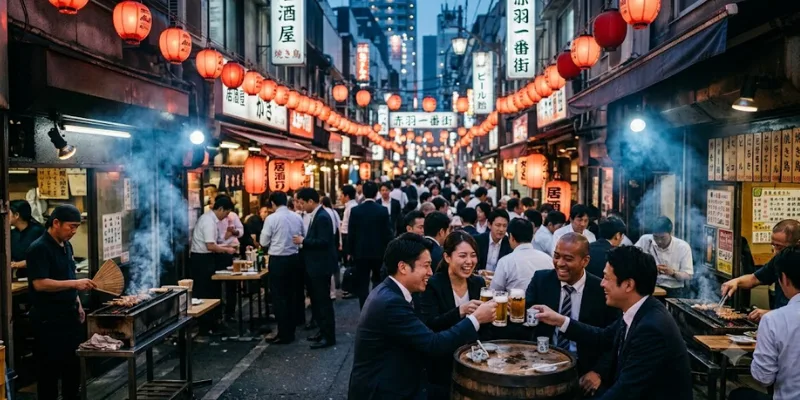
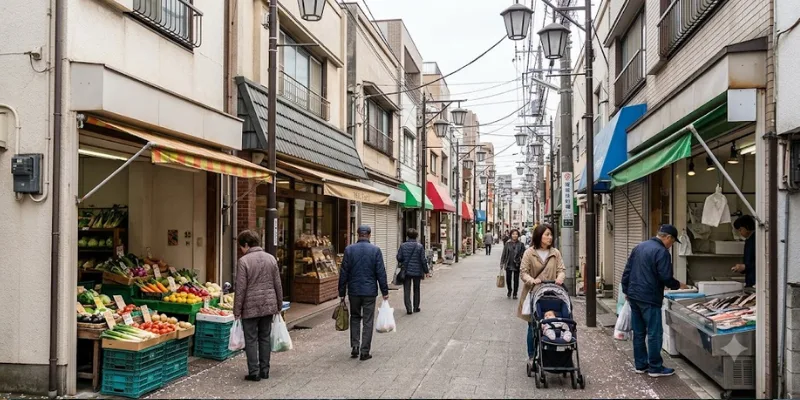
The East Exit side is the Akabane most people picture. Here you find Ichibangai, a maze of narrow streets packed with standing bars, izakayas, and small restaurants. Some places open in the morning, which is part of Akabane’s reputation. There is also a long covered shopping arcade nearby, so running errands in the rain is easy.
This area suits singles and people who eat out often. The downside is noise late at night, especially on weekends. If you are a light sleeper, look for a unit on a higher floor or a few blocks away from the bar streets.
West Exit: calmer and more modern
The West Exit side feels different. It has department-style shopping, wider roads, and more modern apartment buildings. Streets become quiet quickly once you walk a few minutes away from the station. Many couples and small families prefer this side for its balance of convenience and calm.
Akabanedai: higher ground, greener living
Akabanedai is a plateau area northwest of the station. It includes large residential complexes, schools, and green spaces such as Akabane Nature Observation Park. Because it sits on higher ground, it is also a popular choice for renters concerned about river flooding. The trade-off is a slightly longer walk, and some hills, to the station.
Iwabuchi and Shimo: Namboku Line side
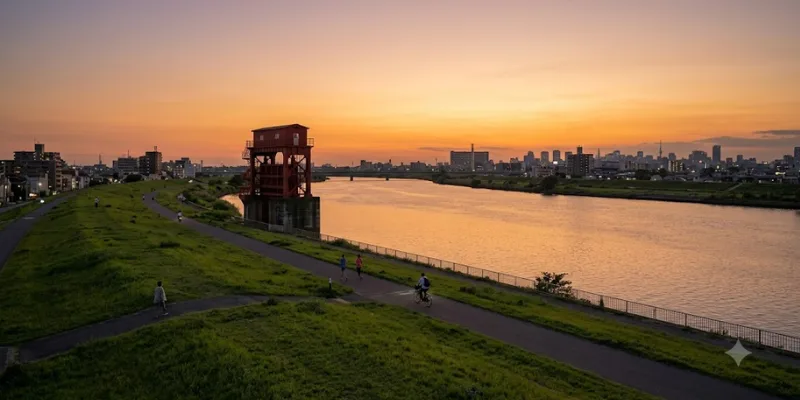
The area around Akabane-iwabuchi Station is mostly residential, with newer mid-rise apartment buildings. It works well if you commute on the Namboku Line. You are also close to the Arakawa riverside, where you can walk, run, or cycle along wide open paths. The historic Iwabuchi Water Gate, with its distinctive red frame, is a local landmark.
Kita-Akabane and Ukima-Funado: best value
If budget matters most, look one or two stops west on the Saikyo Line. These areas are quieter and more suburban, with larger parks and lower rents. You give up the six-line hub, but the Saikyo Line still runs straight to Ikebukuro, Shinjuku, and Shibuya.
What is daily life like in Akabane?
Daily life in Akabane is practical and affordable. Supermarkets, drugstores, 100-yen shops, and discount stores are all within walking distance of the station. The station building itself has shops and restaurants, so picking up dinner on the way home is easy.
The food scene is the big draw. Akabane is famous in Tokyo for “senbero,” a local term for places where you can eat and drink well for around ¥1,000. Beyond izakayas, you will find ramen shops, set-meal diners, bakeries, and a growing number of cafes.
For green space, the Arakawa riverbank is the local favorite. It offers huge open lawns, sports fields, and long paths. On summer evenings, the riverside is a popular spot to relax. Akabane Nature Observation Park is another quiet escape, with ponds and woodland on the site of a former military facility.
For the ward’s international services, schools, and hospitals, see our Kita City guide.
How will redevelopment change Akabane?
Akabane is at a turning point. The most advanced project is the Akabane 1-chome District 1 redevelopment, about two minutes from the station’s East Exit. The plan is a mixed-use tower of 26 floors above ground and one basement level, about 108 meters tall, with 269 homes. Floors 1 to 3 will be retail, and floors 5 to 26 will be residential. Construction is scheduled to start in October 2026, with completion targeted for June 2029, and the plan includes plaza-style open space on the north and west sides of the block. At HomeLIFULL HOME’S
The Ichibangai drinking area is also part of the long-term picture. Two former sub-districts around the Ichibangai shopping street merged into a single “Central District” in October 2024, but its detailed plan is still at an early stage. Meanwhile, a new commercial building on Ichibangai called Akabane Terrace was showing its exterior this month and is due for completion in September 2026. At HomeAkabane-shinbun
What does this mean for renters? In the short term, expect construction noise near the East Exit and some familiar shops closing. In the longer term, new supply from towers may give renters more choice. Local analysts also note that when new buildings hit the market, nearby existing properties face more competition, and older buildings feel it most. That could keep rents on older units competitive. Ina-gr
What should you check before renting in Akabane?
A few Akabane-specific checks will save you trouble later.
Check the flood hazard map. Akabane sits beside the Arakawa River. Low-lying streets near the river carry higher flood risk than areas on the Akabanedai plateau. Kita City publishes a hazard map, and your agent can confirm the risk level for any address. For a step-by-step method, see our guide on how to evaluate a safe neighborhood in Japan, which explains how to read flood depth zones on Japan’s official hazard maps.
Check the property’s history. A flood map tells you about the area, not the unit itself. If a listing near the station looks unusually cheap for its size, it is worth a quick look at the building’s past. Our guide on how to check a property’s history before renting explains how to use Oshimaland and what landlords must disclose by law.
Visit at night. A quiet street at 2 p.m. can be very different at 11 p.m. near Ichibangai. Walk the route from the station to the apartment in the evening.
Confirm the station exit. Akabane Station is large, and the East and West Exits lead to very different neighborhoods. Check which exit is closest to your building.
Ask about the guarantor. Most Tokyo rentals require a guarantor company. If you are new to Japan, read our no-guarantor apartment guide before you apply.
Check affordability. A common rule is to keep rent around one-third of monthly income. Our average salary in Japan 2026 article shows how Tokyo rents compare with typical pay.
Is Akabane right for you?
Akabane suits you if you want fast commutes to several central hubs, value a lively food and drink scene, and prefer a local atmosphere over a polished one. It also works well for people who travel often to Saitama or north Kanto.
It may not suit you if you want a very quiet street right by the station, or if you need to live on higher ground but also close to the East Exit. In that case, look at the West Exit side or Akabanedai.
Overall, this Akabane neighborhood guide points to one conclusion. Akabane offers one of the strongest combinations of transit access and rent in northern Tokyo, and redevelopment is only raising its profile.
Frequently asked questions
Yes. Akabane has good transit, affordable rent, and plenty of daily conveniences. Many foreign residents live across Kita-ku, and landlords in the area are used to renting through guarantor companies.
Akabane is generally safe, like most of Tokyo. The Ichibangai bar streets can be busy and noisy at night, but residential streets a few minutes away are calm.
A 1LDK within a 10-minute walk of Akabane Station averages about ¥161,300 a month, excluding management fees.
Kita-Akabane is cheaper. Its average single-person rent is about ¥81,300, compared with about ¥107,000 at Akabane
About 15 minutes on the JR Saikyo Line or Shonan-Shinjuku Line, with no transfer.
Look at the West Exit side or Akabanedai for quieter streets, larger layouts, and parks, while keeping easy access to the station.
Find your apartment in Akabane with Arealty
Ready to start your search? Browse Kita-ku apartments for rent to see current listings around Akabane, Akabane-iwabuchi, and Kita-Akabane. You can filter by station, layout, and initial costs such as no deposit.
Looking in other parts of Tokyo? Explore all apartments for rent or visit Arealty for English-language support from search to contract.

Real estate advisor at Arealty Japan, specialising in helping foreign residents navigate the Tokyo and Osaka rental markets. Lucy has guided hundreds of international renters — from Working Holiday visa holders to corporate relocations — through Japan’s apartment application process. Her writing draws on firsthand experience with landlord screening, guarantor companies, and foreigner-friendly listings across all 23 Tokyo wards and major Kansai cities.




Leave a Reply