
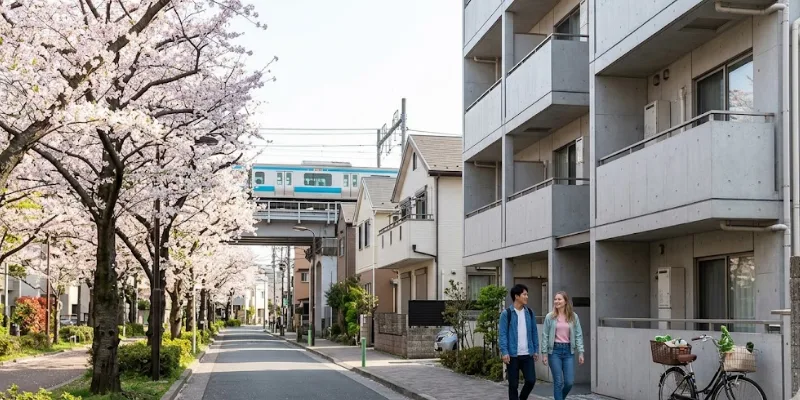

Kita apartments for rent in Tokyo represent one of the clearest value propositions in the mid-ring ward band. Kita-ku sits directly north of Toshima-ku and Bunkyo-ku, served primarily by the JR Keihin-Tohoku Line — one of the most frequent and reliable services in Tokyo. Despite rents consistently 30–35% below Shinjuku for comparable units, the ward remains underrepresented in foreign renter searches. That gap is what this guide addresses.
This is a dedicated rental guide for foreign residents considering Kita-ku in 2026. For comparative data across all wards, see the average rent in Tokyo guide. For wards with the same mid-ring positioning, see the Nakano guide and the Bunkyo guide. Ready to search? Browse Kita-ku apartments for rent on Arealty.
Why Kita Apartments for Rent Are Undervalued for Tokyo Foreigners
Three factors keep Kita-ku off most foreign renters’ shortlists despite its practical strengths.
Name recognition is low. Unlike Shinjuku or Shibuya, Kita-ku has no internationally known neighbourhood anchor. The ward’s main hub — Akabane — is well-known among Tokyo locals but rarely appears in foreign expat guides.
The ward is genuinely residential. Kita-ku has no major commercial district, no tourist attraction, no nightlife zone that would put it on maps. What it has is parks — Asukayama Park is one of Tokyo’s original cherry blossom viewing sites — low-rise residential streets, and a population that has lived in the same neighbourhood for generations. For foreign renters who want a place to live rather than a postcode to impress, this is an asset.
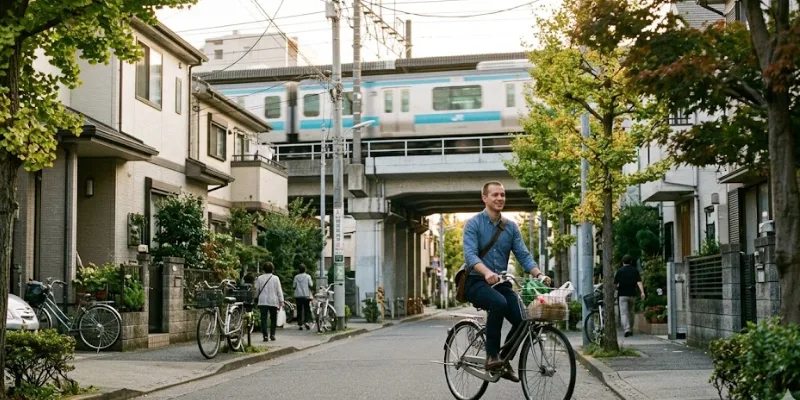
Keihin-Tohoku Line access is underappreciated. The line runs directly from Kita-ku to Akihabara, Tokyo Station, Shinagawa, and Yokohama — a north-south spine that covers more of Tokyo’s business geography than any single Yamanote Line section. For renters commuting to any point along this corridor, Kita-ku offers excellent access at far below the rents of inner wards on the same line.
Kita Apartments for Rent: Sub-Areas
Akabane — The Ward’s Most Practical Hub
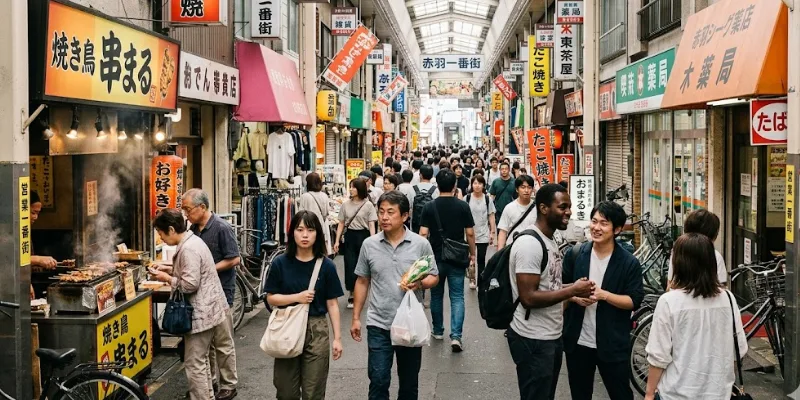
Akabane Station is the main commercial and transit hub of Kita-ku — served by the JR Keihin-Tohoku, Utsunomiya, Takasaki, and Saikyo lines. The shopping area around the station is well-developed, with multiple supermarkets, a covered arcade, and the Akabane One mall. Residential streets begin within 5 minutes’ walk.
1K units near Akabane: ¥72,000–¥92,000/month. Akabane has the highest foreigner acceptance in the ward due to its transit importance and the management company presence that comes with it.
Oji — Traditional Character, Lower Rents
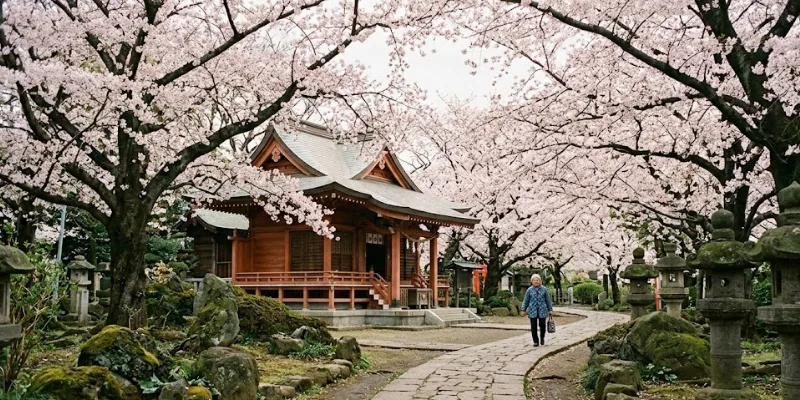
Oji, served by the JR Keihin-Tohoku Line and Tokyo Metro Namboku Line, has a more traditional residential character than Akabane. Asukayama Park — the site of Tokyo’s first public park, dating to the Edo period — and the Paper Museum sit here. 1K units: ¥68,000–¥86,000/month. The Namboku Line provides a useful secondary access route to Tameike-sanno (Ministry of Foreign Affairs area) and Shirokanedai.
Jujo and Higashi-Jujo — Budget Residential Belt
Jujo and Higashi-Jujo sit in the eastern part of Kita-ku, served by the JR Saikyo Line and Keihin-Tohoku Line respectively. These are the most genuinely local sub-areas in the ward — covered shotengai, old-style craft shops, and a neighbourhood atmosphere that has resisted commercial development. 1K from ¥65,000–¥82,000/month. Lower foreigner acceptance than Akabane, but workable with the right agency and guarantor company.
Kita Apartments for Rent Tokyo: 2026 Rent Data
| Unit type | Akabane | Oji | Jujo/Higashi-Jujo |
| 1K (18–25 sqm) | ¥72,000–¥92,000 | ¥68,000–¥86,000 | ¥65,000–¥82,000 |
| 1DK (25–35 sqm) | ¥84,000–¥108,000 | ¥78,000–¥100,000 | ¥75,000–¥96,000 |
| 1LDK (35–50 sqm) | ¥105,000–¥140,000 | ¥98,000–¥130,000 | ¥92,000–¥125,000 |
| 2LDK (50–70 sqm) | ¥140,000–¥185,000 | ¥130,000–¥172,000 | ¥125,000–¥165,000 |
Kita-ku 1K median: ¥73,000/month — in the same value band as Nakano and Suginami but with Keihin-Tohoku Line access rather than Chuo Line. For the full 23-ward comparison see the 1K apartments Tokyo guide. For wards below ¥70,000/month see the cheap apartments Tokyo guide.
Foreigner Acceptance in Kita-ku
Kita-ku has moderate foreigner acceptance — lower than Toshima or Shinjuku, but meaningfully better than outer wards. The ward is seeing increasing foreign resident numbers (rents rising 8% YoY in 2026 per Tokyo Metro data), which is gradually building landlord experience.
- Work visa / Spouse visa: accepted by the majority of Kita-ku landlords
- Student visa: accepted with standard documentation in Akabane and Oji areas
- Working Holiday visa: accepted at moderate rates — best in Akabane. See the WH rental guide
- Tourist visa: monthly mansion only — see short-term options
Browse Kita-ku apartments for rent on Arealty — foreigner acceptance pre-confirmed, zero agency fees.
Commute from Kita-ku
| Destination | From Akabane | From Oji | Notes |
| Ikebukuro | 8 min (Saikyo/Keihin-Tohoku) | 12 min | Direct |
| Akihabara | 15 min (Keihin-Tohoku) | 12 min | Direct, no transfer |
| Tokyo Station | 22 min (Keihin-Tohoku) | 18 min | Direct |
| Shinagawa | 32 min (Keihin-Tohoku) | 28 min | Direct |
| Shinjuku | 18 min (Saikyo from Akabane) | 25 min | Direct Saikyo Line |
| Otemachi | 20 min (Namboku from Oji) | 15 min | Direct Namboku Line |
The Keihin-Tohoku Line’s direct run to Tokyo Station and Shinagawa is Kita-ku’s defining commute advantage. For renters whose work is in the Marunouchi/Otemachi corridor or Shinagawa tech district, Kita-ku undercuts every inner-ward alternative on rent for the same commute time.
The Rental Process
Standard Tokyo process applies. Documents: residence card (在留カード), income proof, 2–3 months bank statements, guarantor company application.
Move-in costs for a ¥78,000/month Kita-ku apartment:
| Fee | Typical amount |
| Security deposit | ¥78,000–¥156,000 (1–2 months) |
| Agency fee | ¥85,800 incl. tax — Arealty charges zero |
| First month’s rent | ¥78,000 |
| Guarantor fee | ¥28,000–¥48,000 |
| Fire insurance | ¥14,000–¥17,000 |
| Total upfront | ¥283,800–¥384,800 |
Key money is rare in Kita-ku — one of the wards where zero-key-money listings dominate even near stations. For the no-key-money breakdown by ward, see the Tokyo no key money apartments guide. For the full application process, see the foreigner rental guide.
Who Should Rent Kita Apartments in Tokyo as a Foreigner
Strong fit for Kita apartments for rent:
- Renters commuting to Akihabara, Tokyo Station, Shinagawa, or Yokohama via the Keihin-Tohoku Line
- Budget-conscious renters who want genuine mid-ring Tokyo at ¥68,000–¥92,000/month
- Families who value park access and a residential character over commercial density
- Renters who prefer a local Japanese neighbourhood feel over an expat-concentrated area
Consider alternatives if:
- Primary commute is Shinjuku or Shibuya — Nakano or Bunkyo are more efficient
- Budget is under ¥65,000/month — cheap apartments Tokyo covers Itabashi and Adachi
- You want a large international community infrastructure — Toshima/Ikebukuro has Tokyo’s highest foreign resident ratio
Browse Kita-ku apartments for rent on Arealty — all listings pre-confirmed for foreigner acceptance, zero agency fees, bilingual support.
Further Reading
- Bunkyo apartments for rent — adjacent ward, Marunouchi Line
- Ikebukuro apartments for rent — Toshima-ku, highest foreign ratio
- 1K apartments in Tokyo — ward-by-ward data
- Cheap apartments in Tokyo under ¥70,000
- Tokyo no key money apartments guide
- Average apartment rent in Tokyo — full 23-ward data
- Renting in Japan as a foreigner — step-by-step process

Real estate advisor at Arealty Japan, specialising in helping foreign residents navigate the Tokyo and Osaka rental markets. Lucy has guided hundreds of international renters — from Working Holiday visa holders to corporate relocations — through Japan’s apartment application process. Her writing draws on firsthand experience with landlord screening, guarantor companies, and foreigner-friendly listings across all 23 Tokyo wards and major Kansai cities.






Leave a Reply