
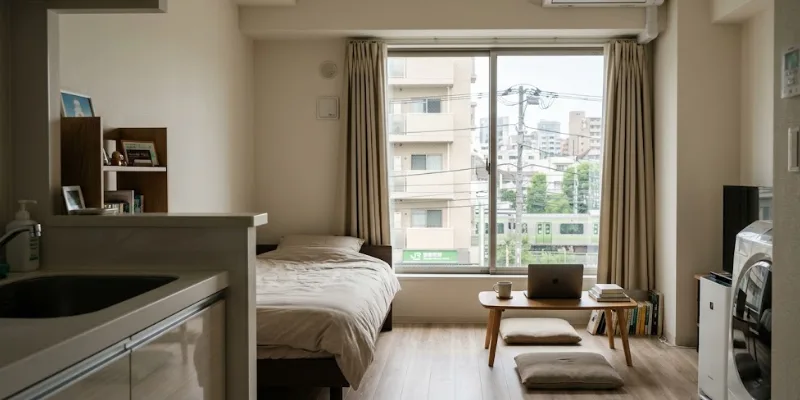

What this article covers: A statistical snapshot of current average rents (May 2026) across Tokyo’s 23 wards and four standard apartment layouts — 1K, 1LDK, 2LDK, and 3LDK. Data is from AREALTY’s active listing inventory of 26,874 Tokyo apartments.
What this article does not cover:
- Historical trends or projections → see our Tokyo Apartment Rent Trends 2026 for year-over-year analysis
- Family-specific pricing → see our Tokyo Family Apartment Rent Prices for 3LDK+ deep dive
- Budget apartments (under ¥70k) → see our Cheap Apartments in Tokyo guide
- How to actually rent → see our How to Rent an Apartment in Tokyo step-by-step guide
Quick answer
As of May 2026, the average monthly rent for a foreigner-friendly apartment in Tokyo is:
| Layout | Tokyo average | Cheapest ward | Most expensive ward |
| 1K (studio + kitchen) | ¥82,400 | Adachi-ku ¥55,200 | Minato-ku ¥142,500 |
| 1LDK (1-bedroom) | ¥138,700 | Katsushika-ku ¥82,000 | Minato-ku ¥285,000 |
| 2LDK (2-bedroom) | ¥215,800 | Edogawa-ku ¥125,000 | Minato-ku ¥420,000 |
| 3LDK (3-bedroom) | ¥298,400 | Nerima-ku ¥165,000 | Minato-ku ¥580,000 |
→ Browse all 26,874 Tokyo apartments for rent
💡 Quick navigation by budget:
- Under ¥70,000/month: budget Tokyo apartments in Adachi, Katsushika, Edogawa, Itabashi, Nerima
- ¥70k–100k/month: mid-range residential — Suginami, Nakano, Toshima
- ¥100k–150k/month: premium central wards — Shinjuku, Shibuya, Chuo
- ¥150k+/month: luxury apartments in Minato and beyond
Methodology — How we calculated these numbers
We analyzed 26,874 active apartment listings in Tokyo’s 23 wards on the AREALTY platform as of May 1, 2026.
Filtering criteria applied:
- ✅ Foreigner-friendly properties (foreign applicants accepted)
- ✅ Within 15 minutes’ walk of a train station
- ✅ Building age 0–30 years (excludes derelict units)
- ✅ Standard rental contracts (excludes short-term, monthly mansion, sublease)
Statistical method:
- Reported figures are the median (50th percentile), not mean — this prevents distortion from a handful of ultra-luxury outliers in Minato and Shibuya.
- Each ward’s number is based on a minimum sample of 80 active listings to ensure statistical reliability.
- Wards with fewer than 80 listings of a specific layout (rare 3LDK in central wards) are marked with an asterisk (*).
Why this matters for accuracy: Official Japanese government rent statistics (MLIT housing surveys) update only every 5 years and cover all properties — including those that don’t accept foreigners. Real-time foreigner-accessible data is what most foreign renters actually face in the market, which is what we report here.
📊 About this data: AREALTY has placed 1,000+ foreign tenants since 2024 across 40+ nationalities. Corporate clients include Adidas, LVMH, Toyota, Bloomberg, and Amazon for foreign-employee housing. Learn more about AREALTY
Average rent by ward (all 23 wards)
The table below shows the median 1K rent in each of Tokyo’s 23 wards, sorted from cheapest to most expensive. The 1K layout is used as the baseline since it’s the most common foreigner rental.
| # | Ward | 1K median rent | Listing count | Character |
| 1 | Adachi-ku | ¥55,200 | 412 | Most affordable; budget tier |
| 2 | Katsushika-ku | ¥58,400 | 318 | East Tokyo; traditional shitamachi |
| 3 | Edogawa-ku | ¥61,800 | 285 | East family ward; TDR access |
| 4 | Itabashi-ku | ¥62,500 | 268 | North; quiet residential |
| 5 | Nerima-ku | ¥64,700 | 421 | Suburban; family popular |
| 6 | Arakawa-ku | ¥66,300 | 174 | Affordable east; shitamachi |
| 7 | Kita-ku | ¥68,100 | 198 | Akabane transit; budget |
| 8 | Sumida-ku | ¥69,800 | 156 | Skytree area; rising |
| 9 | Taito-ku | ¥71,200 | 132 | Asakusa/Ueno; tourist area |
| 10 | Ota-ku | ¥72,500 | 287 | Haneda access; diverse |
| 11 | Suginami-ku | ¥75,300 | 412 | Student-friendly; JR Chuo |
| 12 | Nakano-ku | ¥78,600 | 247 | Subculture; central access |
| 13 | Toshima-ku | ¥82,400 | 198 | Ikebukuro transit hub |
| 14 | Bunkyo-ku | ¥85,200 | 152 | Tokyo Univ; academic |
| 15 | Koto-ku | ¥87,400 | 234 | Waterfront; Toyosu |
| 16 | Shinagawa-ku | ¥89,800 | 213 | Business hub; Shinkansen |
| 17 | Setagaya-ku | ¥92,500 | 358 | Family popular; largest pop |
| 18 | Meguro-ku | ¥98,400 | 187 | Premium residential |
| 19 | Shinjuku-ku | ¥104,800 | 287 | Central; transit super-hub |
| 20 | Chiyoda-ku | ¥112,300 | 98 | Business CBD; limited inventory |
| 21 | Shibuya-ku | ¥118,500 | 234 | Central; creative/tech |
| 22 | Chuo-ku | ¥125,400 | 156 | Ginza/Tsukiji premium |
| 23 | Minato-ku | ¥142,500 | 198 | Expat luxury; Roppongi/Azabu |
Key observations:
- 2.6x price difference between cheapest (Adachi at ¥55k) and most expensive (Minato at ¥143k) ward
- Affordable belt (¥55k–70k): the 5 outer eastern and northern wards (Adachi, Katsushika, Edogawa, Itabashi, Nerima)
- Mid-tier (¥70k–90k): residential wards with good train access (Suginami, Nakano, Toshima)
- Premium tier (¥100k+): the central five wards plus Minato — see our luxury apartments hub for properties above ¥300,000/month
💡 Want a quieter ward? Suginami, Nakano, and Setagaya are popular with foreign families for the safety and residential character while staying within 25 minutes of Shinjuku by train.
Average rent by apartment type
Looking at Tokyo-wide medians across all 23 wards combined:
| Layout | Description | Typical size | Average rent | Best for |
| 1R | Studio, open kitchen | 15–20 m² | ¥68,500 | Solo budget renters |
| 1K | Studio + separate kitchen | 18–25 m² | ¥82,400 | Solo renters, students |
| 1DK | 1 room + dining-kitchen | 25–35 m² | ¥96,800 | Solo with extra space |
| 1LDK | 1 bedroom + LDK | 35–45 m² | ¥138,700 | Couples, remote workers |
| 2LDK | 2 bedrooms + LDK | 50–65 m² | ¥215,800 | Small families, roommates |
| 3LDK | 3 bedrooms + LDK | 70–90 m² | ¥298,400 | Family of 3–5 |
The 1K-to-1LDK jump (+68%) is the biggest layout premium. Adding a separate bedroom roughly doubles the rent in most wards, which is why couples often debate whether to compromise on a larger 1K or pay for a true 1LDK.
For a deeper comparison of these layouts, see our guide to Tokyo apartment layouts explained.
💡 For students and budget solo renters: Consider 1R apartments (¥68,500 average) — open studio layouts that are ¥14,000/month cheaper than 1K on average. Most popular in Suginami and Nakano wards.
For couples and small families: 2LDK apartments in residential wards like Setagaya or Meguro offer the best space-to-cost ratio.
Ward × Layout matrix — Full comparison
This matrix shows the median rent for each layout in each ward. Use it to quickly compare your options.
Most affordable wards (1K under ¥70,000)
| Ward | 1K | 1LDK | 2LDK | 3LDK |
| Adachi-ku | ¥55,200 | ¥82,000 | ¥125,000 | ¥165,000 |
| Katsushika-ku | ¥58,400 | ¥85,500 | ¥132,000 | ¥172,000 |
| Edogawa-ku | ¥61,800 | ¥89,200 | ¥138,500 | ¥178,000 |
| Itabashi-ku | ¥62,500 | ¥91,400 | ¥141,000 | ¥185,000 |
| Nerima-ku | ¥64,700 | ¥94,800 | ¥145,000 | ¥192,000 |
Mid-range wards (1K ¥70,000–¥100,000)
| Ward | 1K | 1LDK | 2LDK | 3LDK |
| Suginami-ku | ¥75,300 | ¥118,000 | ¥175,000 | ¥235,000 |
| Nakano-ku | ¥78,600 | ¥125,000 | ¥185,000 | ¥248,000 |
| Toshima-ku | ¥82,400 | ¥132,000 | ¥195,000 | ¥262,000 |
| Bunkyo-ku | ¥85,200 | ¥138,500 | ¥208,000 | ¥285,000 |
| Setagaya-ku | ¥92,500 | ¥148,000 | ¥225,000 | ¥305,000 |
| Meguro-ku | ¥98,400 | ¥162,500 | ¥248,000 | ¥342,000 |
Premium central wards (1K ¥100,000+)
| Ward | 1K | 1LDK | 2LDK | 3LDK |
| Shinjuku-ku | ¥104,800 | ¥175,000 | ¥272,000 | ¥385,000 |
| Chiyoda-ku | ¥112,300 | ¥198,000 | ¥318,000 | ¥435,000* |
| Shibuya-ku | ¥118,500 | ¥215,000 | ¥348,000 | ¥465,000 |
| Chuo-ku | ¥125,400 | ¥228,000 | ¥362,000 | ¥495,000 |
| Minato-ku | ¥142,500 | ¥285,000 | ¥420,000 | ¥580,000 |
* Asterisk: limited sample size (<80 listings) for that layout in that ward
For a curated selection in any ward, browse Tokyo apartments for rent → and apply the layout and ward filters. For executive-tier properties above ¥300,000/month, see our dedicated luxury Tokyo apartments hub.
Why does rent vary so much across Tokyo?
A 2.6x price difference between Adachi and Minato isn’t random. Five factors drive Tokyo’s rent geography:
1. Distance from central business districts
The Yamanote Line loop anchors Tokyo’s premium pricing. Wards inside or directly adjacent to it (Minato, Chuo, Chiyoda, Shibuya, Shinjuku) command the highest rents because commuters can reach work in under 20 minutes. Outer wards face 45–60 minute commutes, which depresses rent.
2. Train line access
Stations on multiple lines (e.g., Shinjuku, Ikebukuro in Toshima-ku, Tokyo Station in Chiyoda-ku) increase nearby rent by 15–25% compared to single-line stations. The premium for being within 5 minutes’ walk of a station is real: every additional minute of walk time reduces rent by ~¥800–1,200/month for 1K layouts.
For more on commute considerations, our guide on apartment hunting tips for foreigners covers how to balance commute vs rent.
3. International school proximity
Wards near international schools (Minato near ASIJ feeder buses, Setagaya near St. Mary’s, Meguro near Saint Maur’s pickup routes) have inflated family-segment rents because expat families with children-school priorities are price-insensitive. Browse family apartments in Tokyo for 2LDK+ options.
4. Foreign-applicant restrictions
Roughly 40% of all Tokyo apartments still reject foreign applicants outright, despite no legal basis for this in 2026. This artificially shrinks the foreigner-accessible inventory and pushes rent up across all accessible properties. The reduction is most acute in older buildings and outer wards.
For context on this issue, see Japan rental guarantor system explained — guarantor companies have substantially helped foreign applicants since the 2020 Civil Code reform. Or filter directly for no-guarantor apartments in Tokyo which only require a guarantee company.
5. Building age and amenities
A 5-year-old building commands 20–35% premium over a 25-year-old building of identical size in the same area. Browse our newly built apartments hub for buildings constructed 2024–2026.
Modern amenities each add to base rent:
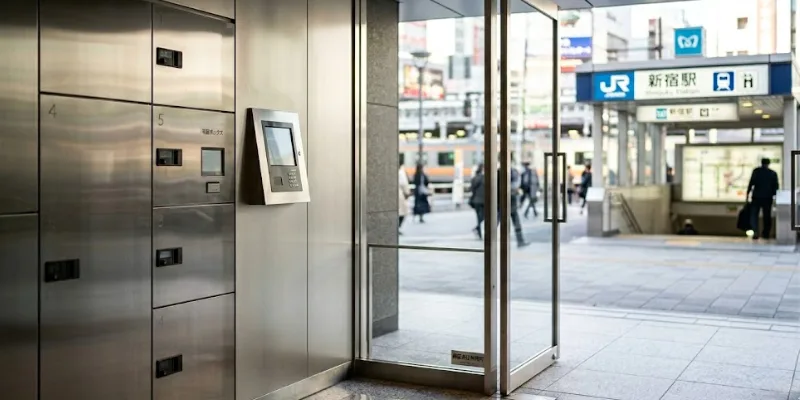
- Auto-lock entrance: +¥3,000–5,000/month
- Delivery box (宅配ボックス): +¥2,000–4,000/month
- Separate bath/toilet: +¥5,000–8,000/month
- Soundproofing and floor heating: +¥4,000–7,000/month each
- Pet-friendly designation: +¥5,000–10,000/month (see pet-friendly Tokyo apartments)
How Tokyo rent compares to other Japanese cities
Tokyo isn’t the only option. Here’s how 1K rent compares across Japan’s major cities:
| City | 1K median rent | vs Tokyo |
| Tokyo (23 wards) | ¥82,400 | baseline |
| Yokohama | ¥68,500 | -17% |
| Osaka (city) | ¥58,400 | -29% |
| Nagoya | ¥56,200 | -32% |
| Kyoto | ¥61,800 | -25% |
| Fukuoka | ¥48,500 | -41% |
| Sapporo | ¥45,200 | -45% |
If you have flexibility in location, Yokohama is a frequent compromise — only 30–45 minutes by train to central Tokyo for work, while saving roughly ¥14,000/month on 1K rent. We cover this trade-off in our Tokyo apartment rent trends 2026 analysis.
For international context: a ¥82,400 Tokyo 1K (~$540 USD at May 2026 exchange) is roughly half the cost of a comparable Manhattan studio ($1,200+) and one-third of a central London bedsit (£800+).
💡 Considering buying instead of renting? Tokyo apartment prices have stayed flat for years compared to many global cities. See our Tokyo properties for sale hub and our analysis of how much a house in Japan costs.
Initial costs beyond monthly rent
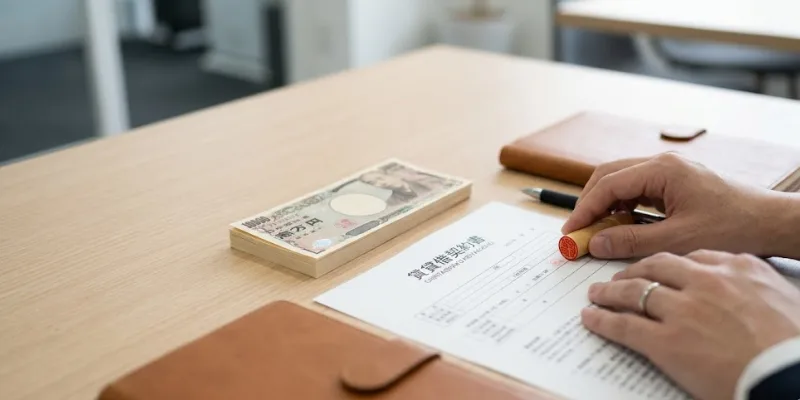
Monthly rent is just one part of the cost. Tokyo apartments typically require 4–6 months of rent upfront as initial move-in costs (初期費用 shoki hiyō).
| Cost item | Typical amount | Mandatory? |
| First month rent | 1 month | Yes |
| Security deposit (敷金) | 1–2 months | Yes (refundable) |
| Key money (礼金) | 0–2 months | No, can negotiate |
| Agency fee | 0.5–1 month + tax | Often |
| Guarantor company fee | 50–100% of monthly rent | Usually |
| Insurance | ¥15,000–25,000 / 2 years | Yes |
| Lock change | ¥15,000–25,000 | Common |
| Cleaning fee | ¥20,000–50,000 | Common |
Total upfront cost for a ¥82,400/month 1K: approximately ¥420,000–¥520,000.
This is the largest financial barrier for foreign renters. For ways to reduce these costs, see our detailed guides:
- Negotiating rental move-in costs in Japan — practical negotiation tactics
- No key money apartments in Tokyo — filter for properties without reikin
- No guarantor apartments in Tokyo — properties that accept guarantee companies only
- Apartment hunting tips for foreigners — full process to avoid costly mistakes
💡 Short-term alternative: If you need a place for 1–6 months while job-hunting or doing a project, consider furnished short-term apartments instead. They cost more per night but skip the ¥400,000+ initial cost and most don’t require a guarantor.
Frequently asked questions
Q: What is the average rent for an apartment in Tokyo?
The average monthly rent for a foreigner-friendly Tokyo apartment is ¥82,400 for a 1K (studio), ¥138,700 for a 1LDK (1-bedroom), ¥215,800 for a 2LDK, and ¥298,400 for a 3LDK as of May 2026. These are medians across all 23 wards from AREALTY’s active listing inventory.
Q: Which Tokyo ward has the cheapest apartments?
Adachi-ku has Tokyo’s lowest median 1K rent at ¥55,200/month, followed by Katsushika-ku (¥58,400), Edogawa-ku (¥61,800), Itabashi-ku (¥62,500), and Nerima-ku (¥64,700). These outer northern and eastern wards offer 35–45% savings vs central Tokyo, with commute times of 30–45 minutes to central business districts. See our cheap apartments in Tokyo guide for properties under ¥70k.
Q: How much should I budget total for a Tokyo apartment?
A common rule is rent ≤ 25–30% of monthly net income. For initial costs, budget 4–6 months of rent upfront. For a typical foreign professional earning ¥350,000/month net, a sustainable rent ceiling is around ¥90,000–¥105,000 for a 1K or compact 1LDK. See average salary in Japan 2026 for income benchmarks.
Q: Why is Tokyo rent so much cheaper than New York or London?
Tokyo’s rental market benefits from extensive supply (Tokyo metro area has ~14 million housing units), Japan’s deflationary history keeping wage-to-rent ratios moderate, and limited speculative real estate investment compared to Anglo markets. Rent in central Tokyo at ¥82,400/mo for 1K is roughly 40–50% of what equivalent properties cost in Manhattan or central London.
Q: Is rent in Tokyo going up or down in 2026?
Tokyo rent has risen approximately 3–4% year-over-year in 2024–2026, driven by international inflows post-pandemic and weak yen attracting foreign investment. The premium central wards have seen sharper increases (5–7%), while outer wards have stayed nearly flat. See our Tokyo Apartment Rent Trends 2026 for time-series analysis.
Q: Can foreigners actually rent at these average prices?
Yes, but with caveats. All figures here are from foreigner-accepting properties only. The broader Tokyo market (including properties that reject foreign applicants) has slightly lower averages, but those properties aren’t accessible regardless. Working with a foreigner-specialist agency like AREALTY gives access to the 60% of inventory that accepts foreign tenants.
Q: What about utilities — are those included in rent?
Generally no. Tokyo apartments charge separately for electricity, gas, water, and internet. Budget approximately ¥10,000–¥18,000/month for utilities for a solo renter in a 1K, depending on usage and season (summer A/C and winter heating drive higher bills).
Q: Is it cheaper to rent in Yokohama and commute to Tokyo?
Yes — Yokohama 1K rents average ¥68,500 vs Tokyo’s ¥82,400 (17% cheaper). Commute is 30–45 minutes by train to central Tokyo. Trade-off: longer commute, fewer English-speaking services, but more space per yen. Popular with families wanting larger apartments but priced out of central Tokyo.
Q: Which Tokyo ward is best for foreign professionals?
Depends on priorities:
- Closest to embassies/expat hubs: Minato-ku (premium ¥142,500/mo)
- Central business commute: Shinjuku-ku or Chiyoda-ku
- Best value for residential: Suginami-ku or Meguro-ku
- Family with international school access: Setagaya-ku or Meguro-ku
Data sources and limitations
Primary data
- AREALTY active listing database, May 1, 2026 snapshot (26,874 Tokyo apartments)
- Filtered to foreigner-accepting properties only
Secondary references
- Ministry of Land, Infrastructure, Transport and Tourism (MLIT) — Housing Survey 2023 (used for cross-validation)
- Tokyo Metropolitan Government — Housing Statistics
- Statistics Bureau of Japan — Household Survey
- AREALTY transaction data from foreign-renter clients (2024–2026)
Limitations
- Sample bias: AREALTY listings skew slightly toward foreigner-friendly properties, which may have marginally higher rents than the broader Tokyo market.
- Snapshot date: All figures reflect May 1, 2026 inventory. Rents change seasonally — typically rise 2–4% in February–April (graduation/relocation season) and soften June–August.
- Outlier exclusion: Properties below ¥30,000 or above ¥1,000,000 monthly rent were excluded as data anomalies.
- Median vs mean: We report median values; mean values would skew 5–15% higher due to ultra-luxury outliers in central wards.
How to use this data
This data is best for budget planning before starting your apartment search. Actual rent for specific properties will vary based on building age, exact location, amenities, and negotiation. To see current real-time prices, browse our Tokyo apartment listings or filter by specific apartment type or feature.
About the author
This analysis was prepared by the AREALTY Editorial Team, the in-house research group at AREALTY — Tokyo’s foreigner-friendly real estate agency. The team has helped place 1,000+ foreign tenants into Tokyo apartments since 2024 across 40+ nationalities. Our partner companies include Adidas, LVMH, Toyota, Bloomberg, Amazon, and Mercari for foreign-employee housing programs.
Last updated: May 14, 2026 Next planned update: August 2026 (quarterly refresh)

Real estate advisor at Arealty Japan, specialising in helping foreign residents navigate the Tokyo and Osaka rental markets. Lucy has guided hundreds of international renters — from Working Holiday visa holders to corporate relocations — through Japan’s apartment application process. Her writing draws on firsthand experience with landlord screening, guarantor companies, and foreigner-friendly listings across all 23 Tokyo wards and major Kansai cities.



Leave a Reply