
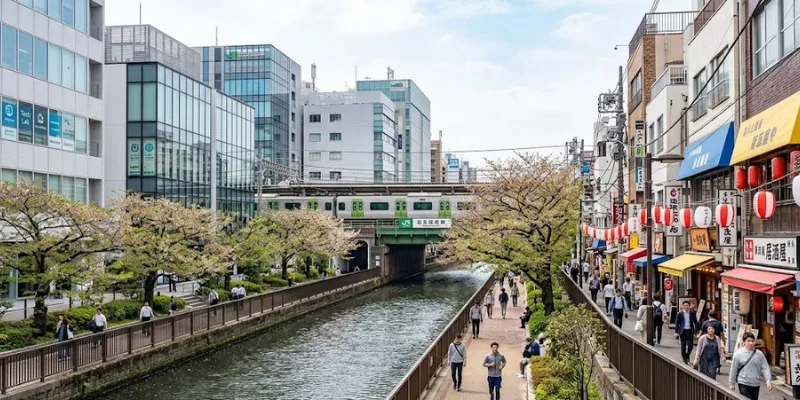

Gotanda is a Yamanote Line neighborhood in northern Shinagawa Ward that pairs a growing startup and tech scene with genuinely affordable rents for its level of connectivity. Sandwiched between Osaki and Meguro on the loop line, Gotanda has spent the last decade shedding its old reputation as a nightlife-heavy transit town and building a new identity around small tech companies, riverside walks along the Meguro River, and a dense cluster of izakaya and independent restaurants east of the station. At A-Realty, we see Gotanda as one of the best-value picks in Shinagawa City for renters who want a short commute to Shibuya and central Tokyo without paying Shibuya-level rent.
Where Is Gotanda and What Is It Known For?
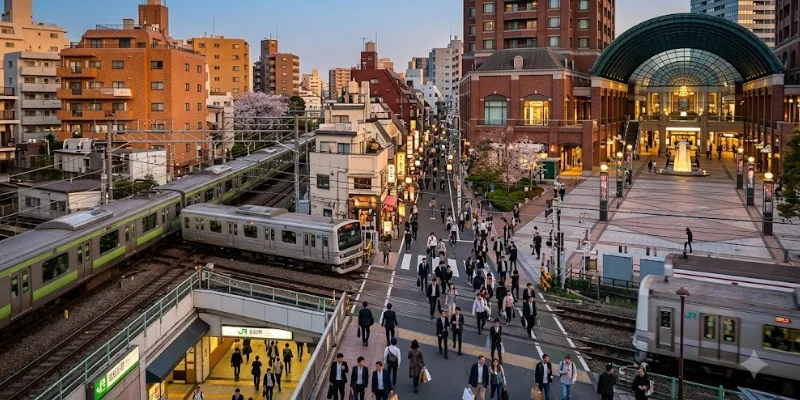
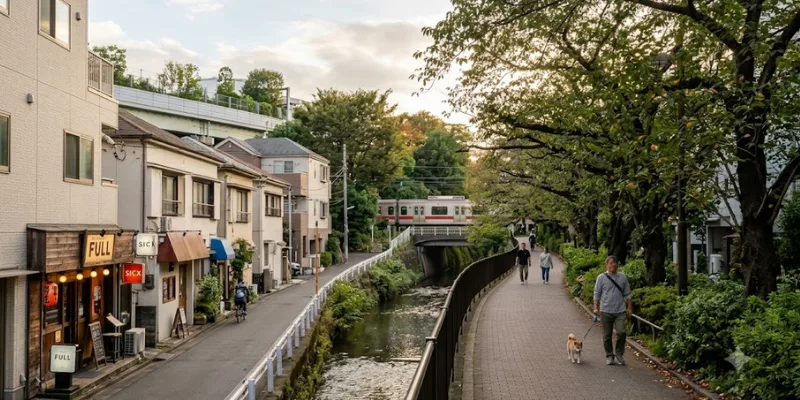
Gotanda sits in the northern part of Shinagawa Ward, one stop south of Osaki and a few minutes north of Meguro on the JR Yamanote Line. The area earned the nickname “Gotanda Valley” in recent years as software startups and small tech firms moved into office buildings around the station, drawn by rents lower than Shibuya or Ebisu but with nearly the same commute times. The Meguro River runs along the neighborhood’s western edge, giving Gotanda something few central Tokyo business districts have: a quiet, tree-lined walking path within a five-minute walk of a major Yamanote station.
Unlike Shinagawa Station or Osaki, which skew heavily toward glass office towers, Gotanda keeps a mixed, slightly gritty character. The west exit is dominated by office buildings and the Gotanda TOC shopping and wholesale complex. The east exit still carries traces of the area’s older nightlife district alongside a dense, walkable strip of izakaya, ramen shops, and small bars.
Redevelopment is actively reshaping this mix. According to Tokyo’s official tourism board, the Gotanda JP Building opened on the former Yu-Port Hall site with office floors, a shared co-working space aimed at startups, and a ground-floor food hall — a concrete sign of the neighborhood’s shift toward a next-generation business hub. Projects like this are gradually filling in the gap between Gotanda’s older entertainment-district image and its newer identity as a startup-friendly, riverside address.
How Connected Is Gotanda’s Transport?
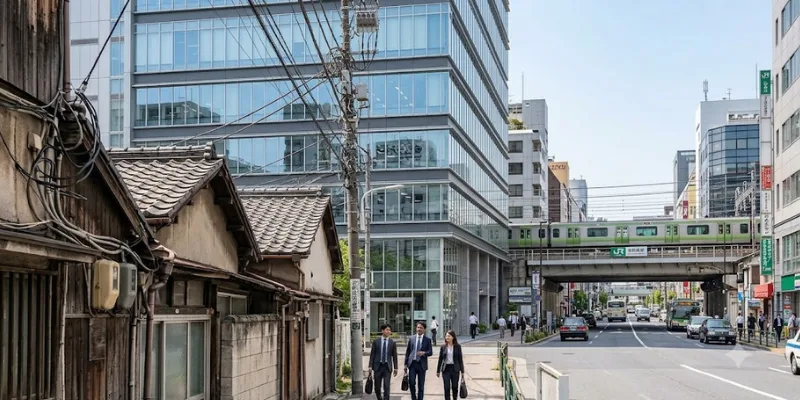
Gotanda’s biggest draw for renters is transport. The station is serve by three lines, which is unusually good coverage for a neighborhood-level stop:
| Line | Operator | Connects To |
|---|---|---|
| Yamanote Line | JR East | Shibuya, Shinjuku, Tokyo, Ueno (loop line) |
| Ikegami Line | Tokyu | Residential Ota-ku, terminating near Kamata |
| Asakusa Line | Toei Subway | Direct through-service to Haneda Airport and Narita |
Being on the Yamanote Line means Gotanda residents reach Shibuya in under ten minutes and Shinjuku in around fifteen. Neither trip requires a transfer. The Toei Asakusa Line’s through-running to Haneda Airport is a particular advantage for international residents who travel frequently. It puts Haneda within a direct ride of home, with no transfer required. Shinagawa Station, the ward’s Shinkansen and Narita Express hub, is also only a few stops away via the Yamanote Line. That means Gotanda residents share in the long-distance travel convenience that defines Shinagawa City as a whole, without living in Shinagawa’s pricier, more corporate core.
Commuters bound for the Otemachi and Marunouchi business districts also have a straightforward option: the Yamanote Line connects directly to Tokyo Station, and several Asakusa Line stops sit within walking distance of the Otemachi office corridor. For residents who work in Ota-ku or need a quieter residential line, the Tokyu Ikegami Line offers a slower, more local alternative heading south from Gotanda.
You can browse current apartments for rent in Shinagawa to see live Gotanda-area listings alongside the rest of the ward.
What Is Gotanda’s Reputation, and Should Renters Worry?
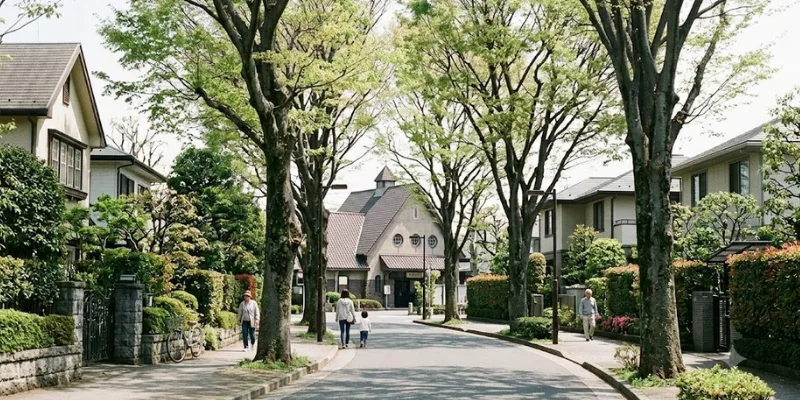
Gotanda’s history is worth addressing directly, since it comes up in almost every search about the neighborhood. The area east of the station has long had a nightlife and entertainment district reputation, and a small cluster of adult entertainment venues still operates there today. For renters, this is a highly localized, easy-to-avoid pocket rather than a neighborhood-wide characteristic — the vast majority of Gotanda, including nearly all of its residential streets south and west of the station, is quiet and family-friendly.
Redevelopment around the station over the past several years has accelerated a shift toward offices, restaurants, and residential buildings, and that trend has steadily diluted the older reputation. Most renters who choose Gotanda today are drawn by the same things that make Osaki or Meguro appealing — Yamanote Line access and Meguro River green space — at a noticeably lower price point.
What Is Daily Life Like in Gotanda?
Grocery shopping in Gotanda is straightforward. Life Gotanda and several standard supermarket chains sit within a short walk of the station, and the atre Gotanda shopping complex inside the station building covers everyday essentials, bakeries, and casual dining for commuters. For a wider range of restaurants, the east exit’s backstreets are the main draw: a dense grid of izakaya, standing sushi counters, and small ramen shops that skew toward local prices rather than tourist-area markups.
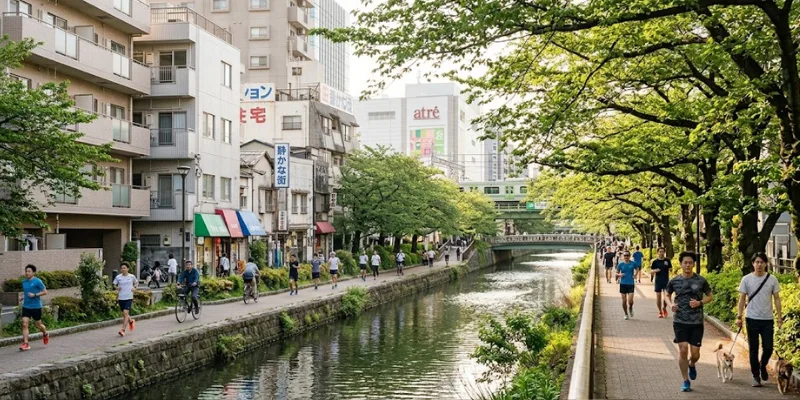
The Meguro River path is the neighborhood’s best lifestyle asset. It connects Gotanda to Meguro and eventually Nakameguro on foot. The path is a popular route for morning runs and evening walks, and it is especially lively during the spring cherry blossom season, when the riverside cherry trees draw hanami crowds without the crush of Nakameguro’s most famous stretch. For families or anyone wanting more green space, Yashio Park and several smaller neighborhood parks sit within easy walking distance of the station.
Beyond the river, Gotanda’s most visible landmark is the redeveloped area around the station’s east exit, anchored by newer mixed-use buildings that combine office floors with street-level restaurants and event space. Sakurada-dori, one of Tokyo’s major avenues, runs through the neighborhood and provides an easy bus and taxi route toward central Tokyo on days when the train isn’t convenient. For day-to-day banking, clinics, and administrative errands, most residents rely on the cluster of services immediately around the station rather than traveling further into the ward.
Learn more about the wider ward in our guide to Shinagawa City, which covers schools, hospitals, and international support services available to Gotanda residents as part of Shinagawa Ward.
How Much Does It Cost to Rent in Gotanda?
Gotanda consistently prices below its Yamanote Line neighbors while offering comparable train access, which is the core of its appeal for value-focused renters. Shinagawa-ku as a whole remains one of the more affordable central wards, and Gotanda sits toward the accessible end of that range given its station-front location.
| Ward | 1R (Studio) Avg | 1K Avg | 1DK Avg |
|---|---|---|---|
| Shibuya-ku | ¥129,637 | ¥111,447 | ¥231,770 |
| Meguro-ku | ¥83,133 | ¥98,857 | ¥179,311 |
| Shinagawa-ku | ¥88,167 | ¥98,813 | ¥160,146 |
For renters comparing options directly on the Yamanote Line, a studio or 1K near Gotanda Station typically costs noticeably less than an equivalent unit near Shibuya or Ebisu, while cutting only a few minutes off the commute. Older buildings closer to the east-exit entertainment streets tend to rent for less than newer buildings near the Meguro River or the quieter residential blocks toward Osaki.
Who Is Gotanda Best Suited For?
- Startup and tech workers: With so many small tech companies based around the station, a short walk-to-work commute is realistic for many Gotanda renters.
- Budget-conscious Yamanote Line commuters: Anyone who needs to be in Shibuya, Shinjuku, or central Tokyo daily but doesn’t want to pay Shibuya-area rent.
- Frequent international travelers: The direct Asakusa Line connection to Haneda Airport is a genuine convenience for people who fly often.
- Runners and river-path regulars: The Meguro River walking and running route is a standout amenity rarely found this close to a major business station.
Families prioritizing school access or a quieter residential feel may prefer looking slightly further into Shinagawa Ward — our Shinagawa City guide covers neighborhoods like Musashi-Koyama that suit that profile better.
How Does Gotanda Compare to Neighboring Areas?
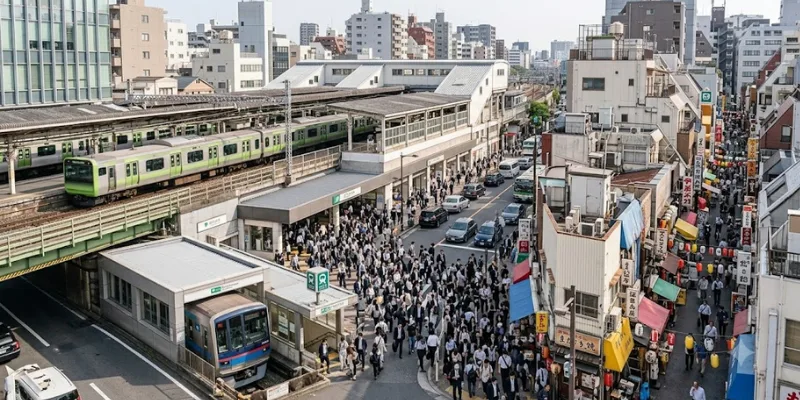
Osaki, one stop north, has undergone heavier redevelopment and now feels more like a corporate business district, with higher rents to match. Meguro, one stop south, trades Gotanda’s startup energy for a more polished, upscale residential identity and a correspondingly higher price point. Gotanda sits between the two — less corporate than Osaki, less expensive than Meguro — which is precisely why it appeals to renters who want Yamanote Line access without either extreme.
FAQ: Renting in Gotanda
Yes, for renters prioritizing train access and value. Gotanda offers direct Yamanote Line service to Shibuya and Shinjuku, a direct Asakusa Line connection to Haneda Airport, and rents that run below neighboring Shibuya and Meguro.
Gotanda’s residential streets are as safe as most central Tokyo neighborhoods. The area’s older nightlife district is concentrated in a small pocket east of the station and is easy to avoid; it does not reflect the neighborhood as a whole.
Gotanda to Shibuya takes under ten minutes on the JR Yamanote Line with no transfer required.
Gotanda Station is served by the JR Yamanote Line, the Tokyu Ikegami Line, and the Toei Asakusa Line, which runs directly to Haneda Airport.
Yes. Gotanda sits in the northern part of Shinagawa Ward (Shinagawa City), between Osaki and Meguro along the Yamanote Line loop.
The Meguro River walking path, the shops and restaurants inside the Gotanda TOC complex, and the dense izakaya and ramen streets east of the station are the main draws for residents. Newer developments like the Gotanda JP Building have also added office, dining, and event space near the station.
AREALTY: Your Partner for Renting in Gotanda
Finding the right Gotanda apartment means weighing east-exit convenience against west-side quiet, and older, cheaper buildings against newer ones near the river — decisions that are hard to make from listing photos alone. A-Realty helps international renters navigate exactly this kind of local nuance, from comparing buildings block by block to explaining lease terms and guarantor requirements in plain English.
Ready to find your home in Gotanda? Browse current apartments for rent in Shinagawa Ward, search all available listings, or contact A-Realty to start your search today.

Real estate advisor at Arealty Japan, specialising in helping foreign residents navigate the Tokyo and Osaka rental markets. Lucy has guided hundreds of international renters — from Working Holiday visa holders to corporate relocations — through Japan’s apartment application process. Her writing draws on firsthand experience with landlord screening, guarantor companies, and foreigner-friendly listings across all 23 Tokyo wards and major Kansai cities.




Leave a Reply