
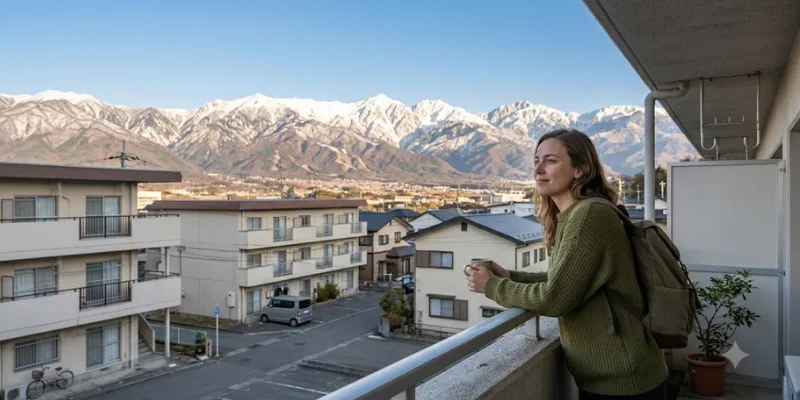

Quick answer: Nagano apartments for rent for foreigners are most commonly found around Nagano City, home to Zenkoji Temple and the prefectural capital. Matsumoto is the second hub, a smaller castle town with a strong precision-industry job base. Both offer much lower rent than Tokyo. Both connect to central Tokyo by Shinkansen in under two hours. Ski towns like Hakuba and Nozawa Onsen add a third option for foreigners drawn to seasonal mountain living, though rental supply there is smaller and more seasonal.
Nagano Prefecture doesn’t come up as often as Tokyo or Osaka in most foreigner housing searches. It still has a real and growing expat community. This guide covers where to look for Nagano apartments for rent for foreigners, what rent actually costs, and what to expect from the rental process outside a major metro area.
Why Foreigners Move to Nagano
Nagano’s appeal comes from a mix of factors that don’t overlap much with typical Tokyo relocation reasons. The mountains and four distinct seasons draw people who want outdoor access without giving up city infrastructure entirely. Remote workers increasingly choose Nagano City or Matsumoto for a simple combination: fast internet, lower cost of living, and a two-hour Shinkansen ride back to Tokyo when needed.
Seasonal ski resort work brings a steady stream of foreign residents to Hakuba and Nozawa Onsen every winter. A portion of them stay on longer term, once they’ve built local connections. Shinshu University in Matsumoto also brings an international student population to the prefecture. It’s smaller than Tokyo’s, but consistent year to year.
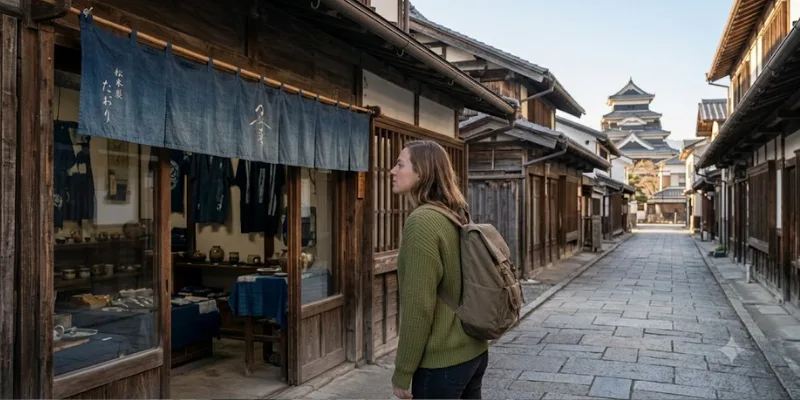
Best Areas for Nagano Apartments for Rent for Foreigners
Nagano City is the prefectural capital and the most practical base for most renters. It has the widest selection of apartments, the best access to shops and services, and direct Shinkansen access to Tokyo. The area immediately around Nagano Station is convenient but pricier. Neighborhoods a short bus ride out tend to offer better value for similar space.
Matsumoto functions almost like a second hub. It’s built around its well-known castle and a strong local economy anchored by precision equipment and electronics manufacturing, including Seiko Epson’s headquarters. It has a more established expat presence than Nagano City, partly thanks to Shinshu University. Its walkable, compact downtown appeals to renters who don’t want to depend on a car.
Hakuba and Nozawa Onsen are ski towns first and residential towns second. Rental listings here skew toward seasonal accommodation tied to resort work. Longer-term apartments do exist for people who’ve settled in permanently, but expect a smaller, more competitive market. English-language support from local agents is also more limited than in Nagano City or Matsumoto.
Ueda and Saku, further along the Shinkansen line, are worth a look if you want lower rent than Nagano City and don’t mind a slightly longer commute. Both are quieter and more residential. They’re also less geared toward foreign renters, so working with an agent who has cross-border experience matters more here.
Average Rent in Nagano
Rent in Nagano Prefecture runs well below Tokyo across every area type.
- Nagano City, near the station: a 1K or 1DK apartment typically runs ¥45,000–¥60,000 per month.
- Nagano City, outer neighborhoods: the same size unit can drop to ¥35,000–¥45,000 per month.
- Matsumoto: comparable units generally run ¥40,000–¥55,000 per month, with some premium for proximity to the station or university.
- Hakuba and Nozawa Onsen: pricing is more variable and seasonal. A basic studio or 1K often starts around ¥40,000 per month outside peak ski season.
For a broader sense of how these figures compare to Japan’s major cities, our guide to the average cost of living in Japan breaks down typical expenses across regions.
Move-in costs follow the same national structure as anywhere in Japan, but the lower base rent means the upfront total is smaller too. A deposit, key money, and agency fee each typically run one month’s rent, so budgeting three to four months’ rent as a lump sum is a reasonable starting point for most Nagano listings. This is considerably less than the equivalent move-in cost for a comparable unit in central Tokyo, which is one more reason remote workers and retirees increasingly consider the prefecture.
Getting to Tokyo: Shinkansen Access
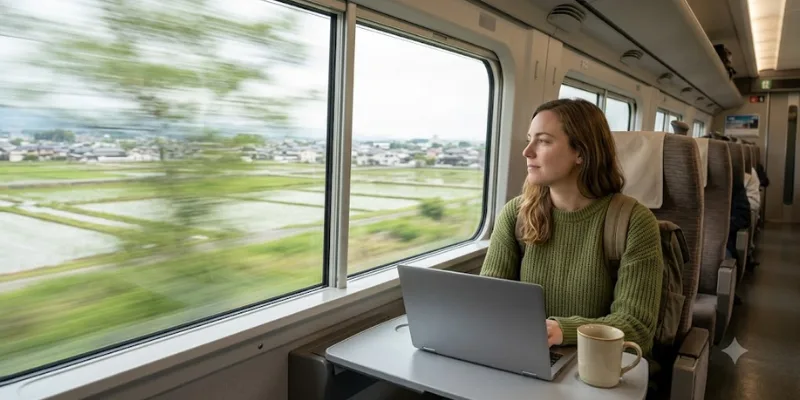
One of Nagano’s biggest advantages over other regional prefectures is how connected it is. The Hokuriku Shinkansen runs directly between Tokyo Station and Nagano Station. Travel time is roughly 80–100 minutes, depending on the train type. This makes Nagano genuinely viable for people who need occasional in-person time in Tokyo, without paying Tokyo rent full time. Matsumoto connects to Tokyo via the Azusa limited express train, running around 2.5 hours, or via a transfer through Nagano.
Documents and Guarantor Requirements
The rental process in Nagano follows the same national framework as anywhere else in Japan. Local agents outside major cities are somewhat less likely to have English-language support built in, so it’s worth confirming this before you commit to working with one. You’ll generally need:
- A valid visa and residence card
- A guarantor or guarantor company, arranged the same way as in Tokyo
- Proof of income or, for students, a scholarship or sponsor letter
- An emergency contact based in Japan
Our guide to the guarantor system in Japan explains how these companies work nationwide. Required documents for renting in Japan covers the paperwork checklist in detail. Both apply the same way in Nagano as they do in Tokyo or Osaka.
Step-by-Step: Renting in Nagano as a Foreigner
- Decide which area fits your reason for being there. A remote worker wanting fast Tokyo access should prioritize Nagano City or Matsumoto near the station. Someone moving for seasonal resort work should focus on Hakuba or Nozawa Onsen directly.
- Search with an agent who has cross-border rental experience. Not every local agency outside Nagano City regularly works with foreign tenants. Ask directly before committing time to a search.
- Prepare your guarantor and documents in parallel with viewings, the same as you would anywhere else in Japan.
- Confirm heating type and insulation before signing. Nagano winters are considerably colder than Tokyo’s. Older regional apartments vary widely in how well they’re insulated.
- Sign and complete move-in procedures, including the standard registration of your new address at the local ward or city office within 14 days.
Life in Nagano for Foreign Residents
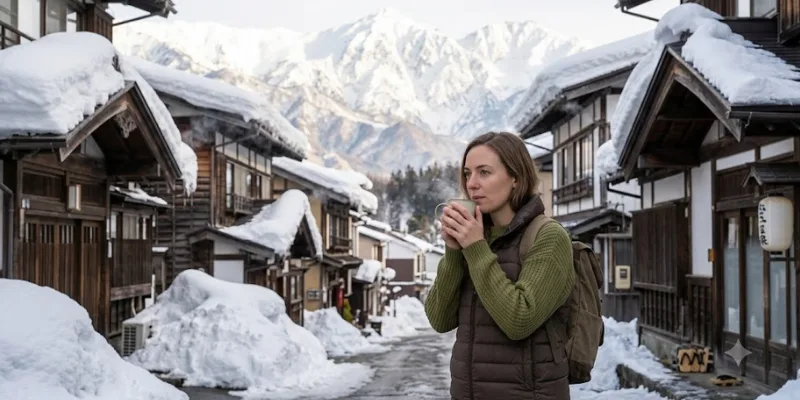
Winters in Nagano are genuinely cold, with regular snowfall across most of the prefecture and heavy snow in the mountain areas around Hakuba and Nozawa Onsen. Summers are milder than Tokyo’s, without the same level of humidity. Many residents count that as a real quality-of-life upgrade.
The foreign community is smaller than in Tokyo or Osaka, but it’s active. Hakuba’s ski season and Matsumoto’s university and manufacturing sectors both draw a steady international presence. Day-to-day life leans more car-dependent outside the city centers than what many Tokyo-based renters are used to. Factor that into your area choice if you don’t plan to drive.
How Nagano Compares to Other Regional Options
Foreigners weighing Nagano against other options outside Tokyo often end up comparing it to similarly sized regional cities. Compared to Kawasaki, which sits close enough to Tokyo to function almost as a suburb, Nagano is a genuine relocation rather than a commuter alternative. Compared to Kyoto, Nagano has a much smaller international community and far less tourist infrastructure, but noticeably lower rent for a comparable unit. Compared to Sapporo, the two share a snowy climate and outdoor-lifestyle appeal, though Sapporo is a considerably larger city with a bigger job market and more established foreign community. If proximity to Tokyo matters more than city size, Nagano’s Shinkansen access gives it a real edge over most other regional prefectures at a similar price point.
Job Opportunities That Bring Foreigners to Nagano
Beyond seasonal ski work, Nagano’s economy has a few sectors that regularly draw foreign professionals. Precision manufacturing and electronics around Matsumoto employ a meaningful number of foreign engineers and technicians, often through companies with international supply chains. English teaching positions exist across the prefecture, though in smaller numbers than in Tokyo. Agriculture, particularly apple and wasabi farming in areas like Azumino, occasionally offers seasonal or longer-term work for foreign residents interested in a more rural lifestyle. None of these compare to Tokyo’s job market in volume, but they give Nagano a more diverse economic base than a purely tourism-driven region would have.
FAQ: Nagano Apartments for Rent for Foreigners
Not fundamentally different from renting in Tokyo. Fewer agents outside Nagano City and Matsumoto have direct experience working with foreign tenants, so choosing the right agent matters more here than in a major metro area.
Roughly 40–60% cheaper for comparable apartment sizes, depending on the specific area and proximity to a station.
Yes. From Nagano City or nearby stations along the Hokuriku Shinkansen line, a regular commute is realistic for people who only need to be in Tokyo occasionally. It’s an expensive habit for a daily commute, though.
Not in Nagano City or central Matsumoto, both of which are walkable with reasonable public transit. Outer areas, ski towns, and smaller surrounding towns are considerably more car-dependent.
Both are possible. The rental market is heavily geared toward seasonal ski workers. A smaller number of long-term residents live there year-round, particularly people connected to the resort or hospitality industry.
The same as anywhere in Japan — a valid visa, a guarantor or guarantor company, proof of income, and an emergency contact based in Japan.

Real estate advisor at Arealty Japan, specialising in helping foreign residents navigate the Tokyo and Osaka rental markets. Lucy has guided hundreds of international renters — from Working Holiday visa holders to corporate relocations — through Japan’s apartment application process. Her writing draws on firsthand experience with landlord screening, guarantor companies, and foreigner-friendly listings across all 23 Tokyo wards and major Kansai cities.




Leave a Reply