
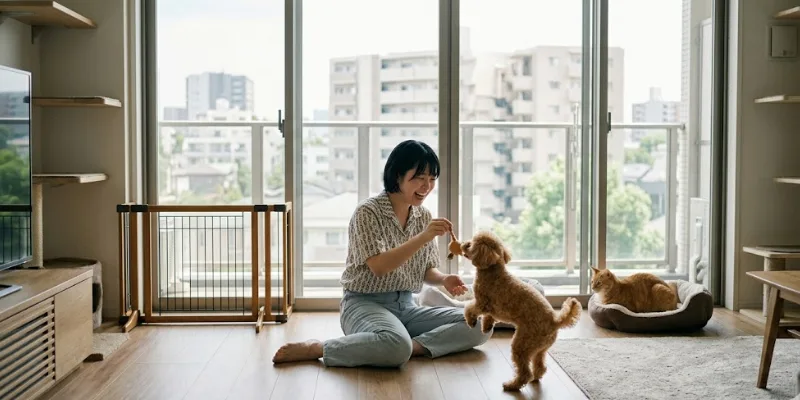

Pet-friendly apartments in Tokyo for foreign renters involve a specific set of challenges beyond the standard rental process. Japan’s rental market has a complicated relationship with pets — the majority of apartments are explicitly no-pets (ペット不可), and even listings marked ペット可 often have significant restrictions on pet type, size, and number.
This guide covers pet-friendly apartments in Tokyo specifically from the foreign renter’s perspective: what the ペット可 designation actually means, which wards have the most pet-accepting inventory, what landlords charge for pet permission, and how to present a pet-owner application effectively. Browse pet-friendly Tokyo listings on Arealty.
Pet-Friendly Tokyo Apartments: What ペット可 Actually Means for Foreigners
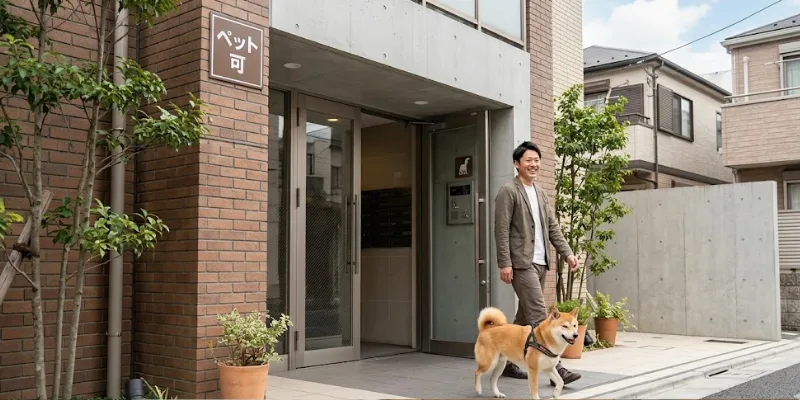
The ペット可 (petto ka) designation on a Japanese rental listing means the landlord has agreed in principle to allow pets. It does not mean all pets are automatically permitted. The actual conditions vary by property and are specified in the lease contract — not in the listing itself.
Common conditions attached to ペット可 designations:
- Size restrictions: small pets only (小型犬, small dogs, typically under 5–10kg); medium and large breeds almost always require separate landlord approval
- Species restrictions: dogs and cats only; exotic animals, reptiles, birds, and fish tanks above a certain size may be excluded or require explicit approval
- Number limits: one pet per household is the most common restriction; two pets may be permitted with additional deposit; three or more is rare
- Declawing requirements: some older listings specify that cats must be declawed (現在は一般的ではない — this is increasingly uncommon and not legally enforceable, but may appear in older lease drafts)
- Breed restrictions: some properties exclude large breeds (German Shepherd, Akita, Shiba Inu above certain weight) by name in the contract
Before applying to any ペット可 listing, confirm exactly which pets the property accepts. An application submitted for a 15kg Labrador to a property that permits only “small dogs under 8kg” wastes time and the application fee.
Pet Restrictions by Type: Dogs, Cats, Small Animals
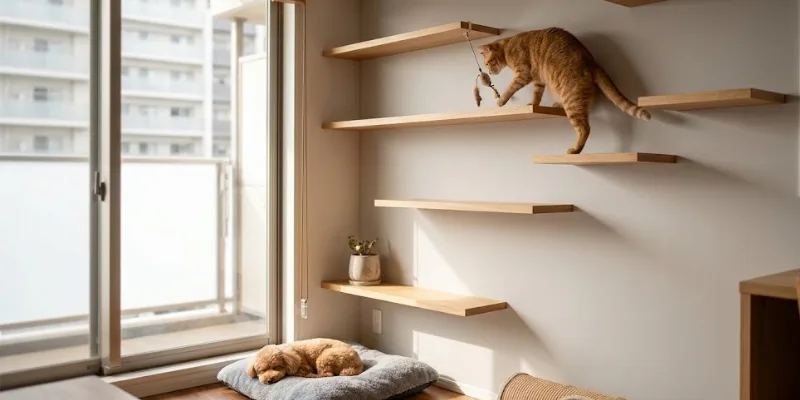
Dogs: The most common pet in Japanese rental listings. Small breeds (Toy Poodle, Chihuahua, French Bulldog under 8kg) are accepted in most ペット可 buildings. Medium breeds (Shiba Inu, Corgi) require landlord case-by-case approval in most buildings. Large breeds face the most restrictions — most ペット可 listings in Tokyo do not accommodate breeds over 15kg without negotiation.
Cats: Indoor cats are accepted in a meaningful share of ペット可 listings. Some buildings distinguish between 犬可 (dogs permitted) and 猫可 (cats permitted) — a building may permit one but not the other. Cats scratch surfaces — landlords are particularly concerned about scratched walls and flooring, and restoration costs at move-out for cat tenants are typically higher than for dog tenants. Some landlords require additional deposit specifically for cats.
Small animals (rodents, birds, fish): The rental market is largely silent on hamsters, rabbits, guinea pigs, and small birds. Most lease contracts do not mention them — which means they fall in a grey area. The practical approach: declare any pet that could cause noise, damage, or odour concerns. A hermit crab declared upfront is safer than a discovered hamster at move-out.
Pet-Friendly Apartments in Tokyo: Which Wards Have the Most Inventory
Pet-friendly inventory in Tokyo correlates with two factors: newer building stock (newer buildings are more likely to be purpose-built with pet infrastructure) and ward character (family-oriented wards have more pet-accepting landlords).
Highest pet-friendly availability:
- Setagaya-ku: the largest ward with the most total housing stock — highest absolute number of ペット可 listings. Futako-tamagawa and Yoga areas have pet-specific buildings with pet washing stations. See the Setagaya guide
- Ota-ku: Haneda area, suburban character, newer developments with ペット可 as standard. Good availability from ¥90,000–¥130,000/month for a 1K/1DK
- Nerima-ku: large ward, greenest in Tokyo, high concentration of family housing with pet acceptance. 1K pet-friendly from ¥68,000–¥85,000/month
- Koto-ku: Toyosu and waterfront developments — newer high-rise buildings often include pet facilities. 1K pet-friendly from ¥88,000–¥115,000/month
- Suginami-ku: creative, park-heavy ward with moderate pet-friendly supply. See the Suginami guide
Lower pet-friendly availability:
- Central wards (Minato, Shibuya, Chiyoda) have fewer ペット可 listings proportionally — older building stock and higher-density construction limits
- Shinjuku-ku has moderate availability concentrated in newer Takadanobaba and Hatagaya buildings
The Pet Deposit and Monthly Pet Fee Structure
Renting a pet-friendly apartment in Tokyo involves costs beyond standard move-in fees:
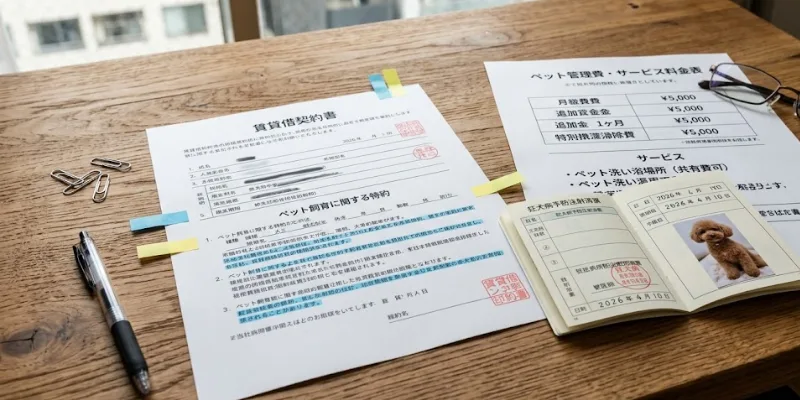
Additional security deposit: most ペット可 properties charge an extra 0.5–1 month’s rent as a pet-specific deposit. For an ¥85,000/month apartment, this adds ¥42,500–¥85,000 to upfront costs.
Monthly pet fee: some buildings charge ¥3,000–¥8,000/month as a pet management fee (ペット管理費). Confirm whether this appears in the lease before signing.
Restoration costs at move-out: this is the most significant pet-related cost. Japanese leases specify restoration (原状回復, genshō kaifuku) obligations at move-out. For pet tenants, landlords typically require:
- Full wall repainting (not standard wear-and-tear covered by landlord)
- Flooring inspection and replacement if scratched or damaged
- Professional deodorisation of the unit
Estimated additional move-out cost for pet tenants: ¥50,000–¥200,000 above standard restoration, depending on pet type, tenancy duration, and condition. Documenting your pet’s behaviour and the unit’s condition at move-in is important for protecting your deposit.
How Foreigners Present a Pet Application in Tokyo
A pet application in Japan has a higher rejection rate than a non-pet application for the same unit. These steps improve approval probability:
Prepare a pet profile document. A one-page document in Japanese (ask your agency to help draft it) stating: your pet’s species, breed, age, weight, vaccination status, spay/neuter status, and any training certifications. Include a photo. Japanese landlords respond significantly better to a formal pet profile than to a verbal mention.
Offer the additional deposit upfront. Propose the extra 0.5–1 month deposit in your application letter before the landlord asks. This signals you understand the concerns and are willing to provide financial protection.
Provide vaccination and veterinary records. Japanese landlords value evidence that the pet is medically current and managed. Vaccination certificates and a recent vet check-up summary are worth including.
Use an agency that has processed pet applications before. The framing of the application — how the cover letter is written, which hoshō gaisha is used, and how the pet information is positioned — affects landlord response. Arealty has processed pet applications across multiple Tokyo wards and can advise on which properties and management companies are genuinely receptive vs those where ペット可 is nominal.
Lease Clauses Foreign Pet Owners Must Understand
原状回復 (genshō kaifuku) clause: specifies your restoration obligations at move-out. For pet tenants, confirm whether the clause specifies pet-specific restoration costs or whether it falls under general wear-and-tear. Under Tokyo Metropolitan Government guidelines, pet damage beyond ordinary wear (scratches from claws, odour, staining) is the tenant’s financial responsibility.
ペット飼育に関する特約 (pet-specific special clause): some leases include a separate pet special clause listing specific obligations — no breeding, noise management, neighbour complaints policy, and move-out requirements. Read this clause fully before signing. Your agency should translate the key points before contract signature.
Noise and neighbour management: Japanese apartment buildings are dense. Dog barking — particularly if the dog is left alone during working hours — is a common source of landlord complaints and lease termination notices. Confirm the building’s noise policy and assess your pet’s behaviour honestly relative to daily schedule.
Share Houses That Accept Pets
A small number of share houses in Tokyo are specifically designed for pet owners. These typically feature:
- Private rooms with pet access
- Shared pet washing stations
- Small outdoor areas or roof terraces for exercise
- Community of other pet owners
Monthly cost: ¥65,000–¥95,000/month all-inclusive. Supply is limited — these properties fill quickly. Searching specifically for ペット可 シェアハウス (pet-friendly share houses) through agencies in mid-range wards (Setagaya, Suginami, Nerima) returns the most relevant results.
Contact Arealty to discuss your specific pet type and target area before searching — the pet application process has enough variables that a preliminary conversation significantly improves outcome. Browse Tokyo listings on Arealty and filter for pet-friendly properties.
Further Reading
- Setagaya apartments for rent — highest pet-friendly supply in Tokyo
- Suginami apartments for rent — moderate pet-friendly inventory, park access
- Japan apartment rental mistakes foreigners make — includes pet application errors
- No-deposit apartments in Tokyo — reducing upfront costs for pet renters
- Renting in Japan as a foreigner — full process guide
- Average apartment rent in Tokyo — 2026 ward data

Real estate advisor at Arealty Japan, specialising in helping foreign residents navigate the Tokyo and Osaka rental markets. Lucy has guided hundreds of international renters — from Working Holiday visa holders to corporate relocations — through Japan’s apartment application process. Her writing draws on firsthand experience with landlord screening, guarantor companies, and foreigner-friendly listings across all 23 Tokyo wards and major Kansai cities.






Leave a Reply