
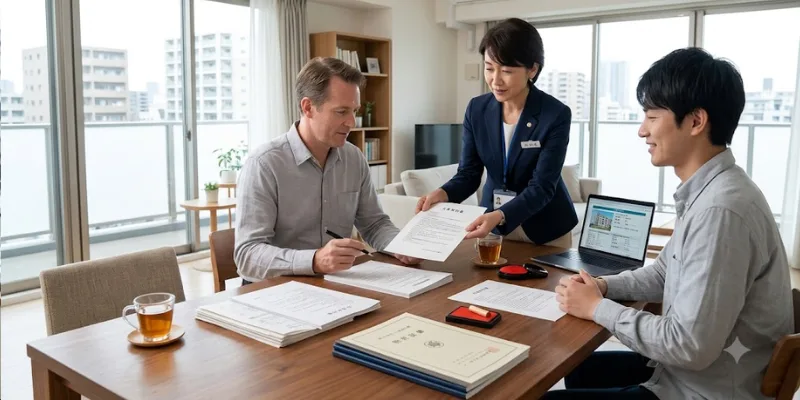

Quick answer: Yes, you can sell your apartment in Japan as a foreign owner with no restriction. Citizenship and residency don’t affect your right to sell. The process runs through a licensed real estate agent, similar to a purchase. Two things trip up most foreign sellers: paperwork if you’re no longer living in Japan, and a 10.21% withholding tax the buyer must deduct at closing if you’re a non-resident at the time of sale.
Selling as someone who’s since moved abroad works differently than selling while still living in Japan. This guide walks through how to sell your apartment in Japan as a foreign owner, step by step, including the tax rules that catch people off guard.
Can Foreign Owners Sell Property in Japan?
Japan places no restriction on foreign ownership or foreign sale of real estate. If you legally bought the apartment, you can sell it the same way a Japanese citizen would. The complexity isn’t legal eligibility. It’s logistics and tax residency status.
If you’re still a Japan resident at the time of sale, the process is close to a standard domestic transaction. If you’ve become a non-resident for tax purposes, a few extra steps apply. Those are covered below.
Step-by-Step: How to Sell Your Apartment in Japan as a Foreign Owner
- Get a property valuation. Ask two or three agents for a comparative market estimate before picking one to list with. Estimates can vary, so don’t settle on the first number you hear.
- Choose a listing agreement type. Japan uses three main types — senzoku (general), sen’nin (semi-exclusive), and sengyo sen’nin (fully exclusive). An exclusive agreement often gets more agent attention, but locks you into one representative.
- Prepare your documents early. Gathering these ahead of time avoids delays once an offer comes in. The next section lists what you’ll need.
- List and negotiate offers. Your agent markets the property and brings you offers. Japan’s market runs more on direct negotiation than open bidding.
- Sign the sales contract and collect the deposit, typically 10% of the sale price.
- Complete the closing (kessai). Ownership transfers, the balance is paid, and your agent handles registration with the Legal Affairs Bureau.
- File a tax return the following year. This reconciles any capital gains tax owed against what was withheld at closing.
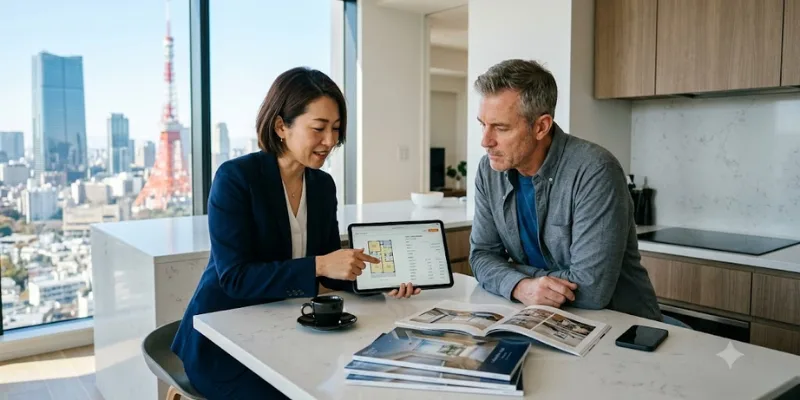
Documents You’ll Need to Sell
Foreign owners generally need to provide:
- The property’s title deed (registration certificate)
- A residence card or passport, plus proof of your current address if you live outside Japan
- The building’s management rules and fee schedule, if it’s a mansion (condo) unit
- Proof of any outstanding mortgage balance, if applicable
- A power of attorney, if you can’t attend closing in person — common for owners who’ve relocated abroad
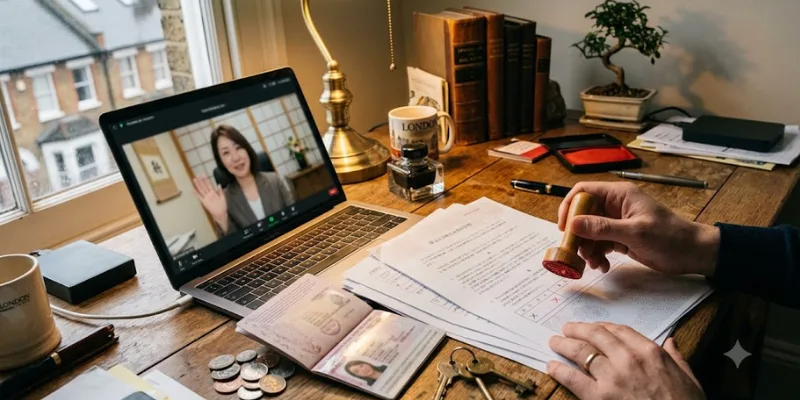
If you’re selling from overseas, your agent can usually walk you through a remote-closing process. This typically uses a power of attorney plus notarized documents from your country of residence.
What It Costs to Sell
Selling isn’t free. Foreign owners should budget for several line items beyond the sale price itself:
- Agent commission. Capped by law at roughly 3% of the sale price plus ¥60,000, plus consumption tax, for properties over ¥4 million.
- Registration cancellation fees, if there’s an existing mortgage to clear from the title.
- Stamp duty on the sales contract, which scales with the transaction value.
- Capital gains tax, covered separately below, since it depends on your holding period and profit rather than a fixed fee.
Our guide to the real estate agent fee in Japan breaks down commission structures in detail. Key questions to ask a real estate agent in Japan is worth reading before you choose who represents your sale.
The Non-Resident Withholding Tax Most Sellers Don’t Expect
This is the part that catches foreign owners off guard. If you’re a non-resident for Japanese tax purposes at the time of sale, the buyer must withhold 10.21% of the gross sale price. That amount goes directly to the tax office. You receive the remaining 89.79% at closing.
This isn’t an extra tax. It’s an advance payment against your eventual capital gains tax bill. You reconcile it the following year when you file a Japanese tax return. If the withheld amount exceeds your actual tax owed, which is common, you get a refund.
There’s one notable exception. If the sale price is ¥100 million or less, and the buyer is an individual purchasing the unit for their own residence or a relative’s, no withholding is required. Most standard residential resales to individual buyers fall under this exemption. Larger or investment-property sales usually don’t.
Capital Gains Tax Basics for Foreign Sellers
Japan taxes the gain on a sale, not the full sale price. Your taxable gain is roughly the sale price minus your original purchase cost and eligible selling expenses. The rate depends heavily on how long you owned the property, measured as of January 1 of the year you sell:
- Owned 5 years or less (short-term): around 39.63% combined tax rate
- Owned more than 5 years (long-term): around 20.315% combined tax rate
That gap is large. Timing a sale to cross the five-year mark, if you’re close to it, can meaningfully lower your tax bill. For the property tax obligations that apply while you still own the unit, see our guide to annual property tax in Japan for homebuyers.
Selling With a Mortgage Still Outstanding
Most sellers still have a mortgage balance when they list. This isn’t unusual, and it’s handled as a normal part of closing rather than a separate hurdle. Your agent coordinates with your lender to confirm the payoff amount, and the loan is settled directly out of sale proceeds at closing. The lender then cancels its mortgage registration (teitoken matsumatsu) on the title. If your loan balance is close to or above what the property is likely to sell for, talk to your agent early. In some cases, sellers need to bring extra funds to closing to clear the balance in full, since Japanese lenders generally require the mortgage to be paid off completely before transferring ownership.
Selling a Jointly Owned Property
Some foreign owners hold their apartment jointly with a spouse, often a Japanese national. If that’s your situation, both registered owners typically need to consent to the sale and sign the contract, even if only one of you initiated it. If your co-owner can’t be present, the same power-of-attorney process used for overseas sellers can usually apply to them as well. Confirm this with your agent before listing, since joint-ownership sales sometimes take slightly longer to arrange paperwork for than a single-owner sale.
Prorating Fixed Asset Tax in the Year You Sell
Japan’s fixed asset tax (koteishisanzei) is billed annually to whoever owns the property as of January 1 of that year. If you sell partway through the year, you’re still technically liable for the full annual bill under the law. In practice, Japanese real estate custom handles this differently: the buyer reimburses you for their share of the tax, prorated from the closing date to the end of the tax year. Your agent calculates this adjustment and builds it into the closing settlement, so it isn’t something you need to arrange separately. It’s worth confirming the exact proration date with your agent in advance, since conventions can vary slightly between regions.
Choosing an Agent to Sell From Overseas
If you’re no longer living in Japan, pick an agent with real experience handling remote sellers. Not every agency does this well. Ask specifically whether they’ve closed a sale using a power of attorney before. Ask how they handle document notarization for overseas clients too.
Our guide on buying property without permanent residency in Japan covers the parallel process on the buying side. That’s useful context if you’re selling one property while considering another purchase. And if you plan to keep other Japanese property as a rental once you’ve left, our guide to property management for investors covers what an overseas landlord needs in place.
How Long Does It Take to Sell?
A typical sale, from listing to closing, runs three to six months in a normal market. Well-priced units in central Tokyo can move faster. Add extra time if you’re coordinating remotely across time zones. Document notarization and courier delays are common friction points for owners selling from abroad.
Common Mistakes Foreign Owners Make When Selling
Not confirming residency status before pricing the sale. Whether you’re a resident or non-resident at closing changes the withholding requirement. Confirm this early with a tax accountant, not after an offer arrives.
Underestimating notarization timelines. Documents from overseas often need apostille or embassy certification. This can take weeks longer than expected.
Assuming the withholding is a final tax. It’s an advance credit, not the final bill. You still need to file a return.
Skipping a tax accountant familiar with cross-border filings. A standard Japanese accountant may not be fluent in the non-resident filing process. Look for one with specific experience in this area before you list.
FAQ: Selling Your Apartment in Japan as a Foreign Owner
Yes. Ownership and tax residency are separate. You don’t need to live in Japan to sell property you own there.
Only if you’re a non-resident at the time of sale, and the transaction doesn’t meet the ¥100 million owner-occupier exemption.
No. It’s an upfront credit against your eventual capital gains tax liability, reconciled when you file your annual return.
No. A power of attorney lets your agent or a representative complete the closing on your behalf.
Agent commission is capped at roughly 3% of the sale price plus ¥60,000, plus consumption tax, for most residential sales.
Yes. Japan doesn’t restrict who can buy from a foreign seller, and the same process applies regardless of the buyer’s nationality.
Source: National Tax Agency of Japan — Withholding Tax on Payments to Non-Residents

Real estate advisor at Arealty Japan, specialising in helping foreign residents navigate the Tokyo and Osaka rental markets. Lucy has guided hundreds of international renters — from Working Holiday visa holders to corporate relocations — through Japan’s apartment application process. Her writing draws on firsthand experience with landlord screening, guarantor companies, and foreigner-friendly listings across all 23 Tokyo wards and major Kansai cities.





Leave a Reply