
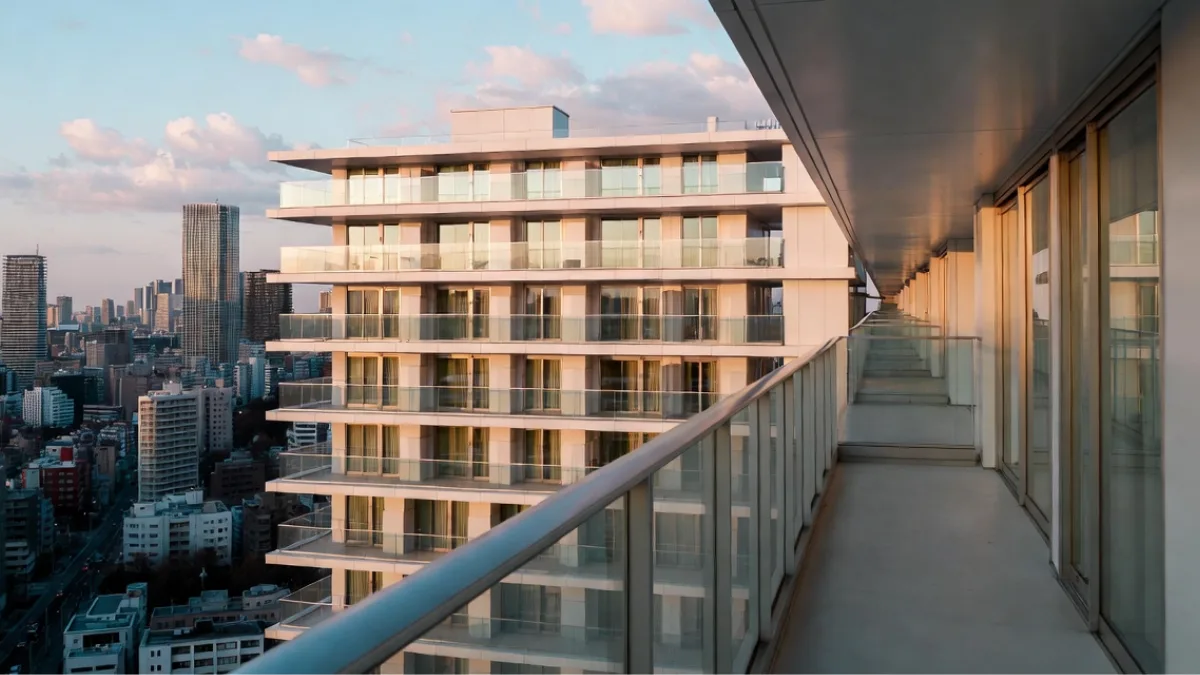

Purchasing real estate in the Land of the Rising Sun offers a unique combination of political stability, transparent title registries, and attractive yield spreads. However, the physical distance and cultural nuances of the Japanese market necessitate a sophisticated approach to oversight. Japan property management for investors is the essential bridge that transforms a high-potential asset into a consistent, passive revenue stream by navigating local laws and tenant expectations.
This guide provides a deep dive into the operational, fiscal, and strategic frameworks required to succeed in the Japanese rental market, specifically focusing on residential assets such as apartments in Japan.
The Strategic Importance of Professional Property Management
Professional management serves as the operational backbone for any overseas landlord. In Japan, the relationship between landlord and tenant is governed by the Act on Land and Building Leases, which heavily protects tenant rights. Navigating these regulations requires local expertise to ensure compliance while maximizing owner returns.
A dedicated manager acts as your legal and operational proxy, handling everything from municipal fire safety inspections to the granular details of garbage disposal rules. This local presence is indispensable if you reside in a different time zone or do not possess native-level Japanese fluency.
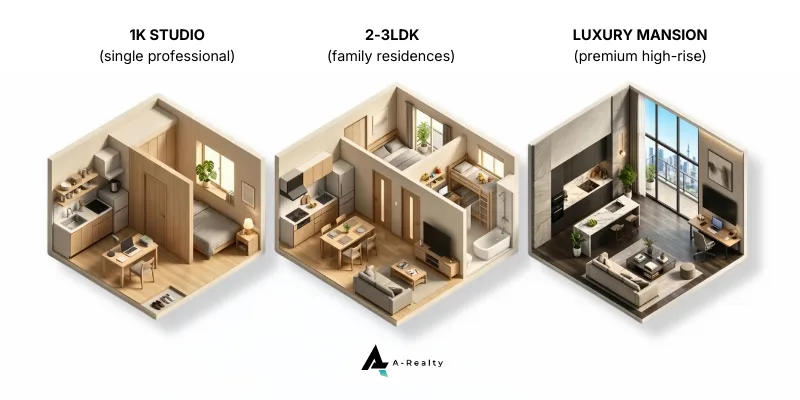
Investors often seek diverse apartments in Japan to balance their portfolios, including:
- Compact “1K” studio units in central business districts designed for single professionals.
- Spacious “3LDK” family residences in suburban residential zones like Setagaya or Nerima.
- Luxury “Designer Mansions” in high-demand neighborhoods such as Minato, Roppongi, or Azabu-Juban.
Core Services: From Acquisition to Retention
A full-service management firm provides a comprehensive suite of services designed to protect the physical integrity of the building and the financial health of the investment. These services are categorized into distinct operational workflows that ensure the property remains competitive.
Tenant Acquisition and Marketing
The Japanese rental market is highly seasonal, with peak activity occurring between January and March before the new school and fiscal year begins. Managers utilize professional photography and 360-degree virtual tours to list properties on major domestic portals like AREALTY or HOME’S. They also target the international community by listing on English-language platforms to capture high-quality expatriate tenants who may be looking for an apartment for rent Japan-wide.
Rigorous Screening and Leasing
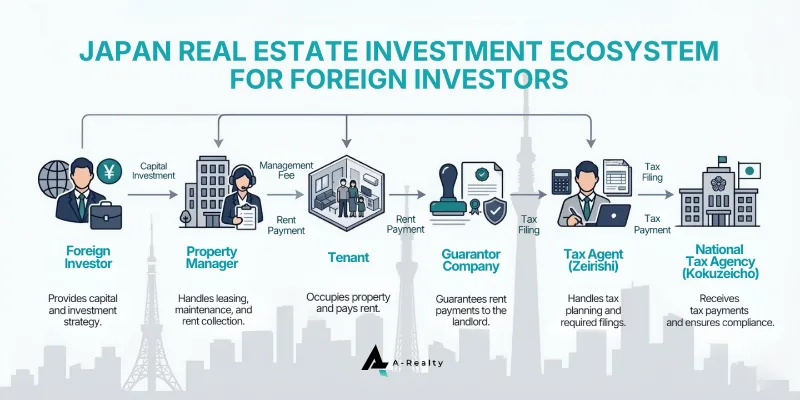
Security is a priority in the Japanese leasing process. Managers conduct thorough background checks, including income verification, employment history, and visa status reviews. They also coordinate with Guarantor Companies (Hosho Kaisha) to insure the rent, ensuring that the owner is protected even if the tenant faces financial hardship. This layer of protection is standard in modern Japanese real estate transactions.
Financial Management and Rent Collection
Modern firms utilize automatic bank transfers and direct debit systems to ensure punctuality. For non-resident owners, the manager handles the mandatory 10.21% withholding tax on rental income, remitting the net proceeds to the owner’s international or domestic account. Detailed monthly statements provide a transparent view of the property’s performance, including line items for repairs and management fees.
Understanding Rental Market Dynamics: Apartments in Tokyo Japan
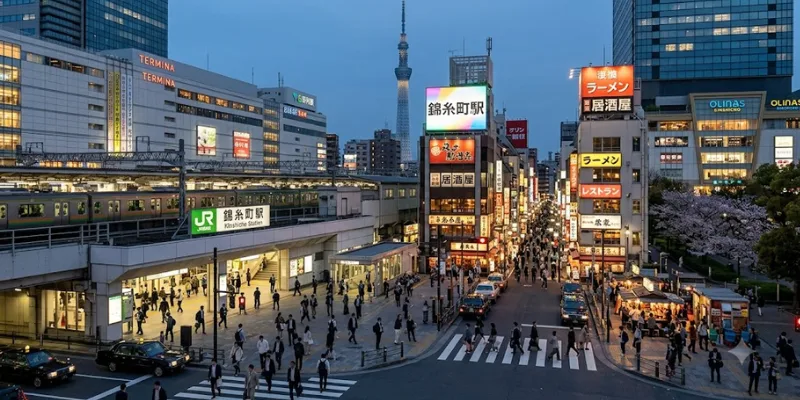
The capital city remains the primary target for institutional and individual investors alike. When looking for an apartment for rent Japan-wide, Tokyo offers the highest liquidity and the most resilient rental rates. The demand for apartments in Tokyo Japan is driven by continuous inward migration and a shortage of modern, earthquake-resistant housing.
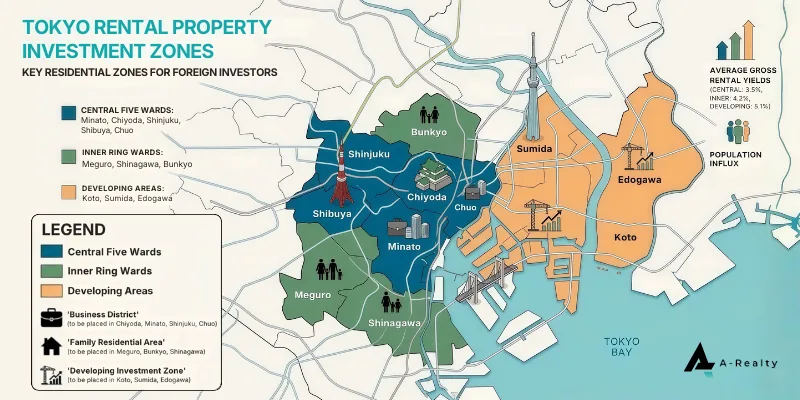
Strategic locations within the 23 Wards offer varying yields and risk profiles:
- Central Five Wards (Chiyoda, Chuo, Minato, Shinjuku, Shibuya): These areas command the highest rents and attract corporate-contract tenants with stable housing allowances.
- Inner Ring Wards (Meguro, Shinagawa, Bunkyo): Highly popular with affluent families and long-term residents seeking proximity to prestigious schools.
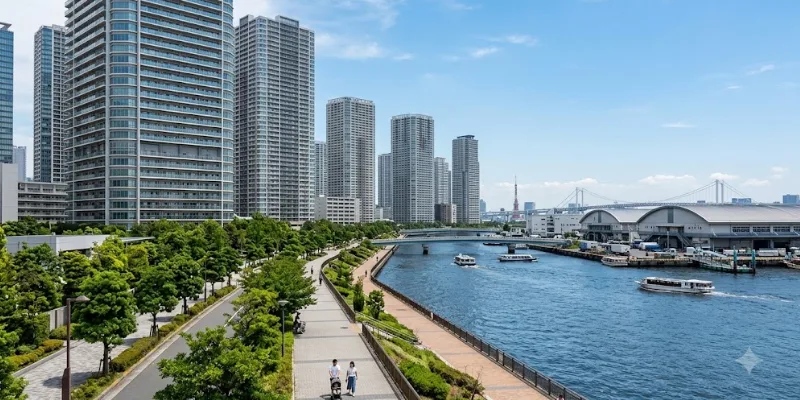
- Rapidly Developing Areas (Koto, Sumida, Edogawa): Offer newer builds and competitive entry prices with strong transit links to the Otemachi financial district.
Reliable managers provide data-driven pricing strategies to minimize vacancy periods in these competitive zones. They monitor “Market Rent” fluctuations to ensure your japan tokyo apartment rent remains optimized against current trends, avoiding the “silent vacancy” that occurs when a property is priced even slightly above the local ceiling.
Technical Maintenance and Preventive Care
Preserving the value of the asset requires a proactive maintenance philosophy. Japanese buildings are subject to strict construction codes and environmental conditions—including high humidity and seismic activity—that demand regular attention. Managers oversee a panel of vetted vendors to perform routine tasks and emergency repairs.
Key maintenance responsibilities include:
- Annual Equipment Inspections: Testing fire alarms, water pumps, emergency lighting, and elevator safety systems.
- 24/7 Emergency Response: Providing coverage for critical issues like plumbing leaks, electrical faults, or tenant lockouts.
- Turnover Renovations: Coordinating “Cross” (wallpaper) replacement, floor polishing, and professional deep cleaning between tenancies to maintain a “like-new” appearance.
By establishing a maintenance reserve fund—typically 3% to 5% of annual gross rent—owners can address these needs without disrupting their monthly cash flow. This fund acts as a buffer against unexpected capital expenditures, such as the replacement of a central water heater or roof repairs.
Contractual Structures for Management
Investors can choose from different contractual models based on their risk appetite and desired level of involvement.
| Contract Type | Description | Best For |
| Standard Management | Manager acts as an agent for a monthly fee (typically 3-5%). | Owners seeking maximum market upside and direct control. |
| Sublease (Guaranteed Rent) | Firm leases the unit from the owner and pays a fixed rent. | Risk-averse investors wanting guaranteed, hassle-free income. |
| Hybrid Model | Base fee plus performance bonuses for high occupancy. | Owners looking to incentivize management to push for higher rents. |
In the Standard Management model, the owner bears the vacancy risk but captures the full market rent. In a Sublease model, the management company assumes the vacancy risk but usually pays the owner 80-90% of the market rate as a “guaranteed” payment.
Leveraging ARealty for Premium Japan Property Management
Choosing a partner with a proven track record is the most critical decision an investor will make. ARealty stands out as a premier choice for foreign investors due to their deep integration into the Tokyo real estate ecosystem and their unwavering commitment to transparency.
ARealty provides a seamless end-to-end experience that specifically addresses the pain points of non-resident owners. Their bilingual staff ensures that no detail is lost in translation, providing English-language lease agreements and comprehensive financial reporting. By utilizing ARealty, investors gain access to:
- Exclusive off-market listings and high-occupancy apartments in Japan that are not available to the general public.
- A robust network of tax accountants and legal experts specializing in foreign ownership and international tax treaties.
- Advanced PropTech solutions for real-time monitoring of property status, including repair tickets and financial performance dashboards.
Whether you are looking to acquire your first apartment for rent Japan or are scaling an existing portfolio of several dozen units, ARealty offers the professional oversight necessary to thrive in a complex market. Contact ARealty today to receive a personalized management proposal and start optimizing your Japanese real estate investments.

Tax and Legal Basics for Non-Resident Owners
Owning property in Japan involves specific fiscal responsibilities that must be managed correctly to avoid legal complications or financial penalties. The Japanese tax year runs from January to December, and tax returns are typically filed between February and March of the following year.
Withholding Tax Obligations
If the tenant is a corporation or uses the property for business purposes, they are legally required to withhold 10.21% of the rent for the Japanese National Tax Agency if the owner is a non-resident. A professional manager ensures this is documented correctly so the owner can claim tax credits or refunds during the annual filing process.
Consumption Tax and Fixed Asset Tax
Residential rent is generally exempt from consumption tax, which benefits the tenant’s affordability and simplifies the owner’s bookkeeping. However, owners must pay the Fixed Asset Tax (Kotei Shisan Zei) and the City Planning Tax (Toshi Keikaku Zei) annually. Managers often facilitate these payments on behalf of the owner to ensure they are made on time if the owner does not have a domestic bank account.
Legal Representation and Tax Agents
Non-resident owners are required to appoint a Tax Agent (Nozei Kanrinin) who is a resident of Japan. This person or entity is responsible for receiving tax notices and making payments on the owner’s behalf. Most reputable management firms either provide this service or partner with licensed tax accountants to fulfill this legal requirement.
Remote Management and Digital Portals
The evolution of Property Technology (PropTech) has significantly enhanced the ability of overseas owners to monitor their investments without needing to fly to Tokyo. High-quality management firms now offer digital “Owner Portals” that provide a 24/7 window into the property’s status.
These digital tools offer several essential benefits:
- Real-time Documentation: Instant access to insurance policies, title deeds, and signed lease contracts.
- Visual Transparency: High-resolution photos and video reports of move-in/move-out inspections.
- Communication Logs: A centralized record of all tenant requests, manager responses, and vendor quotes.
Implementing smart-home technology, such as smart locks for keyless entry or IoT leak detectors, can further reduce operational risks and appeal to the tech-savvy demographic looking for apartments in Tokyo Japan.
Risk Mitigation and Disaster Preparedness
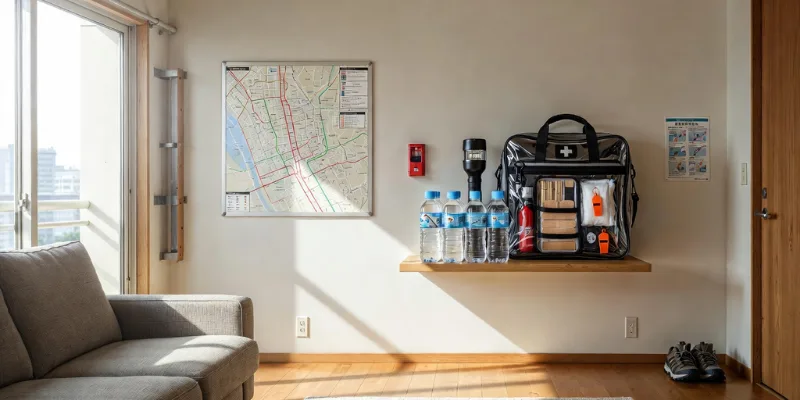
Japan is a geography with specific environmental risks, most notably seismic activity. However, strict building codes—specifically the Shin-Taishin standards introduced in 1981—mean that modern properties are exceptionally resilient. A manager’s role is to ensure the property is covered by the appropriate insurance products.
Essential insurance coverage includes:
- Fire and Earthquake Insurance: Standard protection for structural damage and loss of use.
- Facilities Liability Insurance: Covers the owner if a defect in the building causes injury to a person or damage to their property.
- Rent Default Insurance: Often integrated with guarantor company services to cover up to 12-24 months of lost income during legal disputes.
Managers also conduct regular inspections to identify potential hazards, such as loose balcony tiles or aging gas lines, preventing small issues from becoming major liabilities.
Optimizing Yield Through Strategic Renovations
To maintain high japan tokyo apartment rent levels and attract premium tenants, periodic upgrades are necessary. The Japanese market places a high value on cleanliness and modern “westernized” aesthetics. Small, strategic investments can lead to significant jumps in both rental income and overall asset appreciation.
Effective renovation examples include:
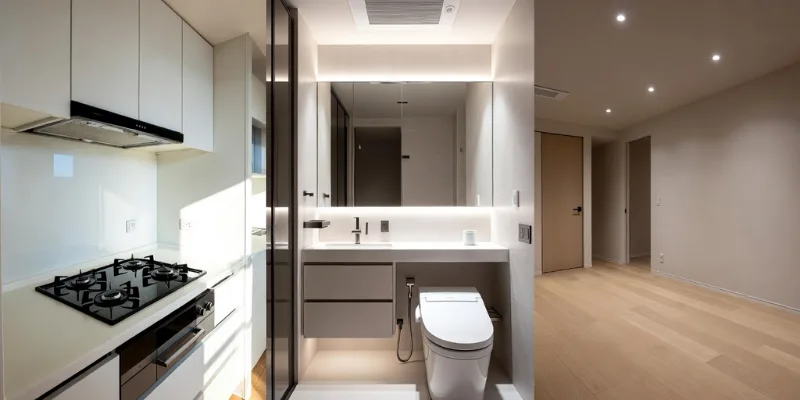
- Kitchen Modernization: Replacing old gas ranges with IH (Induction Heating) cooktops and installing sleek, easy-clean cabinetry.
- Bathroom Upgrades: Updating “Unit Baths” with high-tech Washlet toilets, climate-controlled ventilation systems (to prevent mold), and modern vanity units.
- Interior Refinement: Installing durable wood-veneer flooring and adding recessed LED lighting to create a sense of space and warmth.
A professional manager provides a “Cost-Benefit Analysis” for any proposed renovation, showing the expected Return on Investment (ROI) through increased rent or a shortened vacancy period.
The Exit Strategy: Preparing for Sale
Managing a property isn’t just about the monthly rent; it’s about preparing the asset for its eventual exit. A well-managed property with clear financial records and a history of preventive maintenance commands a significantly higher price on the secondary market.
When the time comes to sell, the management company assists by:
- Compiling Records: Providing a full history of repairs, inspections, and tenant turnover.
- Maximizing Value: Ensuring the property is occupied by a high-quality tenant at market rent, which improves the “Investment Yield” for the next buyer.
- Handover Coordination: Managing the transition of deposits and keys to the new owner or their representative.
Clear documentation is especially important for foreign buyers or institutional funds who require “Clean” data before committing to a purchase.
Scaling Your Portfolio in Japan
Once the first investment is stabilized, many owners look to scale their holdings. Professional management allows for this expansion by standardizing operations across multiple assets.
To scale effectively, investors should focus on:
- Geographic Diversification: Spreading assets across different wards in Tokyo or exploring emerging markets like Osaka or Fukuoka.
- Asset Class Variation: Mixing smaller studio apartments for cash flow with larger family units for long-term capital stability.
- Centralized Reporting: Using a single management partner like ARealty to consolidate all financial data into one master report.
Standardized Operating Procedures (SOPs) for onboarding new units ensure that every property in your portfolio meets the same high standards of tenant care and maintenance.
Common Pitfalls and How Managers Solve Them
Even in a stable market like Japan, challenges can arise. Professional managers are trained to handle these scenarios before they impact the owner’s bottom line.
- Tenant Disputes: Whether it’s a noise complaint or a disagreement over the security deposit refund, the manager acts as a neutral third party to resolve the issue based on the lease terms and local laws.
- Late Payments: Managers utilize automated reminders and, if necessary, coordinate with the guarantor company to ensure the owner receives their rent on time.
- Unexpected Repairs: If a water heater fails in the middle of winter, the manager utilizes their emergency vendor network to replace it immediately, keeping the tenant happy and preventing further damage.
The presence of a proactive manager turns these potential headaches into routine administrative tasks.
Conclusion
Success in the Japanese real estate market is rarely the result of luck; it is the product of diligent management and local expertise. By selecting a partner who understands the nuances of Japan property management for investors, you protect your capital and ensure the longevity of your yields.
Whether you are managing a single apartment for rent Japan-wide or a sprawling portfolio of apartments in Tokyo Japan, the principles of transparency, proactive maintenance, and rigorous tenant screening remain the same. With the right systems in place, your Japanese property becomes more than just a building—it becomes a reliable, hands-off engine for wealth generation.

Real estate advisor at Arealty Japan, specialising in helping foreign residents navigate the Tokyo and Osaka rental markets. Lucy has guided hundreds of international renters — from Working Holiday visa holders to corporate relocations — through Japan’s apartment application process. Her writing draws on firsthand experience with landlord screening, guarantor companies, and foreigner-friendly listings across all 23 Tokyo wards and major Kansai cities.



Leave a Reply