
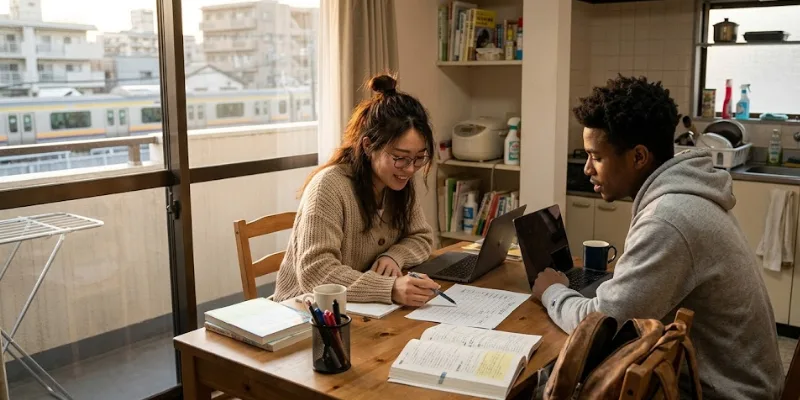

For international students moving to Japan, finding the right accommodation is a critical first step. While solo apartments remain popular, room sharing has emerged as one of the most practical ways to manage living expenses and ease the transition to a new country — particularly in expensive cities like Tokyo.
This guide covers everything you need to know about student room sharing in Japan: the types of arrangements available, how costs break down, what can go wrong, and how to find a property that works for your schedule, budget, and visa situation.
The Landscape of Shared Accommodation for Students
The Japanese housing market offers several distinct options for students who want to avoid the full cost of solo renting. Understanding the difference between them is the first step toward finding something that fits.
Room Sharing vs. Share Houses
Room sharing typically refers to two or more students co-renting a standard apartment — each person has their own space within the unit, but the lease is shared.
Share houses are purpose-built or converted residential buildings where tenants have private bedrooms but share common areas: kitchens, bathrooms, and lounges. Our dedicated guide to share houses in Japan covers this option in detail — including operators who waive key money and offer furnished rooms, which makes them particularly accessible for students arriving without a lot of capital upfront.
Both arrangements are significantly more accessible than solo renting for international students, primarily because:
- Initial costs are divided across multiple tenants
- Some share house operators handle the guarantor requirement themselves
- Furnished options reduce setup costs to near zero
Key Benefits of Shared Living for Students
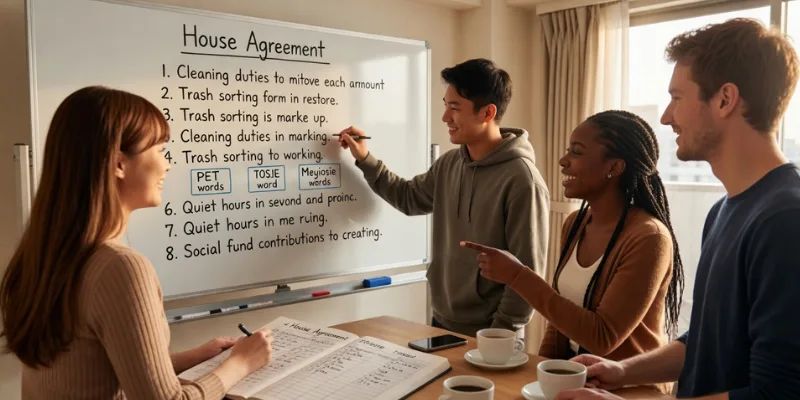
Sharing a living space lowers the barrier to quality housing in central neighborhoods closer to major universities — The University of Tokyo, Waseda, Keio, or Osaka University — without requiring a full solo rent budget.
Financial efficiency: Splitting rent and utilities reduces each person’s monthly housing burden by approximately 30–50%, depending on the number of occupants and location.
Safety and support: Having housemates provides immediate practical help during health issues, natural disasters, or navigating Japanese bureaucracy — all situations where having someone physically present matters.
Skill development: Shared living builds conflict resolution, financial management, and household coordination skills — all of which transfer well beyond student life.
Financial Breakdown: What Room Sharing Actually Costs
One of the most common surprises for first-time renters in Japan is the scale of initial costs. Unlike many other countries, Japan’s standard rental system includes several upfront fees that can total four to six times the monthly rent before you move in.
Initial Costs (Shoki Hiyou, 初期費用)
When splitting a shared apartment, these costs are divided among tenants — but the combined total remains significant. The table below reflects standard market rates as of 2026:
| Expense | Typical amount | Notes |
| Deposit (shikikin, 敷金) | 1–2 months’ rent | Refundable, subject to restoration costs |
| Key money (reikin, 礼金) | 0–2 months’ rent | Non-refundable; some properties waive this |
| Agency fee | 0.5–1 month’s rent | Paid to the real estate agent |
| Guarantor fee | 0.5–1 month’s rent | Required when using a guarantor company |
| Insurance and lock change | ¥20,000–¥40,000 | Mandatory fire insurance; lock replacement |
On the deposit: Japanese landlords can deduct restoration costs from your security deposit when you move out. Understanding what you are and are not responsible for — before you sign — can save you significant money. Our guide to restoration costs in Japan explains exactly what tenants are legally obligated to cover versus what falls to the landlord under Japanese law.
Ongoing Monthly Costs
According to JASSO (Japan Student Services Organization), the average monthly expenditure for an international student in Japan — including tuition and rent — is approximately ¥150,000. Room sharing helps keep the housing portion of that figure manageable. For a full breakdown of what ongoing living costs look like in Tokyo month to month, see our Tokyo cost of living breakdown for two-person households, which tracks rent, food, transport, and utilities across different wards.
Recurring shared costs typically include:
- Electricity, gas, and water (split equally or by usage)
- High-speed internet (one account, shared cost)
- Communal supplies: cleaning products, toilet paper, kitchen consumables
Establishing a shared fund for these items — collected monthly and held by one person on a rotating basis — prevents the most common source of housemate conflict: one person consistently covering communal costs while others don’t pay back promptly.
Challenges and Risks to Plan For
Room sharing works well when expectations are aligned from the start. The most common problems arise not from incompatibility, but from things that were never discussed before move-in.
Academic Interference
Different schedules are the primary structural risk of shared living. A housemate who works late-night part-time shifts and a student with 8 AM lectures will inevitably create friction unless quiet hours are established in advance.
Relationship Strain
Living closely with others surfaces personal habits quickly — cleanliness standards, guests, food boundaries, and noise tolerance vary significantly between people. The most serious financial risk is one person leaving unexpectedly, leaving the remaining tenant responsible for the full rent. This is a genuine possibility that should be discussed and planned for before signing any lease.
Guarantor and Parental Approval
In Japan, most landlords require a guarantor (hoshonin, 保証人). For international students, this is typically handled through a guarantor company — a service that charges a fee but removes the need for a personal Japanese guarantor. For Japanese students, landlords often require a parent to co-sign, which means parental approval is a practical prerequisite for the rental process. Our step-by-step guide to renting in Japan as a foreigner covers how guarantor companies work and which ones are most commonly accepted by Tokyo landlords.
How to Find Student Room Sharing Accommodation in Japan
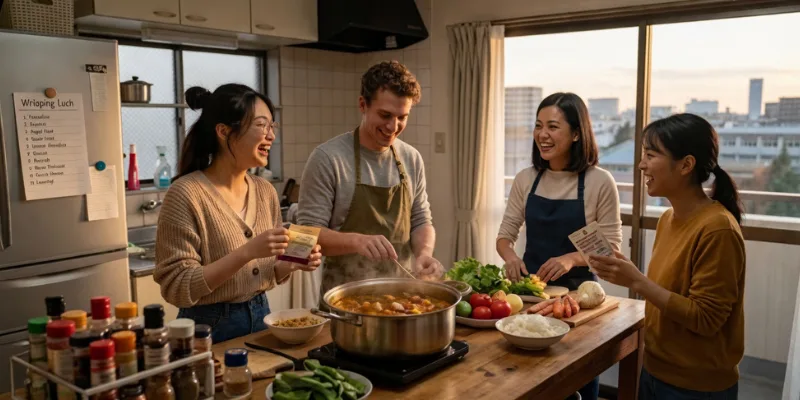
Navigating the Japanese rental market as an international student requires specific knowledge and patience. The following strategies improve your chances of finding a property that is both affordable and genuinely accessible to foreign tenants.
Strategic Location Selection
Proximity to campus matters, but living one or two stations further from a major hub can save ¥20,000–¥40,000 per month in rent without significantly increasing commute time. Student-friendly neighborhoods in Tokyo worth researching include Nerima (accessible to Shinjuku via the Seibu Shinjuku line), Itabashi, and Suginami — all of which offer lower rents than central wards while maintaining good transit access. For a full ward-by-ward comparison, see our breakdown of affordable neighborhoods in Tokyo for foreign residents.
Use Agencies That Work With International Tenants
General real estate agencies are sometimes hesitant to process applications from international students — not always due to policy, but due to the additional documentation and communication complexity. Agencies that specialize in foreign tenants are better equipped to navigate these situations. Our list of top real estate agencies in Tokyo for foreigners includes operators who work specifically with student applicants and often have direct relationships with landlords open to international tenants.
Making Shared Living Work: Practical Setup
A successful shared living arrangement depends on agreements being made explicit before anyone moves in — not assumed.
Draft a House Agreement
Before signing the lease, co-tenants should create a written document covering:
- Cleaning: Specific days assigned to vacuuming, bathroom cleaning, and trash sorting (Japan’s trash rules are strict and ward-specific — non-compliance can result in uncollected rubbish and neighbor complaints)
- Guest policy: Maximum nights a guest can stay; advance notice required
- Quiet hours: A standard “no noise” window — typically 11 PM to 7 AM — that protects everyone’s sleep and study time
- Financial obligations: Who holds the shared fund, how much each person contributes, and what happens if someone can’t pay in a given month
Administrative Tasks After Moving In
Once you have the keys, several administrative steps are required by Japanese law — including registering your address at the local ward office within 14 days of moving in. Our address registration guide walks through this process step by step, including what documents to bring and how to handle the process if your Japanese is limited.
Cultural Considerations
For international students sharing with Japanese housemates — or sharing a building with Japanese neighbors — a few practices matter disproportionately:
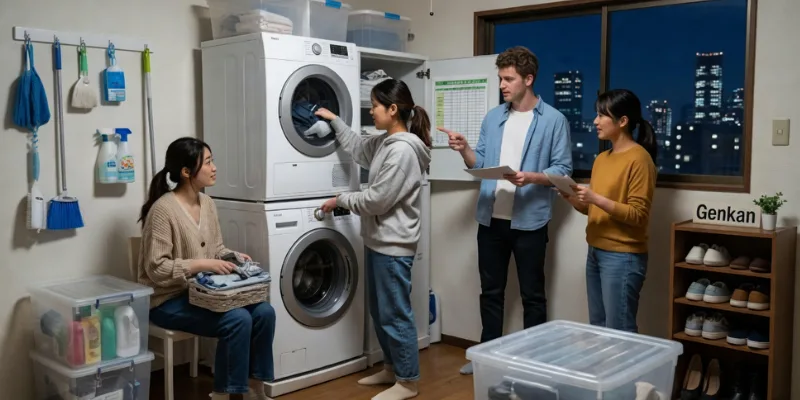
- Genkan etiquette: Always remove shoes at the entrance. Entering with shoes is considered a serious breach of household etiquette.
- Trash sorting: Japan’s waste separation rules are highly detailed and vary by ward. Learn your local rules in the first week — incorrect disposal is one of the most common causes of neighbor friction.
- Noise profile: Walls in Japanese apartment buildings are often thinner than international students expect. A low noise baseline, especially after 10 PM, maintains good standing with both housemates and neighbors.
Conclusion: Is Room Sharing Right for You?
Student room sharing in Japan is a strategic choice that combines meaningful cost savings with built-in social support — particularly valuable in the early months of settling into a new country. It works best when all parties communicate openly, establish house rules early, and approach shared finances with the same transparency they would expect from a housemate.
Students who make this arrangement work well often find they have more financial flexibility for travel, extracurricular activities, and experiences outside the university — while building genuine, lasting relationships along the way.
Further Reading
- Share houses in Japan — complete guide for foreign residents
- Renting in Japan as a foreigner — step-by-step
- Affordable neighborhoods in Tokyo for foreign renters
- Restoration costs when moving out in Japan — what tenants must pay
- Address registration in Japan after moving in
Searching for student-friendly shared accommodation in Tokyo? Browse Arealty’s Tokyo listings or contact our multilingual advisory team for a free consultation.
References
- Japan Student Services Organization (JASSO). Survey on International Students in Japan.
- National Federation of University Co-operative Associations. Student Life Survey.
- Ministry of Land, Infrastructure, Transport and Tourism (MLIT). Guidelines for Rental Contracts and Tenant Rights in Japan.

Real estate advisor at Arealty Japan, specialising in helping foreign residents navigate the Tokyo and Osaka rental markets. Lucy has guided hundreds of international renters — from Working Holiday visa holders to corporate relocations — through Japan’s apartment application process. Her writing draws on firsthand experience with landlord screening, guarantor companies, and foreigner-friendly listings across all 23 Tokyo wards and major Kansai cities.




Leave a Reply