
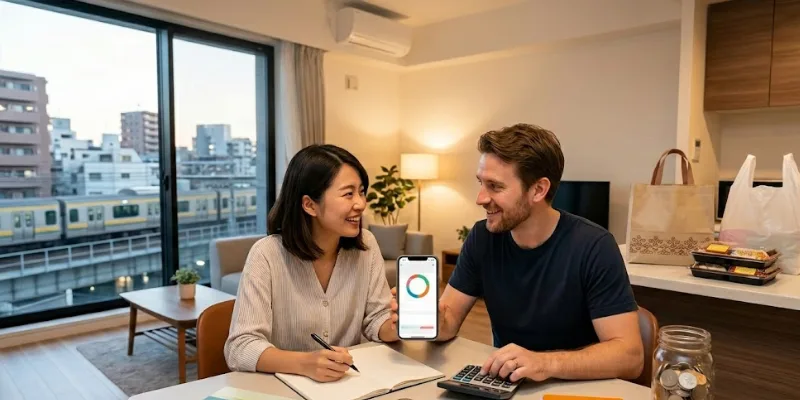

Moving in together is a significant milestone that offers both emotional rewards and financial advantages. However, transitioning from individual spending to a shared financial structure requires a strategic approach to prevent friction. In Japan, where the cost of living and specific rental customs can be unfamiliar for foreign residents, establishing a clear budget framework is essential for a harmonious life together.
This guide provides practical insights into managing a couple’s living budget in Japan, understanding shared expenses, and implementing strategies to save money while searching for the right apartment in Tokyo.
The Financial Reality of Couple Living in Japan
Cohesion in a relationship often stems from financial transparency. When two people share a household, they benefit from economies of scale — reducing the individual burden of fixed costs considerably. According to data from the Statistics Bureau of Japan (2023), the average monthly living expenses for a two-person household (excluding rent) sit at approximately ¥225,000.
For a more granular breakdown of what those expenses look like in practice, see our guide on the cost of living as a couple in Tokyo, which tracks housing, food, transport, and leisure costs across different wards.
Understanding Fixed vs. Variable Costs
To manage your shared budget effectively, partners must distinguish between non-negotiable expenses and flexible spending. Fixed costs remain consistent month to month, whereas variable costs fluctuate based on lifestyle choices and seasonal changes.
Fixed costs: Monthly rent, internet subscription fees, and insurance premiums.
Variable costs: Utility bills (electricity/gas), grocery shopping, and leisure activities.
Defining these categories immediately allows couples to allocate funds with precision. A structured budget acts as a roadmap, ensuring that neither partner feels overwhelmed by unexpected financial demands.
Strategic Management of Shared Expenses
Successfully navigating couple expenses in Japan requires more than splitting bills — it demands a system that accounts for income disparities and personal spending habits. Transparency is the cornerstone of this process, especially when dealing with the high initial costs of renting an apartment in Tokyo.
Common Allocation Methods
Couples should choose a management style that aligns with their professional status and long-term goals. There is no universal solution, but the following methods are widely regarded as effective for foreign residents:
The Common Account System: Both partners contribute a predetermined amount to a shared bank account. This account covers all collective necessities — rent, utilities, and shared groceries.
The Proportional Split: Ideal when there is a significant income gap. Expenses are divided based on a percentage of each person’s salary, ensuring the financial burden remains fair. To benchmark what a proportional split should look like, it helps to first understand average salaries in Japan across different industries and visa types.
The Itemized Responsibility: One partner takes charge of specific bills (e.g., rent and water), while the other covers different categories (e.g., food and electricity).
Essential Shared Expense Categories
Effective couple budgeting means tracking the specific categories that frequently lead to budget leakage:
- Housing-related costs: Rent, management fees (kanri-hi, 管理費), renewal fees (koushin-ryō, 更新料), and restoration costs upon move-out — a commonly overlooked expense that can reach ¥100,000–¥300,000 at the end of a lease.
- Daily necessities: Bulk-purchased household items such as detergents, toiletries, and cleaning supplies.
- Communication and infrastructure: Home Wi-Fi, shared streaming services, and mobile data plans.
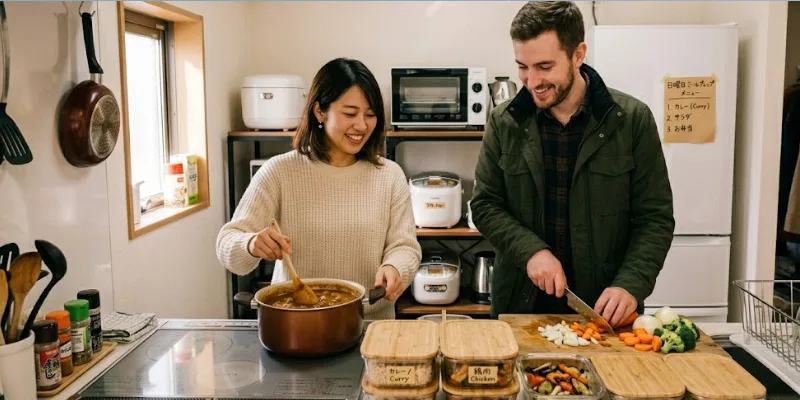
How to Save Money as a Couple in Japan
Inflation and rising energy costs necessitate proactive measures. By optimizing daily habits and utilizing local services, couples can significantly increase their monthly savings without compromising comfort.
Optimizing Utility Consumption
Utility costs in Japan — particularly electricity and gas — spike during humid summers and cold winters.
- Energy-efficient appliances: LED bulbs and modern air conditioning units with “eco-mode” settings make a measurable difference over 12 months.
- Off-peak usage: Washing machines and dishwashers used during off-peak hours can reduce electricity costs depending on your provider contract.
- Bundle deals: Many providers offer discounts when you subscribe to both electricity and gas through the same company.
Smart Grocery Shopping
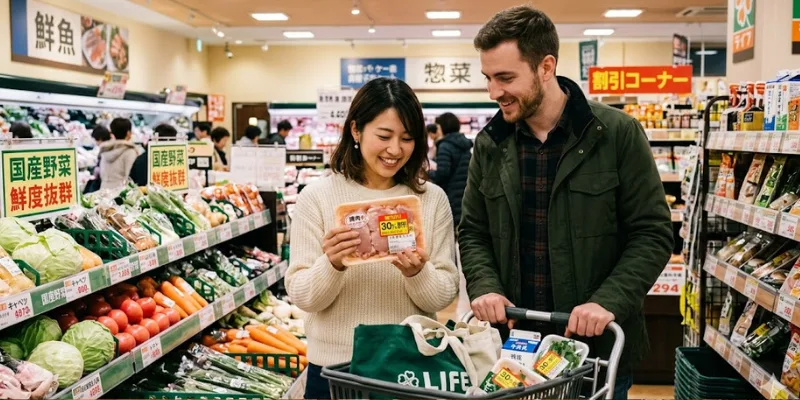
Food expenses are the largest variable in most couple budgets. Transitioning from convenience stores (konbini) to local supermarkets can save a household thousands of yen each month.
- Discount timing: Visiting supermarkets like Life, Seiyu, or Aeon after 8:00 PM when “waribiki” (割引) discount stickers are applied to fresh produce and bento boxes.
- Point cards: Consistently using loyalty programs such as Ponta, d-Point, or Rakuten Points to accumulate credit for future purchases.
- Bulk buying: Wholesalers like Gyomu Super or Costco offer significant savings on non-perishable goods and frozen items.
Avoiding Financial Friction in Relationships
Even with the best system in place, interpersonal conflict can arise when communication breaks down. Financial disagreements are rarely about the money itself — they are usually about differing values or a lack of clarity.
The Consultation Rule
To prevent resentment, couples should establish a threshold for independent spending. A common approach is to consult the partner before any individual purchase exceeding ¥10,000. This ensures that large outlays do not jeopardize the shared budget without prior discussion.
Building an Emergency Fund
Life is unpredictable. Costs for medical emergencies, appliance repairs, or sudden travel home can disrupt even a well-planned budget. The Ministry of Internal Affairs and Communications advises households to maintain reserves sufficient for unforeseen disruptions — most financial planners recommend three to six months of total living expenses as a baseline. This fund provides a safety net if one partner faces temporary unemployment or a health issue.
Finding the Right Apartment in Tokyo
The choice of residence is the single most impactful factor in your monthly budget. Rent in Tokyo varies significantly depending on the ward, proximity to major train lines, and the age of the building. For current pricing context, the Tokyo apartment rent trends for 2026 show continued upward pressure in central wards while outer areas remain more stable.
Key Factors Influencing Rental Costs
When searching for an apartment in Tokyo, couples must balance convenience with affordability. High rent can restrict your ability to save, while a location too far from work increases commuting costs and stress.
- Location vs. price: Wards like Minato or Shibuya command premium prices. By contrast, areas such as Edogawa, Adachi, and Itabashi offer more spacious options at lower monthly rates. For a full comparison by ward, see our breakdown of affordable neighborhoods in Tokyo for foreign residents.
- Initial costs: Be prepared for upfront costs that often include shikikin (security deposit), reikin (key money), and brokerage fees — these can total four to six months’ rent before you move in.
- Size requirements: For two people, look for 1LDK apartments (one bedroom, living/dining/kitchen) or 2DK layouts to ensure enough personal space for both individuals.
Navigating the Rental Process as a Foreign Couple
Renting in Tokyo as a foreign resident involves specific hurdles — most notably the requirement for a guarantor or guarantor company, and documentation that is typically only available in Japanese. Our detailed guide on renting in Japan as a foreigner covers the step-by-step application process, what documents to prepare, and how to approach landlords who may be unfamiliar with international applicants.
Real-World Examples of Household Savings
The following examples are drawn from clients who relocated to Tokyo through Arealty and agreed to share their experiences anonymously.
The Transport Swap: A British-Japanese couple living in Setagaya switched from taxis for late-night returns to the night-bus network and bicycles, saving approximately ¥15,000 per month — nearly ¥180,000 over a full year.
The Meal Prep Strategy: A Canadian couple in Koenji dedicated Sunday afternoons to bulk-cooking, reducing their reliance on “gaishoku” (外食, eating out) and lowering their monthly food spending by around ¥30,000.
The Subscription Audit: After reviewing three months of bank statements, an American-German couple cancelled three unused streaming services and a gym membership they rarely used, redirecting ¥8,000 monthly into their travel fund.
Long-Term Financial Planning and Shared Goals
Beyond monthly expenses, successful partners plan toward shared futures. Budgeting is not merely about restriction — it is about allocating resources strategically to achieve goals that matter to both people.
Defining Shared Objectives
Couples should hold a brief “financial review” once a month to assess progress and adjust targets. Common long-term goals for couples in Japan include:
- Marriage and ceremony costs: Saving for a traditional or modern wedding in Japan.
- International travel: Funding annual trips to visit family or explore new countries.
- Property ownership: Transitioning from renting to purchasing — a goal explored in our guide on buying property in Japan without permanent residency, which covers financing options for non-PR visa holders.
Useful Technology for Budget Management
Digital tools can automate routine tracking, freeing couples to focus on their relationship rather than spreadsheets.
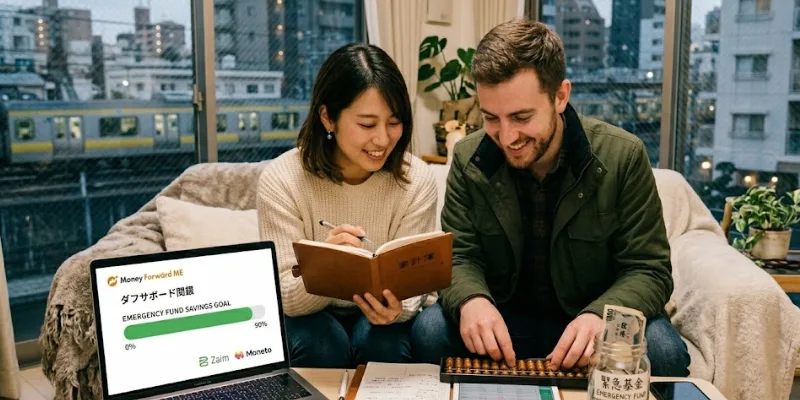
- Zaim and Money Forward ME both link directly to Japanese bank accounts and credit cards, providing real-time spending insights in Japanese and English.
- Automated transfers: Setting up automatic transfers to a savings account on payday ensures you save before you have the opportunity to spend.
- Digital receipts: Japan remains a cash-heavy society in some areas — apps that scan receipts help maintain a complete expense record.
- Shared calendars: Marking “no-spend days” or monthly budget reviews helps keep both partners synchronized.
Conclusion
Mastering a shared budget in Japan is a continuous process of communication, adjustment, and mutual respect. By understanding how costs are structured, making informed decisions about where to live, and building healthy financial habits together, couples can create a stable and prosperous life in one of the world’s most rewarding cities.
The goal of a shared budget is freedom — not limitation. Managed well, your finances create room to explore everything Japan offers, from the energy of Shibuya to the quiet neighborhoods of Koenji and beyond.
Further Reading
- Cost of living for two people in Tokyo — full breakdown
- Affordable neighborhoods in Tokyo for foreign renters
- Renting in Japan as a foreigner — step-by-step guide
- Buying property in Japan without permanent residency
Looking for apartments in Tokyo that fit your couple’s budget? Browse Arealty’s Tokyo listings or speak with one of our multilingual advisors.
References
- Statistics Bureau of Japan (2023). Household Survey: Income and Expenditure.
- Ministry of Internal Affairs and Communications. Consumer Price Index Reports.
- Real Estate Economic Institute. Tokyo Metropolitan Apartment Market Trends.

Real estate advisor at Arealty Japan, specialising in helping foreign residents navigate the Tokyo and Osaka rental markets. Lucy has guided hundreds of international renters — from Working Holiday visa holders to corporate relocations — through Japan’s apartment application process. Her writing draws on firsthand experience with landlord screening, guarantor companies, and foreigner-friendly listings across all 23 Tokyo wards and major Kansai cities.



Leave a Reply