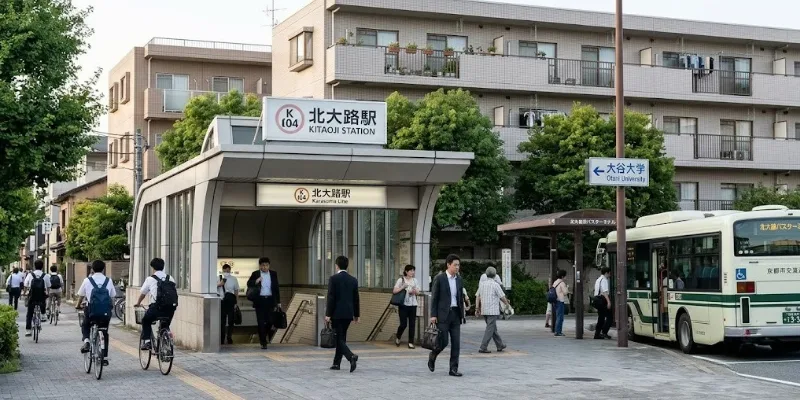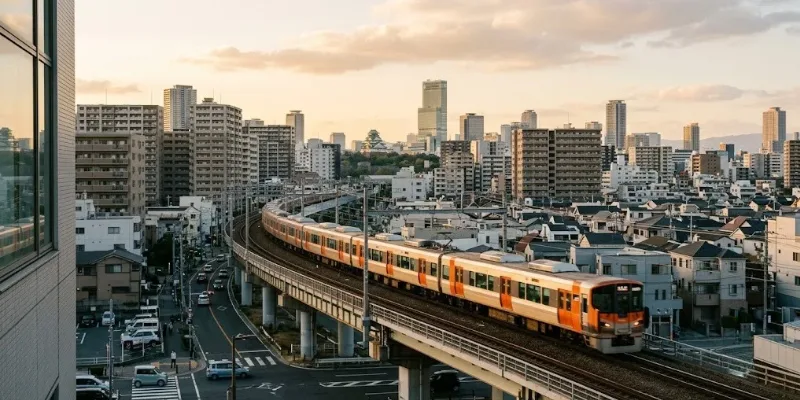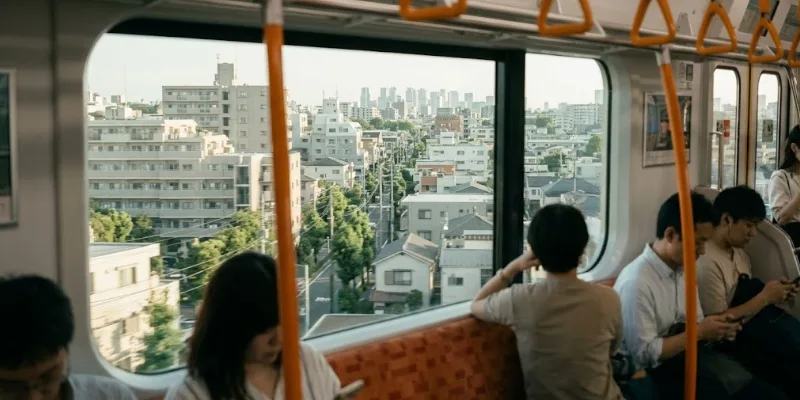

Quick answer: Chuo Line apartments give you a direct, transfer-free ride into Shinjuku and Tokyo Station from almost all of western Tokyo. A studio or 1K costs about ¥145,000 to ¥158,000 a month near central stations. That drops to around ¥100,000 to ¥115,000 in Nakano, Koenji and Kichijoji, and under ¥80,000 past Musashi-Sakai. For most foreigners, the best value is between Nakano and Mitaka: rent is 25 to 35% below central Tokyo and Shinjuku is under 20 minutes away.
JR Chuo Line key facts
| Item | Detail |
|---|---|
| Operator | JR East |
| Main service for residents | Chuo Line (Rapid), orange line, Tokyo to Takao |
| Parallel local service | Chuo-Sobu Line, yellow line, Mitaka to Chiba via Shinjuku |
| Stations in Tokyo | 32 (Tokyo to Takao) |
| Shinjuku to Tokyo | About 14 minutes by rapid train |
| Cheapest studio rent | Takao, about ¥57,000 |
| Most expensive studio rent | Ichigaya, about ¥158,500 |
| Green Car | Paid service since March 15, 2025 |
Rent figures are LIFULL HOME’S averages for studio, 1K and 1DK apartments within a 10-minute walk of each station, checked October 2026.
Why Do Foreigners Choose Chuo Line Apartments?
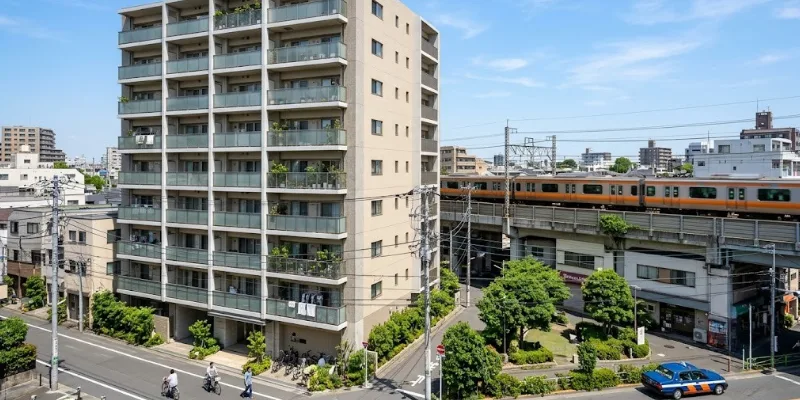
The Chuo Line cuts straight across Tokyo from east to west. One train links the business district around Tokyo Station, the government and university area around Yotsuya and Ochanomizu, and Shinjuku, the busiest station in the world. Beyond Shinjuku, it runs through the neighborhoods many newcomers end up loving: Nakano, Koenji, Ogikubo and Kichijoji.
There are three practical reasons this line works well for international residents.
First, no transfers. If you work or study anywhere near Shinjuku, Yotsuya or Tokyo Station, you can ride one train door to door. Transfers are where Tokyo commutes lose time, so this matters more than distance. Our Tokyo commute times guide explains why.
Second, the rent curve is gentle. Prices fall steadily as you go west, so you can trade a few minutes of commuting for a real drop in rent.
Third, the neighborhoods have character. The west side of the line has shopping streets, live music, used bookshops and large parks instead of only office towers. That makes daily life easier when you are new to Japan.
How the rapid and local trains work together
The orange Chuo Line (Rapid) stops at fewer stations and is the one you will use most. The yellow Chuo-Sobu Line stops at every station between Mitaka and Ochanomizu and then continues east to Chiba. If your apartment is near a small station like Higashi-Nakano or Shinanomachi, you will ride the yellow local trains.
One rule surprises many new residents. On Saturdays, Sundays and public holidays, rapid trains skip Koenji, Asagaya and Nishi-Ogikubo. Local trains still stop there, so you can always get home. Your weekend trip into Shinjuku just takes a few minutes longer. Our Koenji neighborhood guide covers how locals plan around it.
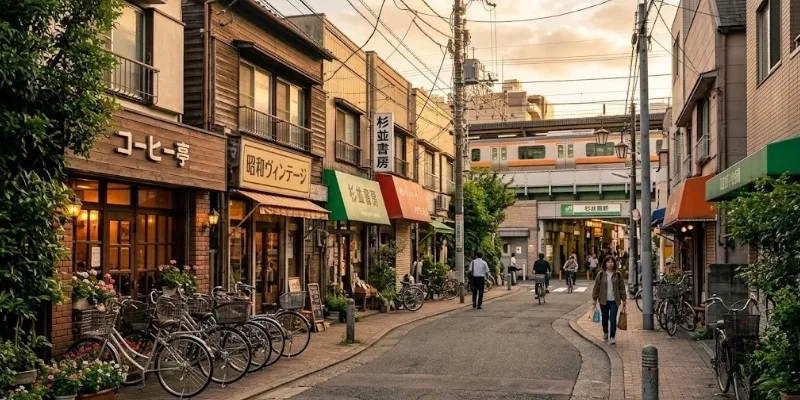
How Much Do Chuo Line Apartments Cost at Each Station?
Below is the average rent for a studio, 1K or 1DK within a 10-minute walk of each station. Times to Shinjuku are approximate rapid-train times.
| Station | Studio / 1K / 1DK rent | To Shinjuku |
|---|---|---|
| Tokyo | ¥148,700 | 14 min |
| Kanda | ¥155,100 | 12 min |
| Ochanomizu | ¥152,600 | 10 min |
| Suidobashi | ¥152,500 | Local line |
| Iidabashi | ¥154,900 | Local line |
| Ichigaya | ¥158,500 | Local line |
| Yotsuya | ¥147,900 | 5 min |
| Shinanomachi | ¥130,100 | Local line |
| Sendagaya | ¥154,600 | Local line |
| Yoyogi | ¥152,200 | 2 min (local) |
| Shinjuku | ¥144,300 | 0 min |
| Okubo | ¥130,700 | 2 min (local) |
| Higashi-Nakano | ¥117,000 | Local line |
| Nakano | ¥114,500 | 4 min |
| Koenji | ¥103,800 | 7 min |
| Asagaya | ¥110,700 | 9 min |
| Ogikubo | ¥109,100 | 11 min |
| Nishi-Ogikubo | ¥118,700 | 15 min |
| Kichijoji | ¥101,800 | 16 min |
| Mitaka | ¥96,500 | 19 min |
| Musashi-Sakai | ¥82,000 | 25 min |
| Higashi-Koganei | ¥78,800 | 27 min |
| Musashi-Koganei | ¥79,800 | 29 min |
| Kokubunji | ¥77,700 | 30 min |
| Nishi-Kokubunji | ¥77,100 | 31 min |
| Kunitachi | ¥92,400 | 35 min |
| Tachikawa | ¥107,600 | 38 min |
| Hino | ¥74,400 | 40 min |
| Toyoda | ¥78,500 | 42 min |
| Hachioji | ¥81,400 | 47 min |
| Nishi-Hachioji | ¥75,000 | 50 min |
| Takao | ¥57,000 | 55 min |
What the numbers tell you
The biggest price drop comes right after Shinjuku. Moving from Shinjuku to Nakano saves about ¥30,000 a month, yet adds only 4 minutes of travel. That is the main reason Nakano and Koenji are so popular with foreign renters.
The second drop happens after Mitaka, where studio rent falls below ¥85,000. From Musashi-Sakai to Kokubunji you pay roughly half the rent of central Tokyo, with a commute of about 25 to 30 minutes.
Two stations break the pattern. Tachikawa is more expensive than its neighbors because it is a major business and shopping hub with many new buildings. Kunitachi is also higher because it is a quiet, planned university town with limited new supply. If you want value in that area, look at Kokubunji or Hino instead.
For context on how these figures compare with the rest of the city, see our average apartment rent in Tokyo guide.
What Is Each Section of the Chuo Line Like?
Central: Tokyo to Yotsuya
This is the office and university core. Iidabashi and Ichigaya have some of the highest rents on the line, partly because so many universities are nearby. Students at Hosei can read our Hosei University Ichigaya housing guide, and Sophia students can check the Sophia University housing guide. Most renters here choose a small 1K and accept less space for a very short commute.
Inner west: Shinjuku to Nakano
Okubo and Higashi-Nakano are lively and international, with many Korean and Southeast Asian shops. Nakano is the standout. It has a huge covered shopping street, the Nakano Broadway mall, and fast access to Shinjuku. Read our Nakano apartments guide for ward-level detail, or browse current Nakano listings.
Suginami: Koenji to Nishi-Ogikubo
This is the Chuo Line most people picture. Koenji is known for vintage clothing and live music. Asagaya has a quieter, older feel and a long covered arcade. Ogikubo is a calm residential hub with good ramen and a department store. Nishi-Ogikubo is full of antique shops and small cafes. Because of the weekend rapid rule, rent in Koenji and Asagaya is often slightly lower than you would expect for their distance. See our Suginami apartments guide or browse Suginami listings.
Musashino: Kichijoji and Mitaka
Kichijoji ranks near the top of Japanese surveys of the most desirable places to live. Inokashira Park, big shopping streets and a second train line, the Keio Inokashira Line to Shibuya, make it very convenient. Our Kichijoji living guide covers it in depth. Mitaka is the end point of the local line and the Tozai Line through-service, so it is easy to get a seat in the morning.
Tama area: Musashi-Sakai to Takao
West of Mitaka, Tokyo becomes greener and more suburban. Apartments are larger for the same money, and parks and rivers are close. Kokubunji and Musashi-Koganei have good shopping. Kunitachi is home to Hitotsubashi University, covered in our Hitotsubashi housing guide. Takao, at the end of the line, offers the cheapest rent and quick access to Mount Takao hiking.
Ready to compare real listings along the line? Start with the areas below.
Which Chuo Line Station Is Best for You?
Office workers in Shinjuku or Tokyo Station: Nakano or Ogikubo
Nakano gives you a 4-minute ride to Shinjuku at about ¥114,500 for a studio. Ogikubo adds a few minutes and has the Marunouchi Line as a backup route, which helps on days when the Chuo Line is delayed.
Students: Koenji, Asagaya or Musashi-Sakai
Koenji and Asagaya offer some of the lowest rents within 10 minutes of Shinjuku. Further out, Musashi-Sakai is near ICU and costs about ¥82,000. Our student housing near Tokyo universities article lists more options, and direct train access to Shinjuku for students compares the Chuo Line with the Odakyu and Keio lines.
Families: Mitaka, Kokubunji or Musashi-Koganei
These stations offer bigger apartments, more parks and quieter streets, with a direct train into central Tokyo.
Lifestyle first: Kichijoji or Nishi-Ogikubo
If shops, cafes and parks matter more than saving every yen, Kichijoji is hard to beat at around ¥101,800 for a studio.
Lowest budget: Hino, Nishi-Hachioji or Takao
You will pay roughly half of central Tokyo rent. The trade-off is a commute of 40 to 55 minutes to Shinjuku.
Should You Use the Chuo Line Green Car?
Since March 15, 2025, Chuo Line (Rapid) trains have double-deck Green Cars in cars 4 and 5. A Green Car seat costs ¥750 one way for trips up to 50 km when you buy the Green ticket with Suica or Mobile Suica. Paper tickets cost ¥1,010 for the same distance.
For people living in the Tama area, the Green Car can make a 40-minute commute far more comfortable. It is not covered by a normal commuter pass, though, so budget for it separately. For many renters, a cheaper apartment further west plus occasional Green Car rides still costs less than a studio in Nakano.
What Are the Downsides of Chuo Line Apartments?
Crowding. Morning rush trains between Nakano and Shinjuku are among the most crowded in Tokyo. Leaving 15 minutes earlier makes a big difference.
Delays. The Chuo Line is long and runs through busy areas, so delays happen more often than on some lines. Living near a station with a second line, such as Ogikubo, Kichijoji or Nakano, gives you a backup.
Weekend rapid skips. As noted above, Koenji, Asagaya and Nishi-Ogikubo get only local trains on weekends and holidays.
Competition. Popular stations like Kichijoji and Nakano get many applicants, especially in spring. Have your documents ready before you view. Our apartment hunting checklist helps.
How Do You Rent Chuo Line Apartments as a Foreigner?
The process is the same as anywhere in Tokyo, but a few tips help on this line.
- Search by station, not by ward. The Chuo Line crosses several wards and cities, so filter by the stations you want.
- Check the walking time. All rent figures in this guide are for apartments within a 10-minute walk. Going further out lowers rent but adds time every day. See walking distance to train stations.
- Look for foreigner-friendly listings. Not every landlord accepts foreign tenants. Arealty marks listings that do.
- Prepare for move-in costs. Expect around 4 to 6 months of rent upfront. Our apartment move-in cost guide breaks this down.
- Ask about guarantor companies. Most landlords require one. See apartments in Japan with no guarantor.
Frequently Asked Questions
Yes. Chuo Line apartments are popular because the line links western Tokyo directly to Shinjuku and Tokyo Station without transfers. It is crowded at rush hour, but it is one of the most convenient lines for daily life.
Takao is the cheapest, at about ¥57,000 for a studio. Within 20 minutes of Shinjuku, Mitaka and Kichijoji are the best value at roughly ¥96,500 to ¥101,800.
No. On Saturdays, Sundays and holidays, rapid trains pass Koenji, Asagaya and Nishi-Ogikubo. Local Chuo-Sobu Line trains still stop there.
About 16 minutes by rapid train, with no transfer.
No. The Chuo Line (Rapid, orange) runs from Tokyo to Takao and skips smaller stations. The Chuo-Sobu Line (local, yellow) stops at every station from Mitaka to Chiba.
Find Chuo Line Apartments with Arealty
Arealty lists foreigner-friendly apartments along the whole Chuo Line, from Nakano studios to family homes in Kokubunji. Every listing is in English, and our team helps with applications, guarantor companies and contracts.
- Browse all apartments for rent in Tokyo
- Start your search on Arealty
- Compare other lines: Yamanote Line station guide and Den-en-toshi Line guide
About this guide
This guide was written by Lucy Nguyen, Marketing Specialist at Arealty, using station-level rent data and official timetable information. Rent and train details change, so check current listings before you decide.
Sources
- LIFULL HOME’S: JR Chuo Line rent by station
- Chintai Style: Chuo Line rent and commute times
- Traffic News: Chuo Line Green Car service starts
- JR East timetables

Real estate advisor at Arealty Japan, specialising in helping foreign residents navigate the Tokyo and Osaka rental markets. Lucy has guided hundreds of international renters — from Working Holiday visa holders to corporate relocations — through Japan’s apartment application process. Her writing draws on firsthand experience with landlord screening, guarantor companies, and foreigner-friendly listings across all 23 Tokyo wards and major Kansai cities.