


wood-frame constructions, known as Mokuzo in Japan, represent a harmonious blend of traditional architectural wisdom and modern engineering. For many expatriates looking for apartments in Japan, the choice of building material significantly impacts daily living comfort, specifically regarding temperature regulation and moisture management. Understanding the technical properties of timber is essential for anyone seeking an apartment for rent Japan who prioritizes a healthy indoor environment.
Understanding Comfort and Humidity Control in wood-frame construction Japan
Comfort and humidity control in wood-frame construction Japan refers to the natural ability of timber to regulate indoor moisture levels through a process called hygroscopicity. Wood acts as a living material that absorbs excess water vapor from the air when humidity is high and releases it back when the environment becomes dry. This natural buffering system maintains indoor relative humidity within a comfortable range of 40% to 60%, which is the optimal level for human health and respiratory function.
Japan experiences extreme seasonal shifts, ranging from the humid “Tsuyu” rainy season in June to the incredibly dry winter months. High-quality apartments in Japan utilize the cellular structure of wood to prevent the stifling atmosphere common in sealed concrete structures. Residents benefit from this natural ventilation because wood breathes, unlike synthetic materials or dense concrete.
Indoor air quality remains superior in wooden structures because the material does not trap stale air. You will notice a significant reduction in condensation on windows and walls if your apartment utilizes modern wooden construction techniques. This is particularly important in a japan tokyo apartment rent scenario, where urban density can often limit natural airflow.
Structural Advantages of wood-frame construction in Japan
Choosing a wooden structure offers several practical advantages for both tenants and investors. While some perceive wood as a traditional choice, it remains a dominant force in the Japanese housing market due to its efficiency and cost-effectiveness.
High Cost-Performance and Economic Value
Wooden apartments offer exceptional cost-performance because the initial construction costs are significantly lower than steel or concrete alternatives. According to industry data, the average construction cost for a wooden apartment ranges from 700,000 JPY to 1,100,000 JPY per tsubo (approximately 3.3 square meters). In comparison, Reinforced Concrete (RC) structures typically cost between 1,000,000 JPY and 1,400,000 JPY per tsubo.
These lower costs often translate into more competitive rental rates for tenants seeking apartments in tokyo japan. Landlords can provide modern amenities and high-quality finishes without needing to charge exorbitant rents to cover construction debt. Investors also benefit from shorter statutory useful lives for tax purposes. The legal depreciation period for wooden structures is 22 years, whereas RC structures extend to 47 years. This allows for higher annual depreciation deductions, which effectively reduces taxable income.
Superior Thermal Insulation and Energy Efficiency
Timber possesses natural thermal insulation properties that surpass those of steel and concrete. Wood has a low thermal conductivity rate, meaning it does not easily transfer heat or cold from the outside to the interior. You will experience a more stable indoor temperature throughout the year if you live in a well-insulated wooden home.
Modern wooden apartments incorporate advanced insulation materials to enhance this effect. Common insulation types include:
- Mineral wool: A fiber-based material that provides excellent fire resistance and sound dampening.
- Rigid foam boards: Synthetic panels that offer high R-values (thermal resistance) in a thin profile.
- Cellulose insulation: An eco-friendly option made from recycled paper treated for fire and pest resistance.
These materials ensure that the japan tokyo apartment rent remains energy-efficient, lowering monthly utility bills for heating and cooling.
Addressing Common Perceptions of Wood-frame Construction
Many foreigners searching for an apartment for rent Japan harbor concerns regarding the durability and safety of wooden buildings. However, modern Japanese building codes are among the strictest in the world, ensuring that new wooden structures perform at elite levels.
Seismic Safety and the New Earthquake Resistance Standards
Wooden buildings in Japan are highly resilient against seismic activity because wood is a flexible material that can absorb and dissipate energy during an earthquake. All buildings constructed after June 1, 1981, must adhere to the “New Earthquake Resistance Standards” (Shin-Taishin). This code mandates that a building must not collapse during a Level 7 earthquake and should sustain only minor, repairable damage during a Level 5+ earthquake.
Furthermore, many modern wooden apartments utilize the 2×4 (Two-by-Four) construction method. This system creates a rigid box-like structure that distributes seismic forces evenly across the walls and floors. You can feel secure during tremors if your building meets the “Earthquake Resistance Grade 2” or higher, which signifies a strength level 1.25 times greater than the basic legal requirement.
Sound Insulation and Acoustic Privacy
While older wood-frame constructions were known for thin walls, contemporary apartments in tokyo japan employ sophisticated soundproofing technologies. Noise transfer is mitigated through the use of:
- Double-layered flooring: A system where the floor surface is separated from the structural slab by a cushioned air gap.
- High-density plasterboard: Extra-thick wall panels that block airborne sounds between units.
- Sound-dampening insulation: Specialized batting placed inside interior walls to prevent the “drum effect” of hollow spaces.
Privacy is maintained at a high level if the developer prioritizes these acoustic specifications during the design phase.
Practical Tips for Maintaining Comfort in Your Apartment
Living in a wood-frame construction requires a basic understanding of how to manage the indoor climate to maximize the benefits of comfort and humidity control in wood-frame construction Japan.
Managing the Rainy Season (Tsuyu)
During the high-humidity months of June and July, it is vital to assist the natural properties of wood. You should utilize the “Dry” mode on your air conditioning unit to remove excess moisture if the indoor humidity exceeds 65%. Most modern apartments in Japan come equipped with high-efficiency HVAC systems designed specifically for the local climate.
Other helpful practices include:
- Using bathroom exhaust fans: These should be left running for at least 2 hours after showering to prevent mold growth.
- Circulating air with circulators: Small electric fans help move air behind furniture and in corners where moisture might settle.
- Employing moisture absorbers: Small chemical canisters placed in closets help protect clothing from dampness.
Combating Winter Dryness
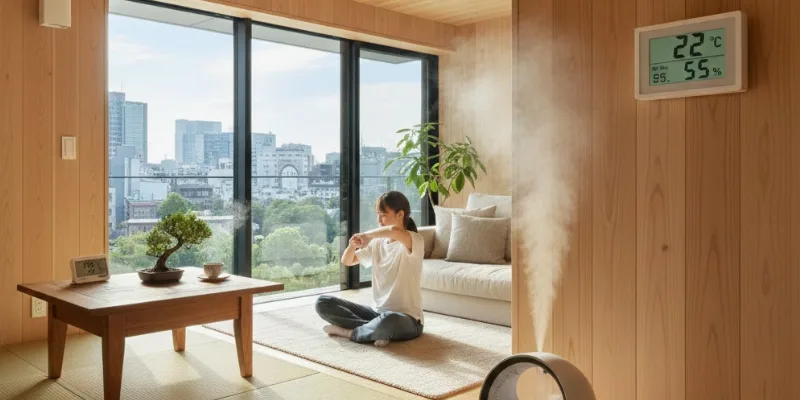
In winter, the air in Tokyo becomes exceptionally dry. While wood releases moisture, the intensity of heating systems can still lead to low humidity. You will prevent dry skin and throat irritation if you use a humidifier to maintain levels above 40%. Proper humidity also makes the air feel warmer, allowing you to set the thermostat a few degrees lower and save on energy costs.
Evaluating Building Quality in the Japanese Rental Market
When browsing for an apartment for rent Japan, it is important to look beyond the surface aesthetics. High-quality wooden buildings are identified by specific certifications and structural features.
Degradation Measures Grade
The “Degradation Measures Grade” (劣化対策等級) indicates how long a building is expected to last with normal maintenance. A Grade 3 rating suggests the building’s structural timber will remain functional for approximately 75 to 90 years. This is a hallmark of premium apartments in tokyo japan that are built to last rather than be demolished after a few decades.
Fire Resistance and Insurance
Modern wooden apartments are often classified as “Quasi-Fireproof” or “Fire-Resistant” structures. They use fire-rated materials like gypsum board that can withstand flames for 30 to 60 minutes, allowing residents to evacuate safely. While fire insurance premiums for wooden homes (H-structure) are generally higher than for concrete homes (M-structure), this cost is often offset by the lower base rent.
Arealty: Your Expert Partner for Finding Premium Apartments in Japan
Navigating the nuances of the Japanese real estate market requires professional guidance, especially when evaluating the technical aspects of comfort and humidity control in wood-frame construction Japan. Arealty specializes in connecting expatriates with high-quality housing that meets international standards for comfort, safety, and design.
At Arealty, we understand that moving to a new country involves more than just finding a roof over your head; it is about finding a home that supports your lifestyle. Our team provides detailed insights into building structures, ensuring you understand the difference between a standard wooden unit and a high-performance apartment. Whether you are looking for a luxury japan tokyo apartment rent or a cozy suburban retreat, we curate listings that prioritize resident well-being.
Our services include:
- Personalized Property Searches: We filter apartments in Japan based on your specific needs for insulation, soundproofing, and location.
- Bilingual Support: We bridge the communication gap between tenants and Japanese landlords, ensuring all lease terms are transparent.
- Technical Inspections: We help you identify buildings with high earthquake resistance and superior humidity control features.
Contact Arealty today to begin your search for the perfect apartment in Tokyo or across Japan. Let us help you find a residence where tradition meets modern comfort.
Comparing Construction Types for Apartments in Japan
To help you make an informed decision, the following table compares the three most common construction types found in the Japanese rental market.
| Feature | Wood-frame construction | Steel (S / Light Steel) | Reinforced Concrete (RC) |
| Rent Price | Generally Lower | Moderate | Higher |
| Humidity Control | Excellent (Natural) | Low | Low (Requires HVAC) |
| Insulation | High | Moderate | High (Thermal Mass) |
| Soundproofing | Moderate to High | Moderate | Very High |
| Best For | Health-conscious, Budget | Balance of cost/strength | Luxury, High-rise living |
Conclusion
The pursuit of comfort and humidity control in wood-frame construction Japan leads many residents to discover that timber is not merely a relic of the past but a sophisticated material for the future. By choosing a modern wooden apartment, you embrace a living environment that adapts to the seasons, promotes respiratory health, and offers a warm, natural aesthetic.
While concrete and steel have their places in the skyline of Tokyo, the wooden apartment remains a cornerstone of the Japanese residential experience. You will find that the benefits of natural moisture regulation, seismic flexibility, and cost-efficiency create a superior living standard if you select a property built to modern specifications.
When you are ready to explore the best apartments in tokyo japan, remember to look for the structural details that ensure long-term comfort. From the thickness of the insulation to the grade of earthquake resistance, these factors define the quality of your stay in the Land of the Rising Sun.

Real estate advisor at Arealty Japan, specialising in helping foreign residents navigate the Tokyo and Osaka rental markets. Lucy has guided hundreds of international renters — from Working Holiday visa holders to corporate relocations — through Japan’s apartment application process. Her writing draws on firsthand experience with landlord screening, guarantor companies, and foreigner-friendly listings across all 23 Tokyo wards and major Kansai cities.





Leave a Reply