
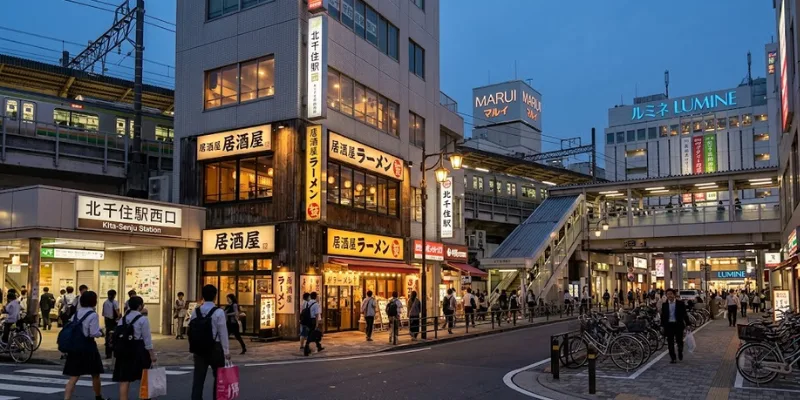

Kita-Senju is one of the best-value places to live in Tokyo if you work in the east or center of the city. One station gives you five train lines, a direct 15-minute ride to Otemachi, and rents well below Ueno or Nippori. The trade-offs are a busy, loud station area and real flood exposure, so choosing the right building matters more here than in most of Tokyo.
Kita-Senju is the main hub of Adachi City, Tokyo’s affordable northeastern ward. This guide covers what renters need to decide: commute times, 2026 rent from real Adachi listings, daily life on each side of the station, flood risk, the coming east exit redevelopment, and how Kita-Senju compares with Ayase, Nishiarai, and other Adachi neighborhoods.
| Key fact | Kita-Senju (2026) |
|---|---|
| Ward | Adachi City (Adachi-ku), not Kita-ku |
| Train lines | 5: JR Joban, Tokyo Metro Hibiya, Tokyo Metro Chiyoda, Tobu Skytree, Tsukuba Express |
| Station traffic | About 1.44 million passengers a day |
| To Otemachi | About 15 min, no transfer |
| To Tokyo Station | About 20 min |
| To Shinjuku | About 30 min, 1 transfer |
| To Haneda Airport | About 55 min, 1 transfer |
| 1K rent (2026) | About ¥75,000 in older buildings, up to ¥137,000 in new builds |
| Rent trend | Up about 24% in 3 years near the station |
| Universities nearby | Tokyo Denki, Tokyo University of the Arts, Teikyo University of Science, Tokyo Future University |
| Coming next | 29-story tower at the east exit, target completion fiscal 2031 |
| Best for | Central and east Tokyo commuters, students, couples on a budget |
| Think twice if | You need an international school, a quiet street, or a ground-floor unit |
Who Kita-Senju suits best. It fits people who value commute time per yen of rent. A single worker in Otemachi or Ginza can cut both rent and travel time compared with living inside the Yamanote loop. Couples often find that a 1LDK here costs about what a 1K costs in central wards. Students get cheap food, compact units, and five lines to reach campus.
Who may prefer somewhere else. Families who need an international curriculum will commute out of the ward, since Adachi has no full international school. People who want leafy, silent streets will find the station area too lively. And if your office is in western Tokyo, wards like Nakano or Suginami usually give a better commute for similar money.
Where Is Kita-Senju in Tokyo?
Kita-Senju (北千住) is in the southwest corner of Adachi City, in northeast Tokyo. The Sumida River runs along its south side and the Arakawa River along its north. That river position is why the town exists: Senju was the first post town on the old Nikko Kaido road out of Edo, where travelers crossed the Sumida.
“Kita-Senju” is a station name, not an official address. Your lease and residence card will show addresses like Senju, Senju-Asahicho, or Senju-Nakacho. Keep this in mind when you fill in ward office forms after you move.
One common mix-up: “Kita” means north, and Kita City (Kita-ku) is a different ward to the west, home to Akabane and Oji. Kita-Senju has nothing to do with it. For the full picture of Kita-Senju’s own ward, including population, schools, and buying prices, read our Adachi City guide.
How Long Is the Commute From Kita-Senju Station?
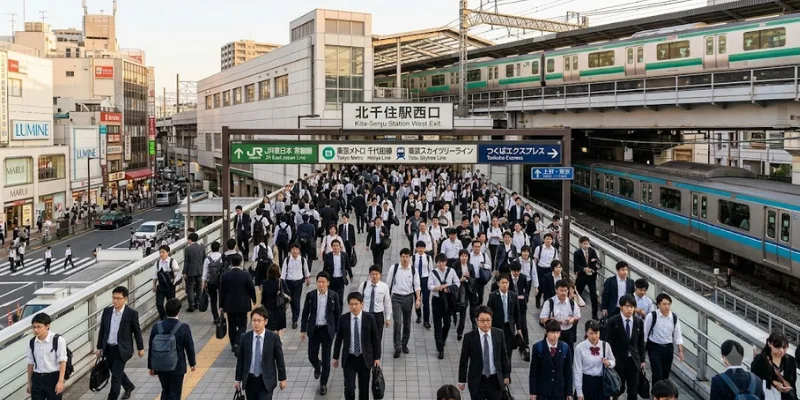
Most central offices are 10 to 30 minutes from Kita-Senju Station. Five lines from four operators stop here, and the station handles around 1.44 million passengers a day, often ranked sixth busiest in the world (source).
| Destination | Best route | Approx. time |
|---|---|---|
| Ueno | Hibiya Line or JR Joban Line | 10 min, direct |
| Akihabara | Tsukuba Express | 10 min, direct |
| Otemachi | Chiyoda Line | 15 min, direct |
| Tokyo Station | JR Joban Line via Ueno-Tokyo Line | About 20 min |
| Ginza | Hibiya Line | About 20 min, direct |
| Ikebukuro | Chiyoda Line, then JR Yamanote at Nishi-Nippori | About 21 min |
| Shinjuku | Chiyoda Line, then JR Yamanote at Nishi-Nippori | About 30 min |
| Shibuya | Chiyoda Line, then Yamanote or Ginza Line | About 37 min |
| Haneda Airport | Hibiya Line, then Toei Asakusa/Keikyu through train | About 55 min |
Approximate off-peak times. Rush hour and timetable gaps can add a few minutes.
Two local tips help a lot. First, the Nishi-Nippori transfer is short and puts the whole western Yamanote loop within about 30 minutes. Second, Chiyoda Line trains arriving from the Abiko direction are often packed in the morning. Locals wait for trains that start at Ayase, one stop up the line, which arrive emptier.
If your office is in Shinjuku or Shibuya, Kita-Senju works but is not the strongest choice. Its real advantage is the east and center of Tokyo: Otemachi, Marunouchi, Ginza, Ueno, and Akihabara.
How Much Is Rent in Kita-Senju in 2026?
Rent in Kita-Senju depends mostly on building age and walking distance to the station. Asking rents within a 10-minute walk reached about ¥14,960 per tsubo (3.3 m²) at the end of July 2026, up roughly 24% in three years (estie). That works out to around ¥113,000 for a 25 m² 1K.
| Layout | Older building (approx.) | New build near the station |
|---|---|---|
| 1R (14 to 20 m²) | ¥65,000 to ¥80,000 | ¥89,000 to ¥110,000 |
| 1K (21 to 26 m²) | ¥75,000 to ¥95,000 | ¥122,000 to ¥137,000 |
| 1DK (25 to 30 m²) | ¥95,000 to ¥120,000 | ¥146,000 to ¥166,000 |
| 1LDK (35 to 40 m²) | ¥120,000 to ¥150,000 | About ¥191,000 + fees |
| 2LDK (40 to 55 m²) | ¥150,000 to ¥190,000 | ¥186,000 to ¥250,000 + fees |
Real examples from current Adachi-ku listings on Arealty, all newly built with no deposit:
- General Heights Kitasenju, 1R, 13.87 m², 7 min walk: ¥89,330
- AZEST Kitasenju, 1K, 21 m², 8 min walk: ¥122,330
- Spacier Senju Ohashi, 1DK, 25.5 m², 13 min from Kita-Senju (2 min from Senju-Ohashi): ¥166,330
New-build figures come from live listings on Arealty and other agents for buildings completed in 2025 and 2026. Older-building ranges are approximate market levels.
Kita-Senju costs more than the rest of Adachi because of its station. The ward-wide average for a studio is about ¥74,528, and about ¥93,426 for a one-bedroom (1DK/1LDK), according to our Adachi City guide. Near Kita-Senju Station, expect to pay above those averages, especially in new buildings. Several 2025 and 2026 towers offer zero key money or free-rent months, so ask about move-in campaigns before you sign.
Budget around four to five months of rent for upfront costs. Our move-in cost guide breaks down deposit, key money, agency fees, and guarantor fees line by line.
What Is Daily Life Like in Kita-Senju?
Daily life in Kita-Senju feels like old Tokyo with a big station attached. The two sides of the station are quite different, so walk both before you choose an apartment.
West exit: shops, food, and noise. This is the historic side. Lumine is built into the station, Marui sits across a pedestrian deck, and covered shopping streets run north along the old Nikko Kaido. You will find long-running izakaya, cheap set-meal shops, and supermarkets open until 22:00 or later. It is the most convenient side, and also the loudest at night.
East exit: newer and calmer. The east side changed after Tokyo Denki University opened its campus here in 2012. Streets are quieter in the evening, and more of the housing is newer single-person and student stock. This is also where the station’s next big redevelopment will happen (see below).
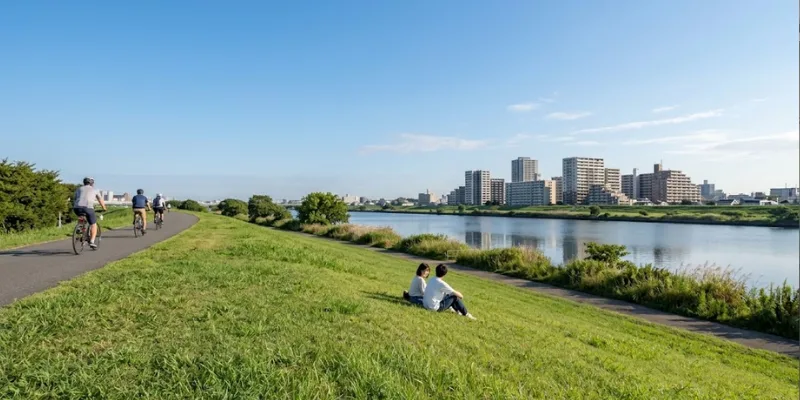
North toward the Arakawa: space and greenery. Ten to fifteen minutes on foot from the station, low-rise streets give you lower rent and quick access to the Arakawa riverside. The embankment has long walking, running, and cycling paths, and it hosts the Adachi Fireworks each summer. There is no large formal park next to the station, so the river is your main green space.
A bicycle helps a lot here. Use paid bicycle parking near the station, since bike theft is the most common crime in the ward.
Where Do Kita-Senju Residents Shop and Eat?
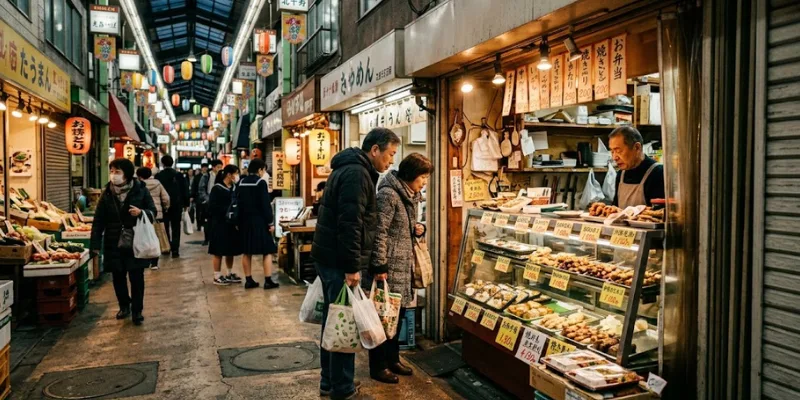
Kita-Senju has more supermarkets and cheap restaurants around the station than most Tokyo neighborhoods. You can do almost all daily errands on foot, and several shops stay open late for people coming home from work.
| Need | Where to go | Why it helps |
|---|---|---|
| Imported food | Seijo Ishii inside Lumine | Cheese, wine, and foreign brands, open until 23:00 |
| Everyday groceries | Tobu Store, York Foods, Ito-Yokado Senju | Reliable prices, most open until 22:00 |
| Late-night shopping | Don Quijote near the west exit | Household goods and snacks after other shops close |
| Ready meals | Marui food hall, west exit | Bento and side dishes for busy weeknights |
| Clinics | Senju Mildix building, west exit | Several clinics in one building next to the station |
Fun fact: the Ito-Yokado store in Senju stands on the site of the first Yokado shop, opened in 1946. The national chain began here.
Eating out is cheap by Tokyo standards. Kita-Senju is famous among Japanese drinkers for senbero bars, where about ¥1,000 buys a few drinks and snacks. Some izakaya near the west exit have served the same dishes for generations. Student-priced ramen, curry, and teishoku shops fill the side streets on both sides of the station.
For culture, Theatre 1010 sits above the station complex, a public theater with 1,010 seats run by the ward. It hosts concerts, plays, and community events throughout the year.
Setting up utilities and internet. Most newer buildings near Kita-Senju come with fiber internet already installed, so you can often start service within a week of moving in. Older buildings may need a separate contract and line check, which can take two to four weeks. Ask your agent which applies before move-in day.
Is Kita-Senju Good for International Students?
Yes. Kita-Senju has become a student town over the past 15 years. Adachi City invited universities into the Senju area, and four now have campuses in or near the district:
- Tokyo Denki University, Tokyo Senju Campus, one minute from the east exit (access info)
- Tokyo University of the Arts, Senju Campus
- Teikyo University of Science, Senju Campus
- Tokyo Future University
For students, this means cheap food, many compact 1R and 1K units, and landlords who are used to young tenants. Students commuting elsewhere also benefit, since five lines reach most of Tokyo’s big campuses with one transfer or less.
You will still need a guarantor company in most cases. If you have no Japanese guarantor, our no-guarantor apartment guide explains your options.
Is Kita-Senju Safe? Crime and Flood Risk
Kita-Senju is safe for daily life, but it carries real flood risk. These are two separate questions, so treat them separately.
Crime. Adachi had a rough reputation decades ago, and that image still keeps rents low. Today, most recorded crime in the ward is bicycle theft, not violent crime. The station area is busy late at night, which some people dislike, but busy is not the same as dangerous.
Flooding. Senju sits between two large rivers. In Adachi City’s worst-case Arakawa flood scenario, parts of the Senju district could see several meters of water. Here is how to reduce your risk:
- Check the official hazard map for your exact building address on the Adachi City website. An English version is available.
- Prefer the second floor or higher. In Kita-Senju, a ground-floor discount is not worth it.
- Ask whether your fire insurance covers water damage. It is not always included by default.
- During heavy-rain warnings, avoid underground station entrances and passages.
Earthquakes. Building age matters more than location. Look for buildings constructed after 1981, when Japan’s stricter seismic standard took effect.
What Is Changing at Kita-Senju Station?
A 29-story tower is coming to the east exit by fiscal 2031. Adachi City finalized the city plan for the Kita-Senju Station Front redevelopment on June 15, 2026 (source).
| Item | Plan |
|---|---|
| Height | About 123 m, 29 floors |
| Uses | Retail, childcare support, hotel, apartments |
| Station link | Deck at 3rd-floor level connecting to the station’s east-west passage |
| Construction start | Fiscal 2028 (target) |
| Completion | Fiscal 2031 (target) |
What this means for renters: expect construction noise at the east exit from around 2028, and upward pressure on east-side rents before the tower opens. If you want the east side at today’s prices, signing in the next year or two makes sense.
Kita-Senju vs Other Adachi Neighborhoods
Choose Kita-Senju if line choice matters most. Choose Ayase, Nishiarai, or Takenotsuka if you want more space or lower rent and can live with one main line. The rent examples below are new-build listings currently on Arealty.
| Area | Main lines | New-build 1R/1K example | Feel | Best for |
|---|---|---|---|---|
| Kita-Senju | 5 lines incl. JR, Chiyoda, Hibiya | ¥89,330 (1R) to ¥122,330 (1K) | Busy hub, shopping streets, student town | Commuters who want every line |
| Ayase | JR Joban, Chiyoda Line | ¥119,330 (1R) to ¥144,330 (1K) | Quiet residential, close to Kita-Senju | People who want calm but stay on the Chiyoda Line |
| Nishiarai / Daishimae | Tobu Skytree, Tobu Daishi, Nippori-Toneri Liner | ¥109,330 to ¥128,330 (1K) | Family-friendly, big shopping centers | Families and budget-minded couples |
| Umejima / Gotanno | Tobu Skytree Line | ¥110,330 (1R) to ¥124,330 (1K) | Low-key local streets | Tobu line commuters, Hibiya Line through trains |
| Takenotsuka | Tobu Skytree Line | ¥86,330 (1R, older) | Redeveloping, further out | Lowest rent in the ward |
Ayase is the closest alternative. It is one stop up the Chiyoda Line, much quieter, and many Chiyoda trains start there, so you often get a seat in the morning. If you want the Kita-Senju lifestyle with less noise, Minami-Senju across the river in Arakawa-ku is another option. You can filter every area above by station on our Adachi-ku rental page.
Kita-Senju FAQ
No. Kita-Senju is in Adachi City (Adachi-ku). Kita City (Kita-ku) is a different ward to the west, covering Akabane, Oji, and Jujo.
Yes, especially if you work in central or east Tokyo. Rent is lower than nearby Ueno, the station has five lines, and many landlords are used to international students. Check flood risk for your exact building before signing.
About ¥75,000 to ¥95,000 in older buildings, and ¥122,000 to ¥137,000 in new builds near the station, as of 2026. Browse current options on our Adachi-ku rental page.
About 30 minutes with one transfer. Take the Chiyoda Line to Nishi-Nippori, then the JR Yamanote Line.
Five: the JR Joban Line, Tokyo Metro Hibiya Line, Tokyo Metro Chiyoda Line, Tobu Skytree Line, and Tsukuba Express.
The area right around the station is busy and loud, especially on the west exit side at night. Streets 10 minutes north toward the Arakawa River are much quieter.
Find Your Apartment in Kita-Senju
Kita-Senju rewards renters who choose carefully: the right floor, the right side of the station, and the right building age. Arealty lists foreigner-friendly apartments across Adachi, with English support from search to contract, and many listings with no deposit or no guarantor required.
- Browse Adachi-ku apartments for rent, including studios near Kita-Senju Station
- Search all Tokyo rentals by line, price, and layout
- Talk to our team at Arealty Japan



Leave a Reply